


Things to do in Burgos in 2 days: plan a weekend in this Castilian city steeped in history and art. In just one weekend you can admire the Cathedral of Burgos, stroll the elegant Paseo del Espolón, discover historic gems like the Monastery of Las Huelgas and the Cartuja de Miraflores, and dive into the food scene around Plaza Mayor and the old town. This guide includes a detailed 2-day itinerary of Burgos’ must-see sights plus practical tips to make every hour count.
Ready to discover Burgos on your own?
Rent a car and tour the surrounding towns freely and stress-free.
Book now and enjoy the freedom of traveling without schedules.
What you’ll find in this guide
Walking through Burgos means immersing yourself in a medieval city alive with history. For centuries it was a key trading crossroads linked to Flanders and wider Europe, and the footprint of El Cid Campeador remains everywhere—from statues to street names—adding depth to the things to do in Burgos you’ll experience now.
Because the Camino de Santiago crosses Burgos, its cultural wealth takes on a spiritual edge. Winters can be crisp, but each season repaints the city in fresh tones—scenes worthy of a canvas—and there’s always plenty to enjoy whenever you visit.

Burgos is more than its history and weather. Its cuisine is a treat—think morcilla, olla podrida, and roast lechazo—and for art and science lovers, the Museum of Human Evolution is a must-see.
In two days you can see the best of Burgos—from its majestic Cathedral to the charming lanes of the old town. Stay at least one night to enjoy the lively evening atmosphere and the magic of its landmarks beautifully lit after dark.
In short, Burgos captivates at every turn—a city to savor slowly and admire in all its grandeur. With our guide, you can plan an unforgettable getaway to one of Castilla y León’s true gems. Don’t wait—Burgos is ready to welcome you.

Glutendtrotters Tip
The best way to get to know Burgos first-hand is by joining a walking tour.
[adinserter block=”3″]
Parking in Burgos: Best Spots & Tips
We’ve visited Burgos several times because it’s close to us, and we always choose to drive. To keep things hassle-free, we park at the Plaza de España car park—central, reliable, and a perfect base for exploring the city on foot.
Must-See Places in Burgos
1. San Juan Square
In the heart of the city stands San Juan Square (Plaza de San Juan), a spot steeped in history and architectural charm. Ringed by notable buildings, it’s a true gem—and an essential stop on any 2-day Burgos itinerary.
One of the standout buildings is the Church of San Lesmes, a superb example of Gothic architecture. Inside rests the tomb of Saint Lesmes (San Lesmes Abad), the city’s patron, whose presence lends the interior a calm, devotional atmosphere.
Right next door stands the Hospital de San Juan, a silent witness to centuries of care and hope. Its austere façade contrasts with the warmth inside, where attentive care and compassion have long been the true hallmark.

The Public Library, another landmark on the square, is a haven for curious minds. Its open doors invite you to dive into literature and culture, enriching anyone who seeks knowledge and beauty among its shelves.
The true jewel of San Juan Square (Plaza de San Juan) is the Monastery of San Juan, a striking 16th-century complex. Its peaceful cloister, history-rich chapter house, and the evocative ruins of its church make it a living testament to Burgos’s past splendor—and an unmissable landmark.
Could there be a better beginning for your trip plans?
2. Casa del Cordón: Historic Palace in Burgos
One of the most emblematic things to do in Burgos is visiting Plaza de la Libertad, dominated by the imposing Casa del Cordón—the historic Palace of the Constables of Castile.
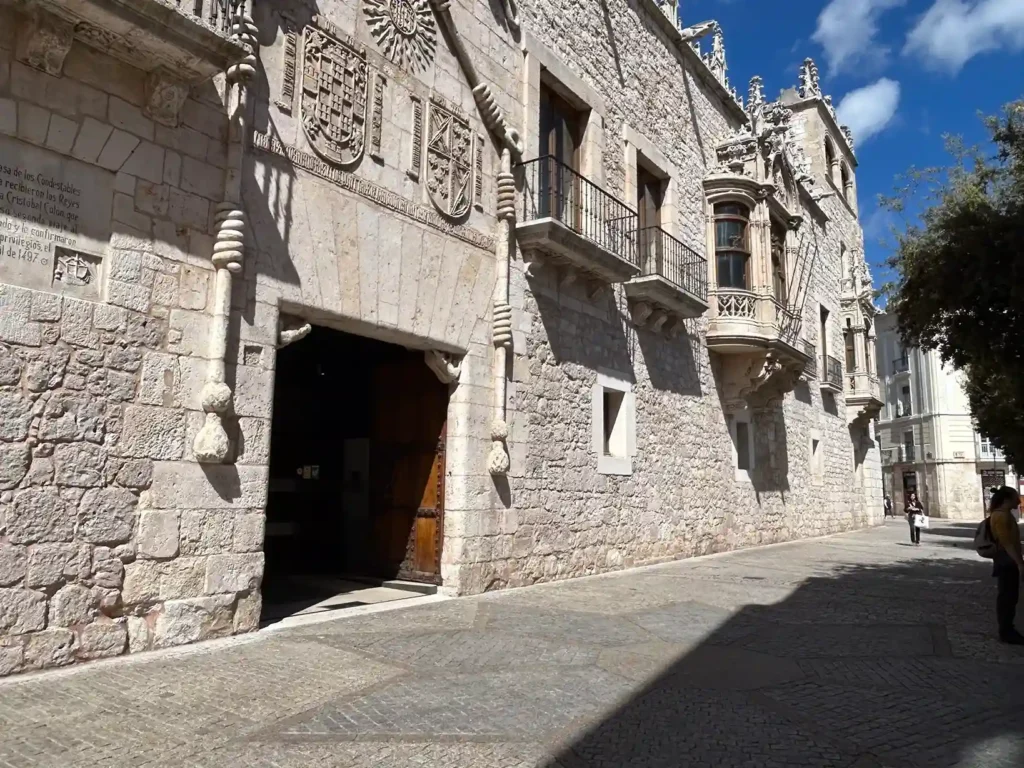
This magnificent Gothic civic building, commissioned in the 15th century by the Constable of Castile, Don Pedro Fernández de Velasco, and his wife, Doña Mencía de Mendoza—the second Counts of Haro—never fails to impress. Its façade features a broad Franciscan cord carved in stone, framing the portal like an alfiz, and two heraldic shields with the couple’s lineages above the main doorway—evoking an era of splendor and elegance.
The Casa del Cordón has witnessed major chapters of history, including the audience granted to Christopher Columbus by the Catholic Monarchs after his second voyage to the Americas, and the untimely death of Philip the Handsome (Philip I of Castile)—events that left a lasting mark on the city.
Don’t miss the chance to explore this architectural treasure and immerse yourself in the history within its walls—an unmissable stop on any 2-day Burgos itinerary.
3. El Cid Equestrian Statue, Plaza del Mío Cid
Presiding over Plaza del Mío Cid, opposite the majestic San Pablo Bridge, rises the imposing bronze equestrian statue of the legendary El Cid Campeador—a classic stop among the things to do in Burgos. We couldn’t fit it into our route this time, but we’ll be back to see it up close and finally snap the photo we missed.

This striking monument depicts the Castilian hero Rodrigo Díaz de Vivar (El Cid), beard streaming in the wind, astride his loyal steed Babieca. With the mighty sword Tizona in hand, he crosses the Arlanzón River at the moment he leaves Burgos for exile—an image that captures his enduring legacy and a must for history lovers.
El Cid was born in Vivar, just 5 km from Burgos. The city preserves numerous traces of his presence, keeping the deep connection between the legendary hero and Burgos alive.
4. San Pablo Bridge (Puente de San Pablo)
The San Pablo Bridge, rising gracefully over the Arlanzón River, links Plaza del Mío Cid with Plaza del Conde de Castro—a spot where Burgos’s past and present meet. We couldn’t fit it into our 2-day itinerary this time as it fell outside our route, but it’s bookmarked for our next visit to see it properly and take the photo we missed.
Built in the 13th century, the San Pablo Bridge is the oldest of the twelve bridges spanning the Arlanzón in Burgos. It endured repeated flood damage over the centuries until a comprehensive restoration in 1955, when a series of sculptures depicting figures associated with El Cid was added.
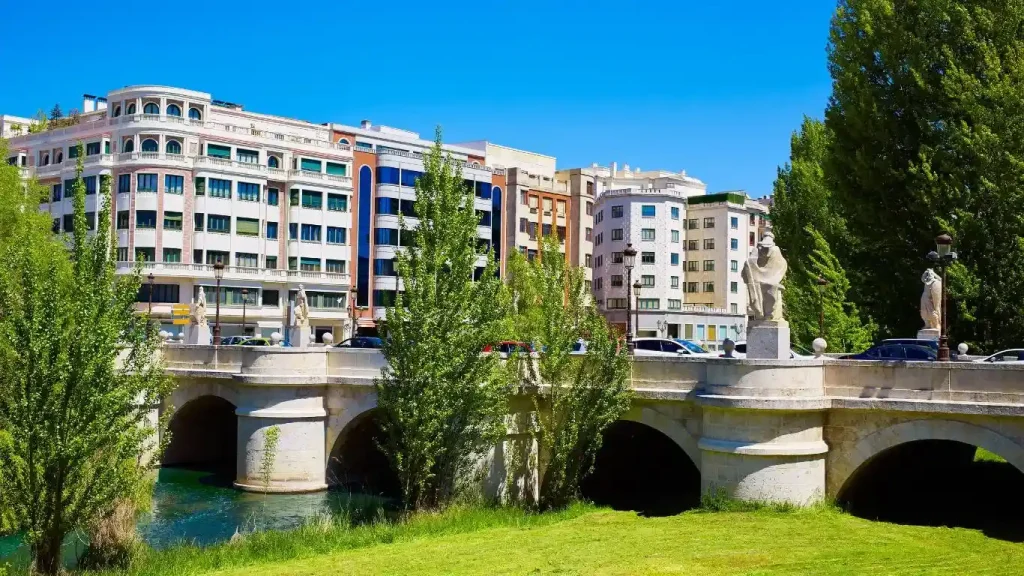
The San Pablo Bridge is not only a feat of medieval engineering and architecture; it’s also a silent witness to Burgos’s history and evolution through the centuries. Its commanding presence and close ties to the legend of El Cid make it a must-see for visitors—and an essential stop on any 2-day Burgos itinerary.
5. Human Evolution Museum in Burgos (MEH)
Discover the story of human evolution at the Museum of Human Evolution (MEH) in Burgos—a modern, world-class center that goes far beyond simply displaying archaeological finds. Set on Paseo de la Sierra de Atapuerca, it’s a standout among the things to do in Burgos and a must for anyone interested in the origins of our species.
The Museum of Human Evolution (MEH) not only showcases some of the most significant discoveries from the Atapuerca archaeological sites; it also serves as an engaging learning center for visitors of all ages. Its location just a short walk from the spectacular Burgos Cathedral makes it easy to combine both visits in the same day.
Inside, the MEH leads you on an in-depth journey through human evolution, with an exhibition of 200+ original fossils—including remains of Homo antecessor, the “Miguelón” skull and the “Elvis” pelvis—iconic finds from the Atapuerca sites, designated a UNESCO World Heritage Site.
Beyond its outstanding permanent collection, the MEH hosts temporary exhibitions, concerts, book presentations, and a wide range of educational programs—experiences that enrich your visit and reinforce its status as one of Castilla y León’s leading cultural institutions.
As part of the Atapuerca System, the MEH belongs to a wider program that includes the Interpretation Center, the Mina Esperanza, and, of course, guided visits to the Atapuerca archaeological sites—one of the world’s foremost locations for the study of human evolution, just 15 km from Burgos. It’s a key stop to build into your 2-day Burgos itinerary.
It’s a place where science and history intertwine to illuminate our human story. Don’t miss it!
6. Paseo del Espolón: Statues, Arcades & Gardens
Discover the charming Paseo del Espolón, one of the classic things to do in Burgos. Dating from the late 18th century, this elegant promenade leads from the Arco de Santa María to the imposing Teatro Principal, perfect for a leisurely city stroll.
Bask in the serenity of this tree-lined, manicured promenade along the gentle waters of the Arlanzón River. Statues of four kings line the path, alongside the splendid Consulado del Mar and the Palace of the Marchioness of Vilueña.
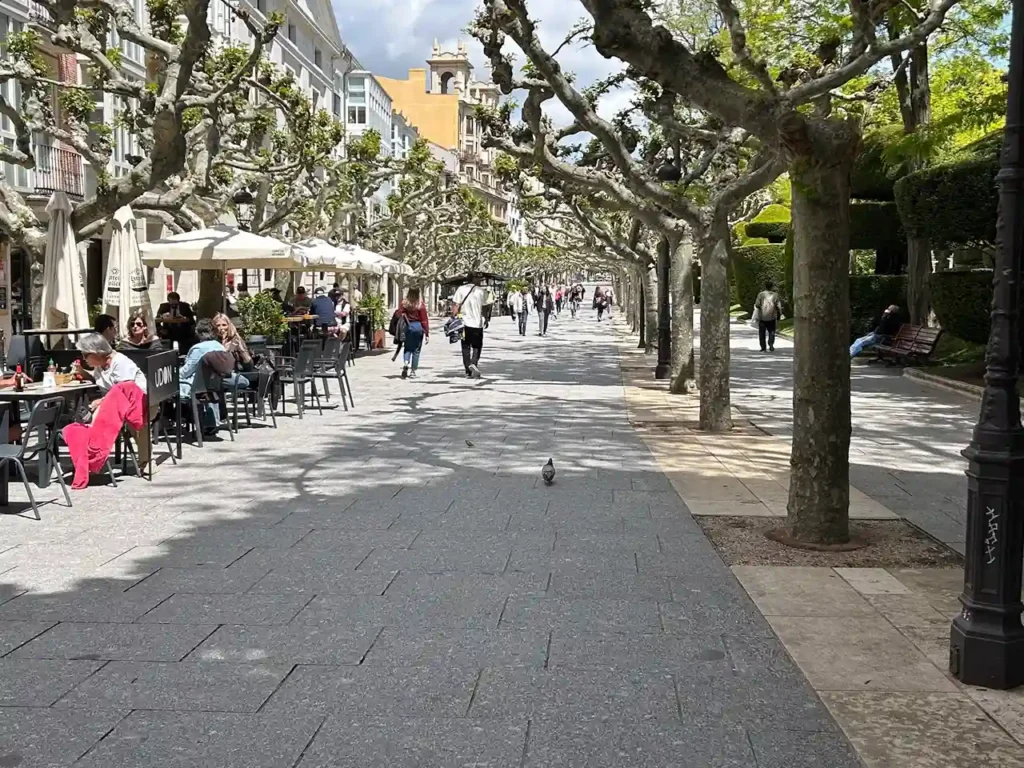
The area around the Teatro Principal, just behind Plaza del Mío Cid, is an ideal spot for a quiet pause or a photo session—where history and beauty meet at every turn.
7. Arco de Santa María: Historic City Gate
Explore the history and beauty of the Arco de Santa María—one of the twelve medieval gates and a classic stop among the things to do in Burgos. Rebuilt in the 16th century in Burgos’s signature white limestone, its façade showcases Emperor Charles V alongside emblematic figures from the city’s past, including El Cid.
This imposing monument links the Santa María Bridge with Plaza del Rey San Fernando—home to Burgos Cathedral—and rivals it in popularity as one of the city’s most photogenic spots.

Commissioned as a tribute to Emperor Charles V on the occasion of his reception in the city, the Arco de Santa María has served many roles over the centuries—from Burgos’s first town hall to the home of the Museum of Fine Arts until 1945. In 1943 it was declared a Historic-Artistic Monument, recognizing its cultural and historical significance.
Today, the Arco de Santa María welcomes visitors as a Historical-Artistic Cultural Center, with museum spaces and temporary exhibition halls. Step inside free of charge to delve into Burgos’s past and explore the cultural richness preserved within—an essential stop on any 2-day visit to the city.
Before you leave, take a moment to admire the magnificent mural by Burgos-born artist Vela Zanetti that dominates the arch’s main hall, dedicated to Count Fernán González and the independence of Castile. And don’t miss the panoramic view over the Paseo del Espolón and the Santa María Bridge from one of its turrets.
8. Burgos Cathedral: Gothic Masterpiece
The Cathedral of Burgos is a showstopper—an architectural jewel of soaring beauty and scale, and one of the top things to do in Burgos. Declared a UNESCO World Heritage Site in 1984, this imposing Gothic masterpiece is Spain’s third-largest cathedral, surpassed only by Seville and Toledo, and an absolute must on any itinerary.
Built in the early 13th century in the Gothic style, the Cathedral of Burgos is one of the earliest Gothic landmarks on the Iberian Peninsula, modeled on Saint-Denis and Notre-Dame in Paris. Its essential structure was completed in under forty years and the cathedral was consecrated, securing its place as a milestone of medieval architecture.

Burgos Cathedral Interior
Inside rest the remains of the legendary El Cid and his wife Doña Jimena, underscoring the site’s historic significance. Don’t miss the whimsical “Papamoscas”—a clock figure that opens its mouth on the hour with each chime—a delight for both children and adults.
The funerary chapels—most notably the spectacular Chapel of the Constables—along with the magnificent Main Altarpiece and the finely carved choir stalls are among the masterpieces housed in this awe-inspiring cathedral.
On the outside, its four imposing facades, the elegant Gothic–Plateresque lantern tower (cimborrio), and the two near-twin 13th-century spires stand as hallmarks of the city. Although only one 13th-century rose window survives, the cathedral remains an architectural marvel that never fails to amaze visitors.

Carved detail and choir stalls inside Burgos Cathedral / Photo by Glutendtrotters
Don’t leave without snapping a photo beside the pilgrim sculpture in Plaza del Rey San Fernando, at the foot of the cathedral—an unforgettable keepsake and a highlight of any 2-day itinerary.
9. St Nicholas of Bari Church
Exploring the area around the majestic Burgos Cathedral, you’ll find another architectural gem among the things to do in Burgos: the Church of San Nicolás de Bari. It sits just a short flight of steps from the Santa María portal.
Built in 1408 atop an earlier Romanesque structure, this church is a landmark for pilgrims on the Camino de Santiago. Inside, it preserves a Gothic altarpiece—an exquisite masterpiece carved from Hontoria de la Cantera limestone, richly adorned with finely sculpted figures and Renaissance details that captivate at first glance.

It now hosts the San Esteban parish, following the opening of the Museum of the Altarpiece in the original Church of San Esteban.
Beyond its remarkable altarpiece, the Church of St Nicholas of Bari preserves other artistic gems: the 16th-century Cherubim Arch (Arco de los Querubines), the wooden altarpiece of St. Michael, and a Last Judgment painting. The magnificent main portal also deserves special attention, adding another layer of beauty and craftsmanship to this Burgos landmark.
Together with the nearby churches of San Gil and San Esteban, it forms a must-see Gothic trio in Burgos. Declared a Bien de Interés Cultural (Site of Cultural Interest) in 1917, the Church of St Nicholas is an essential stop on any 2-day visit to the city.
10. Burgos Old Town
Explore the magic of Burgos Old Town, a UNESCO World Heritage Site brimming with monuments and historic buildings that transport you back in time.

Stroll the picturesque streets of La Paloma, San Lorenzo, and Avellanos—emblematic stretches of the Camino de Santiago as it passes through Burgos. Don’t miss Plaza Huerto del Rey, an urban oasis of terraces that’s perfect for a relaxing break.
11. Burgos Main Square (Plaza Mayor)
For a perfect Burgos getaway, don’t miss Plaza Mayor—one of the essential things to do in Burgos. Its unique architecture, with colorful façades and elegant arcades, will transport you to another era.
Shaped over centuries, this square has long been a stage for Burgos’s history and culture. At its heart rises the imposing City Hall, an architectural jewel that never fails to impress. Don’t miss the Town Hall Gate, one of Spain’s finest sculptural ensembles—a true masterpiece worth admiring up close.

Walking through Plaza Mayor is like stepping into Burgos’s past. Once known as the Weekly Market Square and later the Plaza del Mercado Menor, it was long the city’s commercial and social heart. Today it’s still a lively meeting point, lined with traditional shops and emblematic cafés, with a welcoming atmosphere that invites you to slow down and enjoy.
Whether you’re starting the day with a delicious breakfast or pausing for a relaxed afternoon snack, Plaza Mayor is the perfect setting. Let the medieval charm and color-washed arcaded façades work their magic—it’s an essential stop on any 2-day Burgos itinerary.
12. Castle of Burgos — Hilltop Fortress
Don’t leave the Burgos Castle and Viewpoint off your plan. Perched on a hilltop, this emblematic site pairs sweeping city panoramas with a storied past: its origins go back to 884, when Count Diego Porcelos founded Burgos and established the fortress as a strategic watchpost for the Christian territories.
Burgos Castle is more than a defensive stronghold; in the 16th century it also served as a state prison that held prominent captives. It later became home to Spain’s first artillery school and even operated as a gunpowder factory.
Today, the castle grounds have been transformed into Burgos’s largest recreational park, with lanes dedicated to poets that lend a unique cultural, literary touch. A partial rebuilding of the fortress made way for an interpretation center, which opened to the public in 2003, inviting visitors to explore the site’s many historical layers and its significance to the region.
During your visit, you can descend into the well and explore the underground galleries—known as the Cueva del Moro—which lend the experience a touch of mystery and adventure.
13. St Stephen Church
Declared a National Monument in 1931, the Church of San Esteban is one of Burgos’s finest landmarks—an essential stop on any visit. Inside, it houses the Museum of the Altarpiece (Museo del Retablo), featuring an outstanding collection of 16th–18th century retablos and several notable tombs that reflect the region’s history and devotion.

The San Esteban complex includes the church itself (still in use for worship), a crypt, and a cloister accessed via the street that climbs from the town square to the main portal. Inside you’ll find remarkable details: an 8th-century baptismal font, the Romanesque Cristo del Perdón, splendid mid-16th-century choir stalls, and an exquisite Rococo organ.
It enjoys a prime location next to the Castle and the Caja de Burgos Art Center (CAB), whose terrace offers sweeping views over the city center—adding even more appeal to your cultural experience in Burgos.
14. Monastery of Las Huelgas
Affectionately known as Las Huelgas Monastery, the Royal Monastery of Santa María la Real de las Huelgas is a jewel of Spanish heritage near the charming Paseo de la Isla. Founded in the 12th century by King Alfonso VIII and Eleanor of Plantagenet, this Cistercian nunnery is Spain’s most prominent—and one of the essential things to do in Burgos—serving as the principal model for Cistercian houses in the Crown of Castile.

Its name, “Las Huelgas,” dates back to the Middle Ages and derives from holgar—land left fallow for pasture. Conceived as a royal pantheon and a retreat for noblewomen, the monastery amassed extensive patrimony and privileges over the centuries. Inside, it preserves some of the oldest stained-glass windows in Spain, an artistic treasure that captivates visitors with its beauty and history.
You can also visit the Museum of Medieval Fabrics, admire the superb tombs of notable medieval figures, and learn about the Las Huelgas Codex—one of Europe’s key sources for Ars Antiqua polyphony. Home to a community of Cistercian nuns of St. Bernard, the monastery offers a uniquely serene, spiritual experience amid the bustle of Burgos.
15. Cartuja de Miraflores — Royal Carthusian Monastery
Once a pleasure palace of Henry III and later the Royal Pantheon of Queen Isabella I’s parents—John II and Isabella of Portugal—the Cartuja de Miraflores is an architectural and spiritual jewel of the city, and one of the essential things to do in Burgos. We couldn’t fit it into this trip as it fell outside our route, but we’ll be back to see it calmly and enjoy its historical and artistic value.

Home to a community of monks of the Carthusian Order, this historic charterhouse traces its lineage to St. Bruno’s 11th-century foundation at Chartreuse, France. A fascinating detail: the gilding on its sculptures was crafted with gold brought back by Christopher Columbus after his second voyage to the New World.
The exterior of the Cartuja de Miraflores is crowned with delicate spires and stone cresting, highlighting its architectural elegance. It’s an invitation to contemplation: a slow walk through the precinct and its surroundings reveals the harmony between nature and stone shaped into art.
Itinerary: 2 Days in Burgos
Day 1: Historic Burgos
Morning
- Start at the Arco de Santa María, the old city gate.
- Visit the Burgos Cathedral (UNESCO), including the tomb of El Cid and Doña Jimena, the Papamoscas clock, and the Constables’ Chapel.
- Stroll through the Old Town streets: La Paloma, San Lorenzo, and Avellanos.
Afternoon
- Walk along the Paseo del Espolón and relax at Plaza Mayor.
- Visit the Church of San Nicolás de Bari with its stunning stone altarpiece.
- Climb to the Castle of Burgos for panoramic views.
Evening
- Dinner in the old town with local specialties (morcilla de Burgos, roast lamb).
- Enjoy the illuminated view of the Cathedral from Plaza del Rey San Fernando.
Day 2: Art, Monasteries & Culture
Morning
- Explore the Museum of Human Evolution (MEH) and learn about the Atapuerca discoveries.
- Optionally visit the Atapuerca archaeological sites (15 km from the city).
Afternoon
- Visit the Monastery of Las Huelgas, a royal Cistercian monastery with centuries of history.
- Continue to the Cartuja de Miraflores, a Gothic treasure housing royal tombs and Gil de Siloé’s altarpiece.
Evening
- Stroll around the Plaza de San Juan and the Monastery of San Juan.
- Farewell dinner in a gluten-free friendly restaurant, like En Tiempos de Maricastaña or Villa Trajano.
Gluten-Free Restaurants in Burgos (Celiac-Safe)
Burgos offers more than a cultural feast—it invites you to savor its superb cuisine. Its famed morcilla is a signature dish, but not the only treat. Start with olla podrida, sopa castellana, or sopa burgalesa—comforting classics that showcase the region’s flavors.

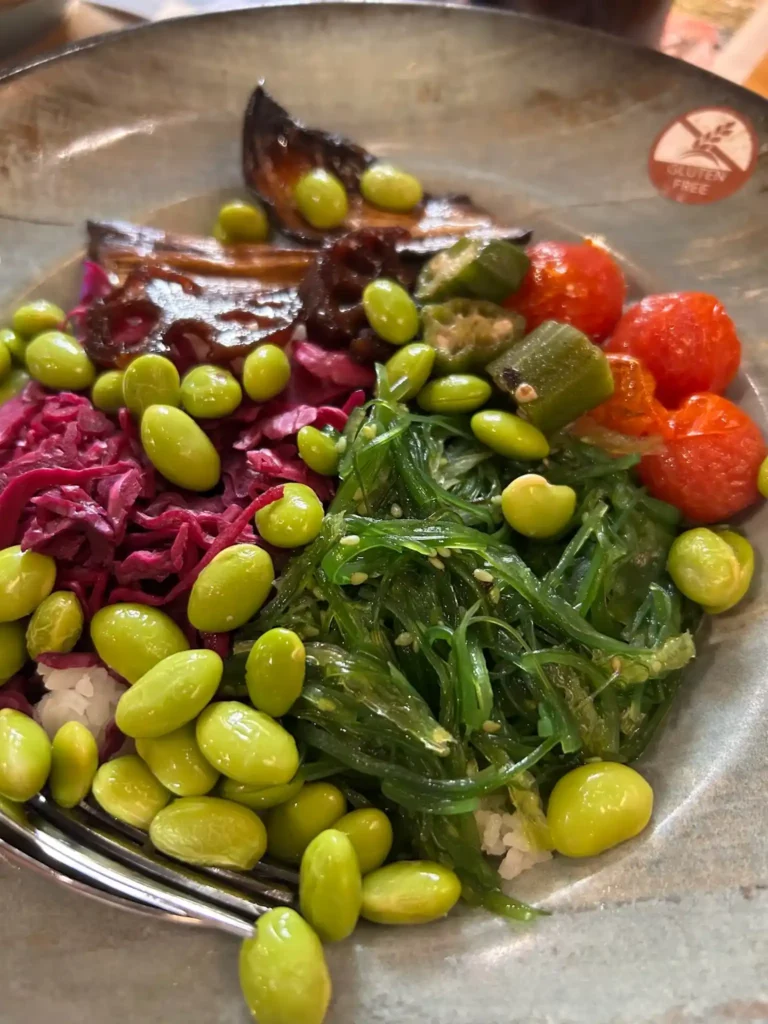
While many of these dishes are naturally gluten-free, you should always consider potential cross-contamination. We recommend two places where we’ve eaten with peace of mind: En tiempos de Maricastaña, a gastrobar with gluten-free adaptations in an excellent spot near the cathedral; and Villa Trajano, an Italian restaurant with a wide menu of delicious gluten-free pizzas and standout service—ideal for families.
Map of restaurants
Burgos Tourist Pass: What It Includes & How It Works
If you love Gothic architecture, the Burgos City Council has you covered: the Tourist Wristband gives you access to the city’s four signature Gothic landmarks with a single pass.
Where do you get it? Head to the Cathedral ticket office and pick one up. The wristband includes entry to Burgos Cathedral, the Church of San Nicolás de Bari, the Museum of the Altarpiece, and San Gil Church. Best of all, it has no expiration date.
Note that once you take it off, the wristband becomes invalid. As for timing, it depends on your pace, but the City Council suggests allowing at least 1 hour for the Cathedral and around 20 minutes for each of the other three sites. All of them are within a five-minute walk of the Cathedral, so you can easily see everything in a single day.
Our plan for a perfect 2-day Burgos getaway—covering the essential things to do in Burgos—ends here. If you still have time and energy, consider exploring the province: there’s plenty more to see. Here are a few worth adding to your list:
Search the Map for Burgos Monuments
Charming Towns & Villages in Burgos (Province)
Covarrubias
An enchanting village just 40 km from Burgos, Covarrubias has been inhabited since the Paleolithic and later by Romans and Visigoths. Closely linked to Count Fernán González, it has witnessed key chapters of Castilian history. Although most of its medieval walls have vanished, it remains one of Spain’s most beautiful villages, with plenty of sights to explore. Don’t miss it on a 2-day Burgos itinerary.

Don’t miss the Fernán González Tower, the Ex-Collegiate Church of San Cosme y San Damián, the remnants of the medieval walls, and the statue of Princess Kristina of Norway, which commemorates the town’s historic ties with Norway. Admire traditional architecture at the Casa de Doña Sancha, delve into local history at the Church of Santo Tomás, and leave time for the Plaza del Ayuntamiento and the Museo del Libro.
Just 3 km from the center, the Ermita de San Olav (St. Olav Chapel) embodies a striking fusion of tradition and modernity.
Also read: Things to do in Covarrubias: Complete Guide
Santo Domingo de Silos Monastery — Romanesque Cloister
The Monastery of Santo Domingo de Silos, in the province of Burgos, stands as a symbol of monastic life and medieval art in Spain. This Benedictine complex, with both a medieval and a modern cloister, blends history, spirituality, and architecture. Highlights include the church, the great hall rebuilt after the 1970 fire, and above all its famous cloister—the true heart of monastic life, reflecting the abbey’s evolution over the centuries.
Another gem is the library, home to around 400 ancient works, along with the apothecary, which showcases the community’s scientific legacy. The monastery museum also displays Mozarabic and Romanesque sculptures, archaeological finds, and valuable pieces of goldsmithing—giving visitors a deeper understanding of Silos’s influence on Spanish and European culture.
Lerma
Lerma stands as a symbol of history and architecture, proudly recognized as one of the Most Beautiful Villages in Spain. This distinction, granted in 2017, highlights its cultural heritage and exceptional beauty, with a preserved medieval atmosphere that enchants visitors. Be sure to add it to your 2-day Burgos itinerary for a truly complete experience.

The town, with pre-Roman origins, reached its height in the 17th century under the influence of the Duke of Lerma, favorite of Philip III. During his rule, emblematic landmarks were built, including the Ducal Palace (now a Parador hotel) and the Plaza Mayor, one of the largest squares in Spain. The Collegiate Church of San Pedro and the Monastery of Santa Clara stand as prime examples of the rich religious architecture that defines the area.
Beyond its historical richness, Lerma also offers a standout culinary experience with its signature dish, roast suckling lamb (lechazo asado)—best enjoyed alongside wines from the Arlanza Denomination of Origin.
Also read: Things to do in Lerma
Orbaneja del Castillo
Orbaneja del Castillo is a storybook village tucked into the Sedano Valley, in the shadow of the Ebro River canyon. Despite its tiny population of just 47 residents, it draws countless visitors each year, captivated by its spectacular waterfall and breathtaking natural surroundings.
The history of Orbaneja del Castillo is closely tied to the caves surrounding it, silent witnesses of prehistoric times. The Cueva del Níspero, for instance, served as a refuge during the Epipaleolithic, while the Cueva del Azar preserves valuable examples of cave art—providing a tangible link to the region’s ancient past.

One of Orbaneja del Castillo’s standout attractions is its 25-meter waterfall, fed by an aquifer in the Páramo de Bricia. This natural wonder splits the village into two parts: La Villa and La Puebla. The water flow changes with the seasons and rainfall, yet the cascade remains a constant presence, adding a magical touch to the landscape.
Ojo Guareña Caves and Natural Monument
Discover a fascinating karst complex in Castilla y León—an underground adventure within one of the most extensive cave systems on the Iberian Peninsula. With over 110 kilometers of explored galleries, Ojo Guareña is not only a natural monument of major geological and archaeological significance but also an exciting destination for explorers and nature lovers alike.
Designated a Natural Monument in 1996, this complex is a geological marvel. Archaeological findings show that Ojo Guareña served as a human refuge from the Middle Paleolithic through the Middle Ages, adding deep historical significance to its already striking natural features.

In addition to its rich history, Ojo Guareña is home to more than 180 species of invertebrates, making it a key site for biodiversity and scientific research. To learn more about this vast karst complex, visit the interpretation center in Quintanilla del Rebollar, just 6 km from the main cave, where detailed exhibits and educational activities enhance the experience.
If you’re looking for a unique adventure in a spectacular natural setting, Ojo Guareña is the perfect destination.
Explore Charming Towns & Scenic Spots of Burgos on the Map
Your journey through Burgos in 2 days may be coming to an end, but the city still has so much more to offer. Overflowing with art, history, and gastronomy, it’s the perfect destination for travelers seeking more than just a quick getaway. From the majestic Burgos Cathedral to the charming corners of the old town and its famous morcilla, every experience is unforgettable. And don’t stop at the city—its surroundings are filled with scenic landscapes and historic gems, making them essential things to do in Burgos beyond a 2-day itinerary.
If you’re inspired to go further, places like the Monastery of Santo Domingo de Silos or the Ebro River canyon in Orbaneja del Castillo will amaze you. And, since we always think of fellow glutendtrotters, remember that Burgos offers plenty of gluten-free dining options, so you can enjoy the local cuisine without worries.
Get ready for a truly complete getaway—and above all, share your experience with us. Your tips can inspire and help other travelers in the community.
FAQs
In 2 days you can visit Burgos Cathedral (a UNESCO World Heritage Site), the historic center with the Arco de Santa María, Plaza Mayor, and Paseo del Espolón, climb up to the Castle viewpoint, and explore the Museum of Human Evolution. Outside the center, add the Monastery of Las Huelgas and the Cartuja de Miraflores to complete the must-sees.
Day 1: historic center (Arco de Santa María, Cathedral, Plaza Mayor, Paseo del Espolón) and sunset at the Castle viewpoint. Day 2: Museum of Human Evolution in the morning and, in the afternoon, visit either the Monastery of Las Huelgas or the Cartuja de Miraflores. Book tickets in advance to save time and walk whenever possible.
Plan between 60 and 90 minutes for a standard visit with audioguide. Advance booking is recommended on weekends, holidays, and peak season to secure your entry time and avoid queues. Check schedules and possible liturgical events before going. Various discounts are available for seniors, large families like ours, or unemployed visitors, among others.
Spring and autumn offer mild temperatures and fewer crowds. Summer has longer daylight hours and more lively streets, but also higher occupancy and occasional heat waves. Winter is cold, yet the city retains its charm without mass tourism.
The most practical option is to leave your car in a public car park near the center and explore on foot. Look for parking areas around the Paseo del Espolón and the Arlanzón riverbank, or regulated zones outside the old town. Always check signs and restrictions. More details in the post.
Yes, the historic center is compact and flat, perfect for walking. For longer distances or to reach the Castle viewpoint, you can take a city bus or taxi. Visits to the Cartuja de Miraflores or Las Huelgas can be done on foot or by public transport/taxi, depending on your time.
Choose accommodation in the historic center or near the Paseo del Espolón to be close to the Cathedral and main attractions. Areas around the Arlanzón River are also a good choice for their tranquility and easy walking access to the main sights.
Yes, more and more restaurants and cafés offer gluten-free alternatives. Always ask about cross-contamination and safe handling, check menus beforehand, and if possible, contact the venue to confirm. We recommend the restaurant En Tiempos de Maricastaña, located on the Paseo del Espolón.
Top options include the Monastery of Santo Domingo de Silos, Orbaneja del Castillo, and the Ebro Canyon, along with historic towns across the province. With a car, you can combine them with viewpoints and short hikes; organized tours are also available depending on the season.
Yes. The pedestrian center, riverside parks, and interactive museums like the Museum of Human Evolution make it very family-friendly. Plan frequent breaks, include viewpoints and open spaces, and choose shorter activities to keep the little ones engaged.
