


Located on the shores of the Atlantic, Cascais is one of Europe’s most desirable tourist destinations, situated about 30 kilometers from Lisbon. Although it is possible to see its main attractions in one day, we recommend taking your time to soak in the relaxed and stately atmosphere of this former fishing village. When planning the best things to do in Cascais, you will discover that this charming place offers a unique combination of beaches, history, and culture, making it an unmissable destination.
The charm of Cascais
Cascais is the living image of Portuguese charm. Its cobblestone streets, majestic mansions, and golden sandy beaches are a testament to a rich history linked to the sea and fishing. From naval battles to hosting royalty in its palaces, Cascais has watched fishermen challenge the ocean day after day with their nets and boats.
But what makes this place so special?
- History and Culture: Discover the rich history of Cascais, from its naval battles to its transformation into a refuge for royalty.
- Beaches: Dive into the refreshing waters of its beaches and enjoy the Portuguese sun.
- Gastronomy: Delight in the rich local cuisine, from fresh fish and seafood to traditional sweets.

Before your trip to Cascais
Don’t forget to get travel insurance with IATI (5% discount for Glutendtrotters readers), activate your Holafly eSIM (also with a 5% discount for you) to have data during your trip, and book your rental car with Discover Cars if you want to explore Cascais and the Lisbon coast freely.
Best Things to Do in Cascais
1. Lota (Fish Market)
Start your Cascais adventure at the busy fish market. It is especially vibrant on Wednesdays and Saturdays when it is in full swing.
Just a 10-minute walk from the center, the Municipal Market not only offers an authentic glimpse into local life but is also surrounded by establishments where you can taste delicious local cuisine.
2. Condes de Castro Guimarães Museum
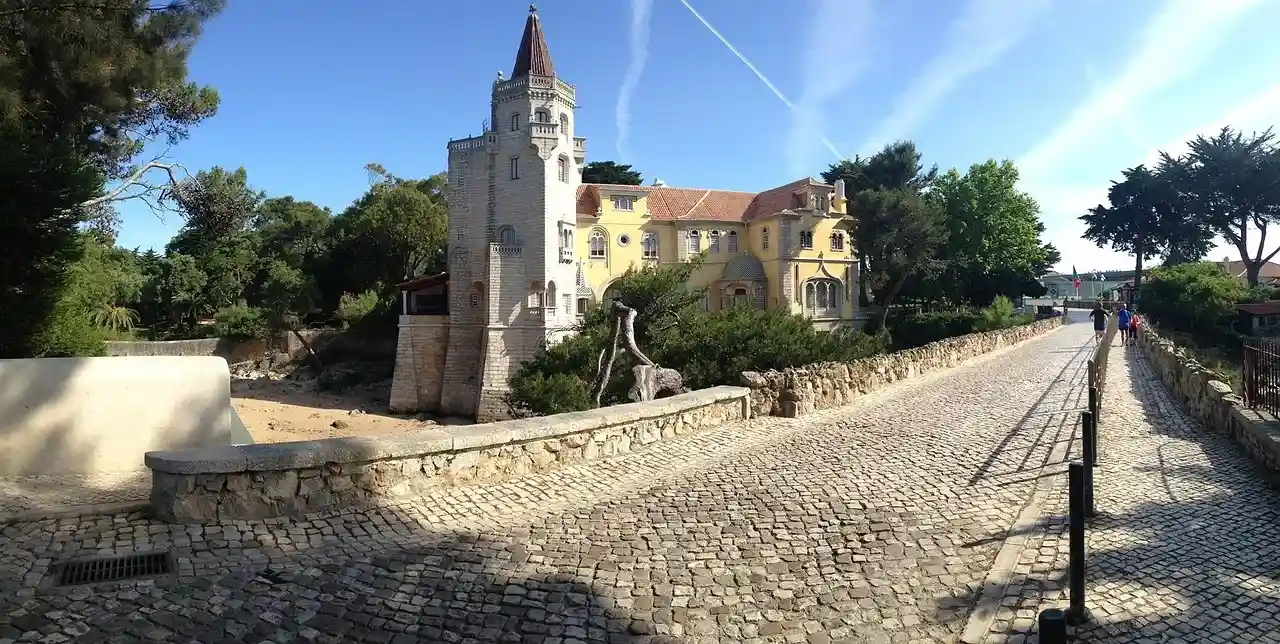
Located in the Museum District, this museum stands in a palace built in 1897 by the Irishman Jorge O’Neil. Later, the palace was acquired by Castro Guimarães following O’Neil’s bankruptcy in 1910.
The building’s design, which combines medieval elements with a romantic style, and its seaside location make it an architectural jewel. Inside, you will discover an opulent collection of art and references to the Irish origins of its first owner.
The Condes de Castro Guimarães Museum is possibly the best-known museum in Cascais, but not the only one. The Casa das Histórias Paula Rego, with its unique art gallery, and the Museu do Mar, which depicts the rugged life the sea provided to many locals, are also very interesting.
3. Santa Marta Lighthouse Museum
This 19th-century lighthouse, with its distinctive white and blue tiled masonry, is more than just a landmark. It formerly served as a military defense within the grounds of the Santa Marta Fort and now houses a museum dedicated to the life of lighthouse keepers.
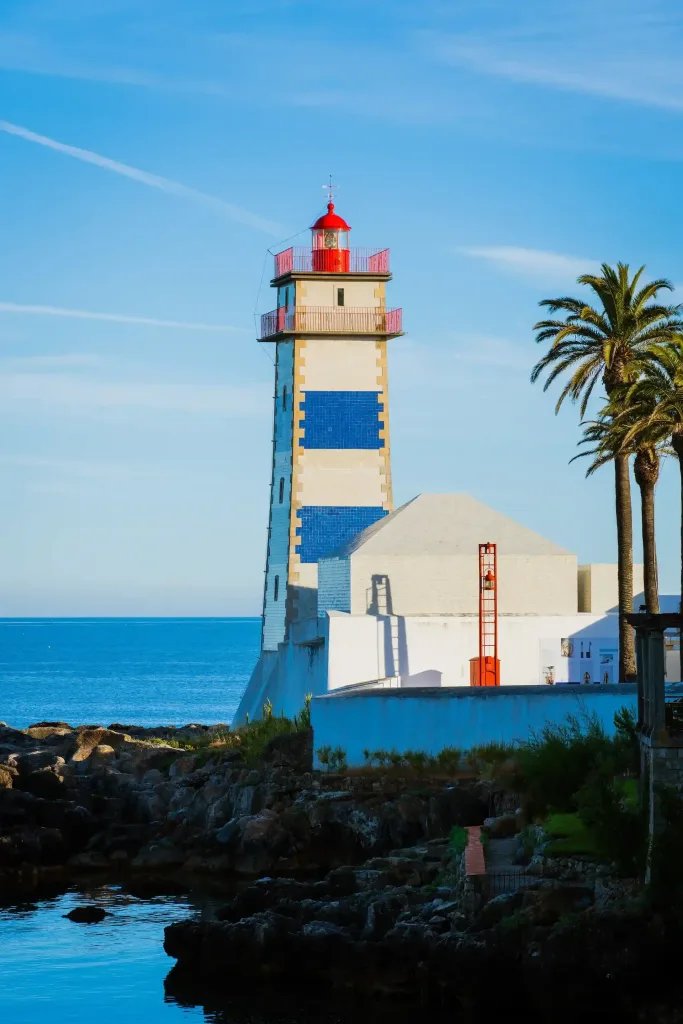
From its highest point, you get panoramic views of Cascais and the vast ocean.
4. The Citadel
This historical fortification, consisting of the Santo António de Cascais tower, the Fortress of Our Lady of Light (Nossa Senhora da Luz de Cascais), and the former Royal Palace area, is a defensive complex that once served to protect the coast.
Converted into a summer residence by King Luís I of Portugal, it now houses the luxurious Pestana Cidadela Cascais hotel and its innovative Art District.
5. Marina
The Cascais marina is a hive of activity. It is the setting for major sailing competitions and hosts a mix of traditional fishing boats, modern yachts, and exclusive shops.


It is the largest marina on the Portuguese Riviera and the third largest in the country.
6. Seafront Promenade
This two-kilometer promenade connects Cascais with Estoril.
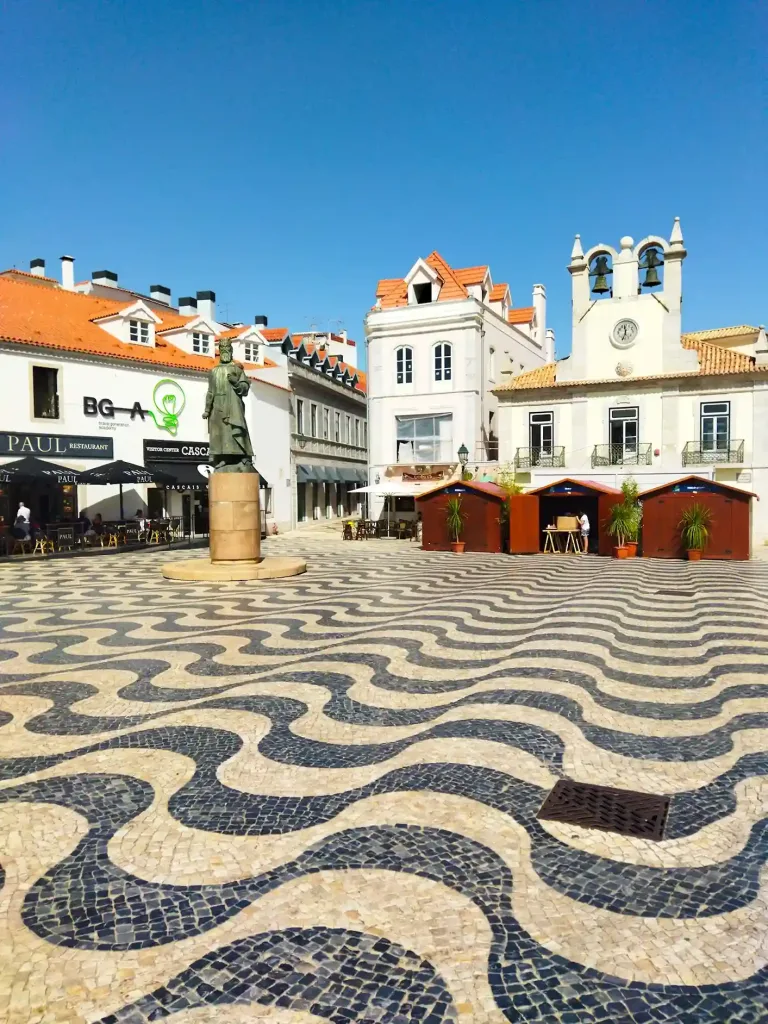
While walking, enjoy the sea views and the majestic 19th-century mansions that line the route known as the “Portuguese Blue Coast.”
7. Beaches of Cascais: Praia da Ribeira, Praia da Duquesa, Praia da Conceição, Praia da Rainha, and Praia do Guincho.
Cascais’ biggest tourist draw is its paradisiacal coves with turquoise waters and golden sand.
From the family-friendly Praia da Ribeira to the wild Praia do Guincho, which is ideal for surfing and surrounded by dunes.
Don’t miss Praia da Conceição, Praia da Duquesa, and Praia da Rainha, all of which are near the center and perfect for a day of sun and sea.
8. Boca do Inferno (Hell’s Mouth)
The route from Cascais to Guincho is approximately two kilometers long and hides one of the most special places in Cascais, the famous Boca do Inferno.
An impressive cliff that has been sculpted over the years by the power of the Atlantic Ocean. Its name comes from the roar produced by the sea as it hits the rocks, especially during storms.
At sunset, visitors and locals gather here to watch the sun go down over the Atlantic.
9. Cabo da Roca
Just 30 minutes from Cascais, this point offers panoramic views from the westernmost cliffs of Europe.
It is an ideal place for nature lovers in the heart of the Sintra-Cascais Natural Park.
It is a feast for the senses and one of the best places to photograph the Atlantic Ocean.
If you would rather not drive, this Sintra, Cabo da Roca and Cascais tour by van leaves from Lisbon with hotel pick-up, and includes a photo stop at Cabo da Roca, a stop at Boca do Inferno and about an hour of free time in Cascais.
Where to eat gluten-free in Cascais
If you are travelling with coeliac disease, the municipality of Cascais has places on the list of establishments certified by the Portuguese Coeliac Association (APC), in the November 2024 edition we checked:


Batarda’s, in Parede (Praceta Lagoa de Óbidos, 38), is a bakery and pastry shop that is exclusively gluten-free and APC-certified. In central Cascais, Cozinha por Mim (Largo das Fontainhas, Rua São José) is also APC-certified and describes its food as completely gluten-free with no cross-contamination, offering takeaway meals and delivery. The same list includes an ice-cream shop, Gelateria Italiana Fabio Lupi (Avenida Valbom, 10A).
Small businesses change their hours or close fairly often, so we recommend confirming that they are still open before you go. For more options in the capital, see our guide to eating gluten-free in Lisbon.
Cascais, once a quiet fishing village, has transformed into one of the most coveted coastal destinations in Portugal. With its mix of history, culture, and golden beaches, it is the perfect place for those seeking sun, sea, and adventure.
Ready to embark on an unforgettable adventure along the Portuguese coast? Explore Cascais with Glutendtrotters and discover its best-kept secrets!
Comment below with your favorite spot or share this article with friends who love to travel like we do.
Read also: 10 reasons to visit Lisbon: must-see places
Frequently Asked Questions (FAQ)
How far is Cascais from Lisbon?
Cascais is about 30 kilometers from Lisbon, on the shores of the Atlantic.
Can you see Cascais in one day?
Yes, it is possible to see its main attractions in one day, although we recommend taking your time to enjoy the relaxed atmosphere of this former fishing village.
When is the best time to visit the Lota fish market in Cascais?
On Wednesdays and Saturdays, when it is in full swing and at its liveliest. It is about a 10-minute walk from the center.
Why is it called Boca do Inferno (Hell’s Mouth)?
Its name comes from the roar produced by the sea as it hits the rocks of this cliff, especially during storms.
How long does it take to get from Cascais to Cabo da Roca?
About 30 minutes. Cabo da Roca is in the Sintra-Cascais Natural Park and offers views from the westernmost cliffs of Europe.
Where can I eat gluten-free in Cascais?
The list of establishments certified by the Portuguese Coeliac Association (November 2024 edition) includes Batarda’s, in Parede, an exclusively gluten-free bakery and pastry shop, and Cozinha por Mim, in central Cascais. It is worth confirming that they are still open before you go.


