


If you are a lover of fine wine, the good life, and gluten-free food, Logroño deserves a prominent place on your list of must-visit destinations. Things to do in Logroño is a complete guide that will allow you to tour its main points of interest in a day, but we recommend extending your visit a little longer, if possible, to savor its famous gastronomy and enjoy its exquisite wines at a leisurely pace.
Beyond being the world capital of wine, Logroño has much to offer: a charming pedestrian historic center, the mighty Ebro River crossing the city, and its role as a key stop on the French Way of St. James. Additionally, its well-maintained parks and vibrant cultural life make this city an essential destination in Spain.
We suggest a gluten-free route for you to experience the authentic atmosphere of Logroño. Enjoy the lively “tardeo” with a long vermouth or its nightlife on such iconic streets as Laurel. If you are traveling from Cantabria, you will arrive easily by car, and if you don’t have one, you can always rent one. Furthermore, from anywhere in Spain, you can take advantage of convenient connections by plane, train, or bus, which will take you straight to the heart of La Rioja.
In this complete guide on what to see in Logroño, we show you how to make the most of your visit.
1. Revellín Wall
We take the medieval wall and its surroundings as our starting point for the tour.
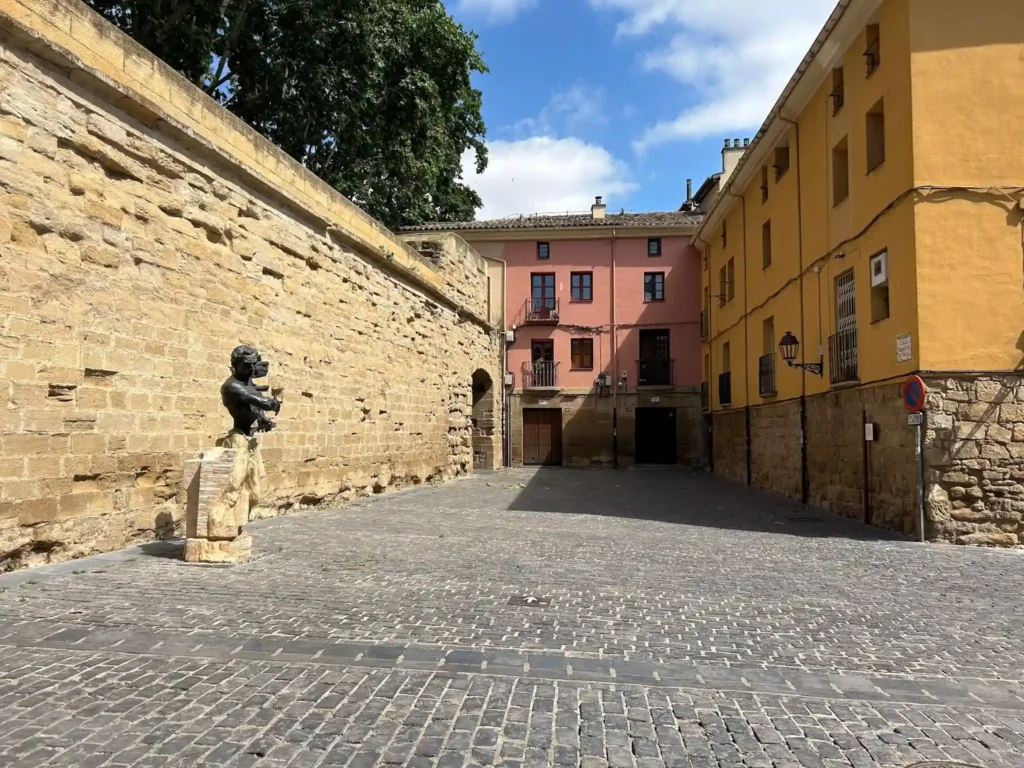
Among the most prominent remains of the old medieval wall that protected the city are the Cubo del Revellín, a robust fortification built between 1522 and 1524, and the Puerta del Revellín, the only original entrance that still stands today. This section, one of the best preserved, is a true testament to Logroño’s defensive past.
Just in front of the wall stands the Monument to the Valvanerada, an emotional tribute to those who participate in the 63.2-kilometer night march that connects Logroño with the Monastery of Valvanera, one of the most symbolic destinations in La Rioja.
We recommend booking a free tour of the city; it is an ideal way to immerse yourself in the rich history of Logroño, learn all the historical details, and not miss a thing.
👉 Read our post about the best free tours in Logroño.
2. Parliament of La Rioja
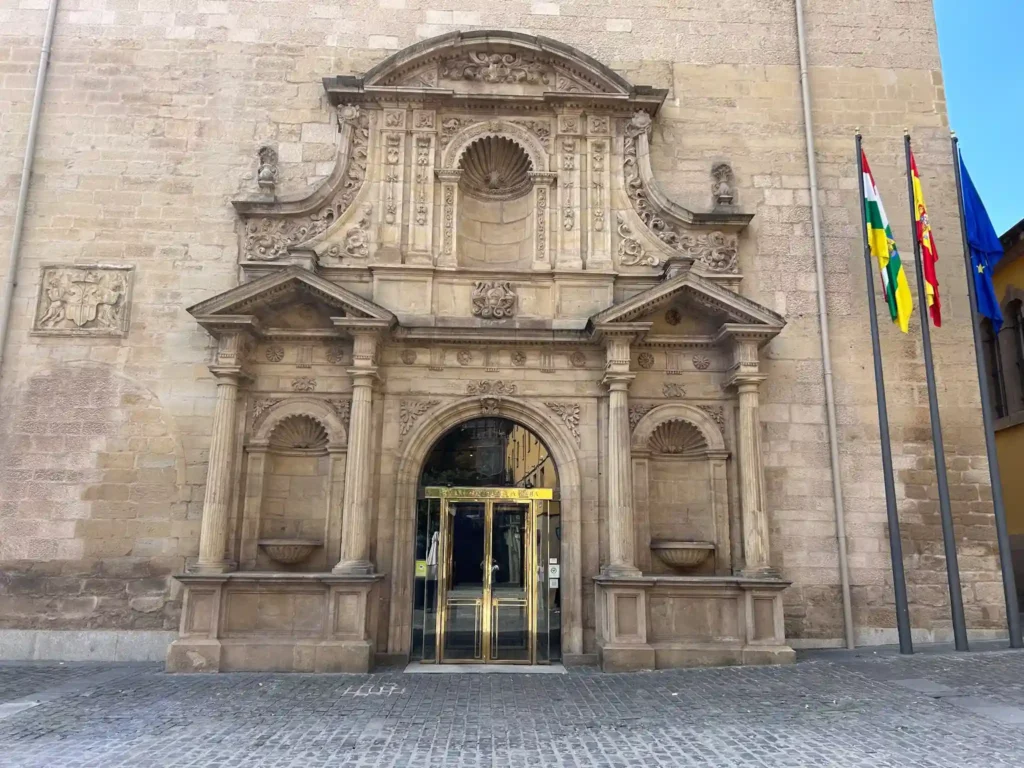
Just a few steps from the Revellín Wall, on Calle Marqués de San Nicolás, stands the Parliament of La Rioja. This building, which was once the former Convent of La Merced, still retains its imposing 17th-century Baroque facade. For centuries, it was home to the Mercedarian order until the Mendizábal confiscation in 1835, when its use changed completely. Later, the space housed a tobacco factory, and today, its former cloister has been transformed into an elegant plenary hall.
3. Calle Portales
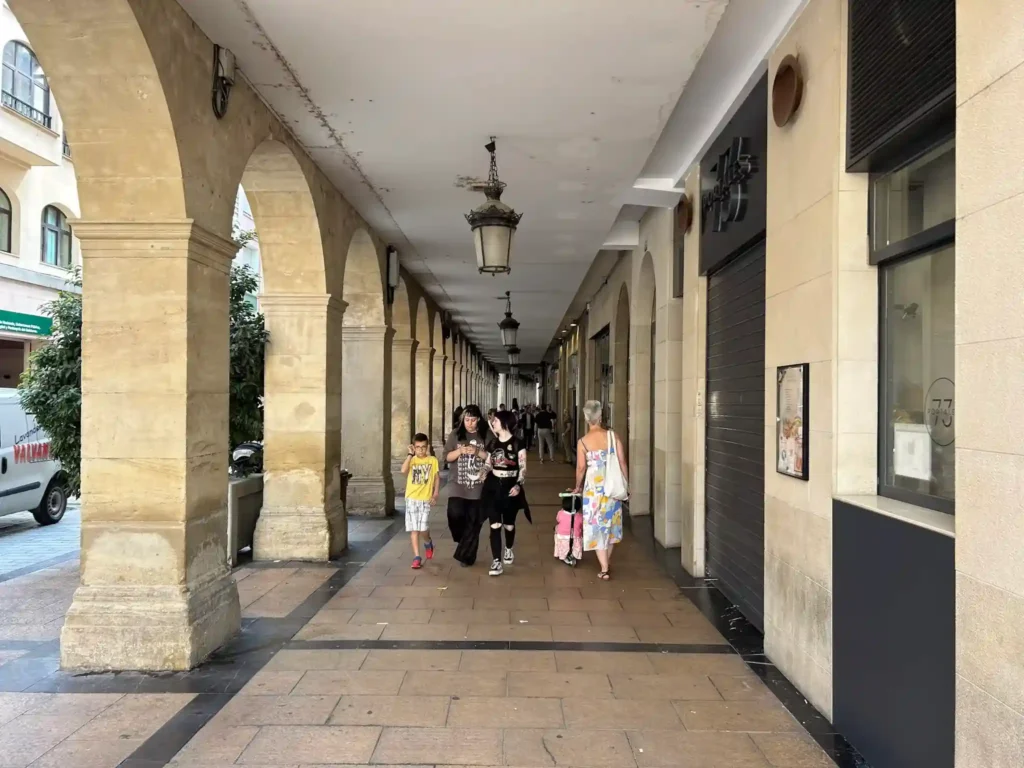
Upon crossing the Puerta del Revellín, you will find Calle Portales, one of the most charming spots to see in Logroño. This iconic street, which runs through the heart of the historic center, gets its name from the arcades (portales) that cover much of its south sidewalk.
In addition to being the city’s premier commercial hub, Calle Portales offers endless terraces where you can sit and enjoy a drink while watching the locals go by, immersing yourself in the vibrant, everyday atmosphere of Logroño.
4. Co-Cathedral of Santa María de la Redonda
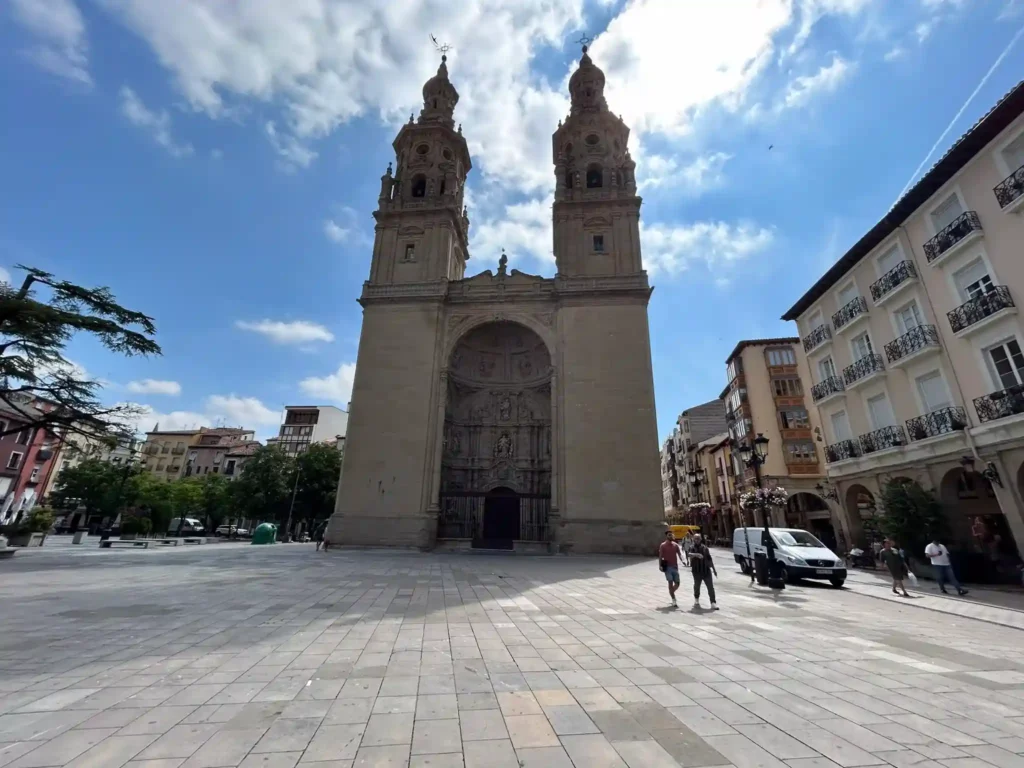
At the end of Calle Portales, you will reach the beautiful Plaza del Mercado, where the Co-Cathedral of Santa María de la Redonda is located, one of the must-see sights in Logroño.
Its name comes from a 9th-century Romanesque church with a round floor plan that originally occupied this site. However, the current structure was built between the 16th and 18th centuries, standing out for its impressive Baroque towers, known as the “twin towers.” Curiously, one is two meters taller than the other, though both are true symbols of classical Riojan architecture. These towers drew inspiration from the church of Santo Tomás in Haro, and their style is also reflected in other towns like Santo Domingo de la Calzada or Briones.
The interior of the co-cathedral is also worth a visit. There, you can admire the High Altarpiece, the Chapel of Our Lady of Peace, and, above all, a unique treasure: a small oil painting known as “The Calvary of La Rioja,” attributed to the great Michelangelo. This painting, originally created for his friend Vittoria Colonna, is located in the ambulatory, just behind the high altar.
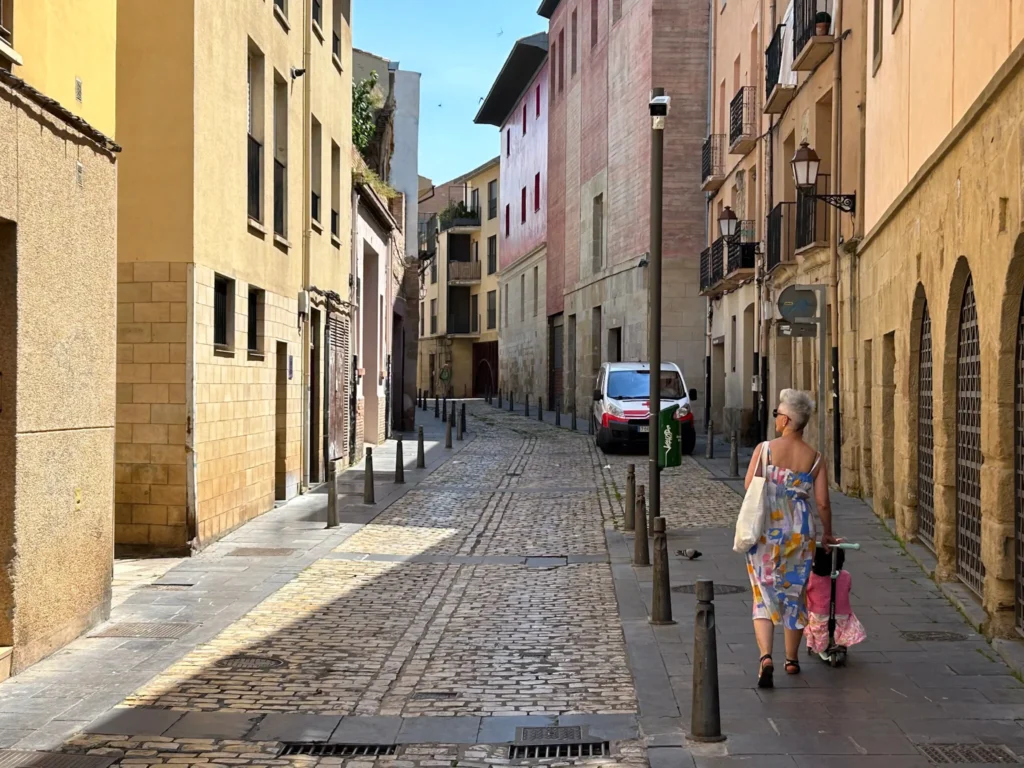
5. Old Town (Calle Caballerías, Herrerías, Marqués de San Nicolás and Ruavieja)
After visiting the co-cathedral, you can leave the Plaza del Mercado via Calle Caballerías, which will lead you to the Church of San Bartolomé, a beautiful Gothic temple and the oldest you can find in Logroño.
Walk along Calle Herrerías and Calle del Marqués de San Nicolás until you reach Calle Ruavieja, a picturesque cobbled street that is part of the Way of St. James. This street is famous for its calados, old wine cellars located on the ground floors of the houses. Among the most notable are the San Gregorio calado, from the 16th century, with an impressive 30-meter length and a barrel vault, and the calado of the former palace of the Yanguas, currently the headquarters of the La Rioja Culture Center.
As a curiosity, in 1583 a municipal ordinance was established prohibiting iron-rimmed carriages from passing through Ruavieja so as not to disturb the rest of the wines stored in the calados.
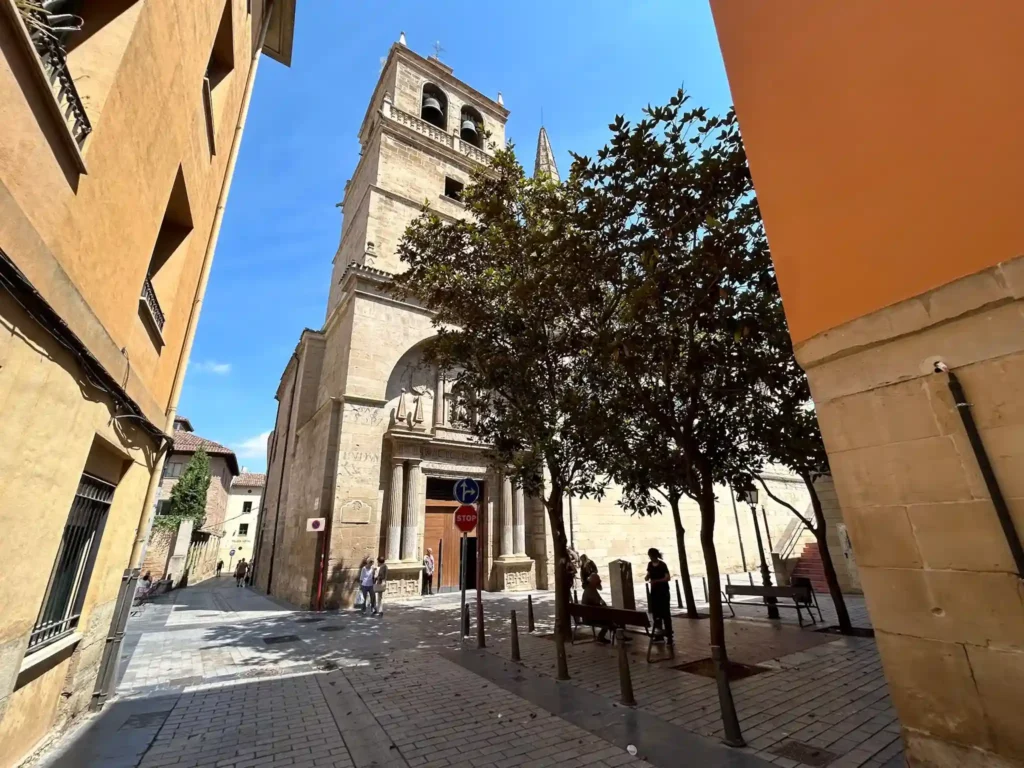
6. Imperial Church of Santa María de Palacio
Another must-visit in Logroño is also found on Calle Marqués de San Nicolás: the Imperial Church of Santa María de Palacio. Its origins date back to the 12th and 13th centuries, making it one of the oldest temples in the city. Its characteristic octagonal spire is one of the most distinctive elements of the Logroño skyline, uniquely defining its silhouette.
7. Church of Santiago el Real and Plaza de Santiago
The Church of Santiago is a mandatory stop for every pilgrim, as Logroño is deeply linked to the Way of St. James. Inside, you can discover the crypt of the condemned, the Chapel of Santa Elena, the imposing High Altarpiece, and the Virgin of Hope, the patron saint of the city.
This temple played a key role during the siege of 1521, when the inhabitants of Logroño took refuge within its walls for protection.
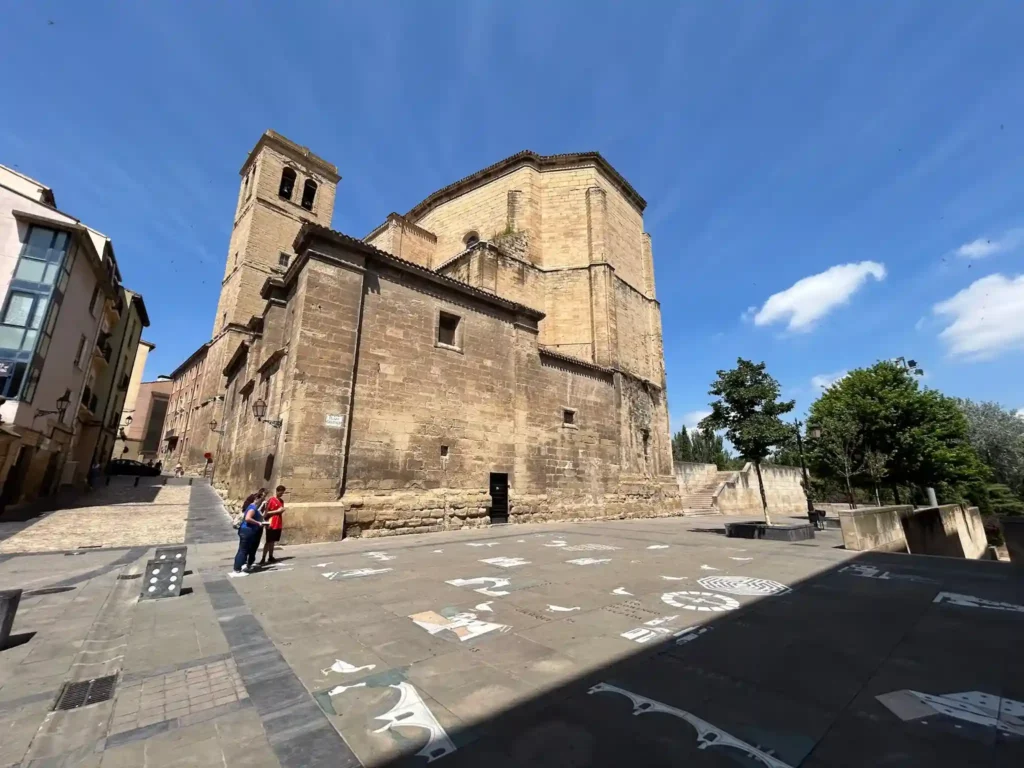
Very close to the church is the Plaza de Santiago, also known as Plaza de la Oca. Its floor design represents an allegory of the French Way of St. James, showing some of the most iconic stops on the Jacobean route, like a giant “game of the goose.”
8. Puente de Piedra (Stone Bridge)
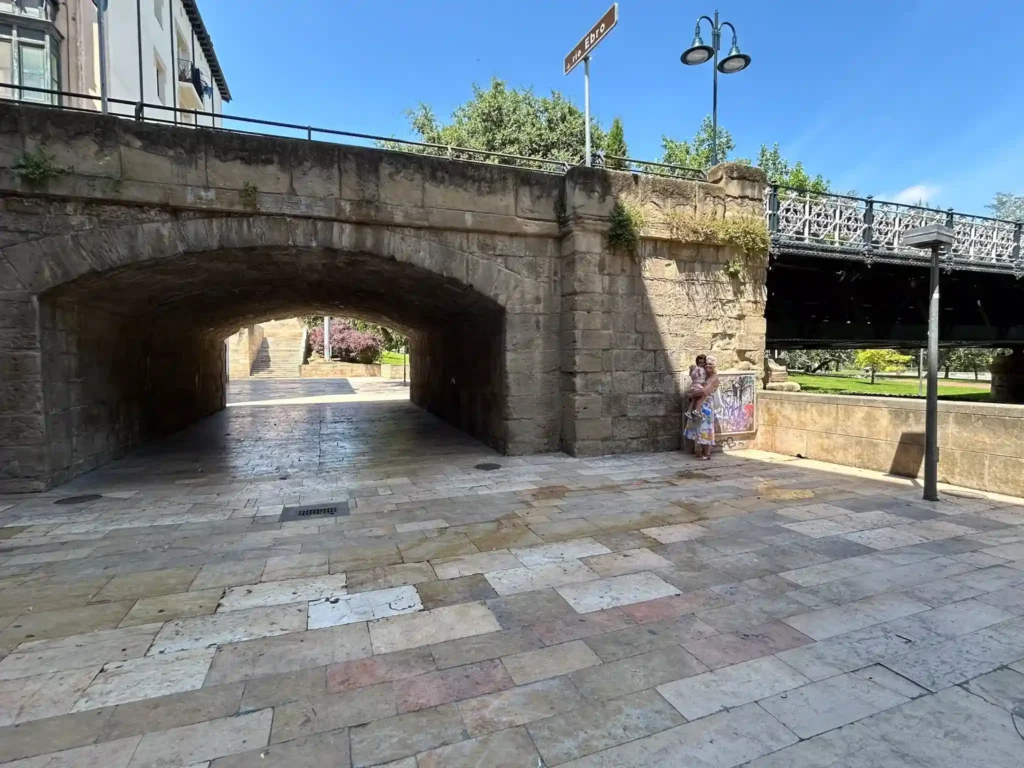
One of the must-see places in Logroño is the Puente de Piedra, also known as the San Juan de Ortega Bridge, a symbol of the city that crosses the Ebro River. At 198 meters long, it is one of the four bridges in Logroño and is part of the Way of St. James route, marking the pilgrims’ entry into the city.
The current bridge, built at the end of the 19th century, replaces the original one, which dated back to the 12th century and collapsed over the years. This structure is not only important for its history but also because it appears on the coat of arms of Logroño, where the bridge is shown over the Ebro flanked by three defense towers. Additionally, it is named after San Juan de Ortega, in honor of the chapel that was located on its left bank, dedicated to the saint who, according to tradition, built the original bridge.
9. Ebro Park
After crossing the Puente de Piedra again, you can enjoy a quiet walk along the Paseo de la Florida, which follows the course of the Ebro River and connects the Parque de la Ribera with Ebro Park. The latter is the green lung of downtown Logroño, with a large wooded area. Furthermore, it features several points of interest such as the Footbridge and the Ebro Gate, the Revellín Frontón, the Brick Chimney, and the Mills.
10. Puente de Hierro (Iron Bridge)
If you continue your route, you can return to the city center by crossing the Ebro via the Puente de Hierro, built in 1881 by the Maquinista Terrestre y Marítima company of Barcelona. This bridge, which opened to the public in December 1882, is another place to see in Logroño. Although it was operational from its opening, its construction was finally completed by the middle of the following year.
11. Paseo del Espolón
Near the historic center and easily accessible after crossing the Puente de Hierro, is the Paseo del Espolón, also known as the Paseo del Príncipe de Vergara. It is one of the most iconic spots in Logroño, ideal for enjoying a pleasant walk surrounded by gardens and fountains.
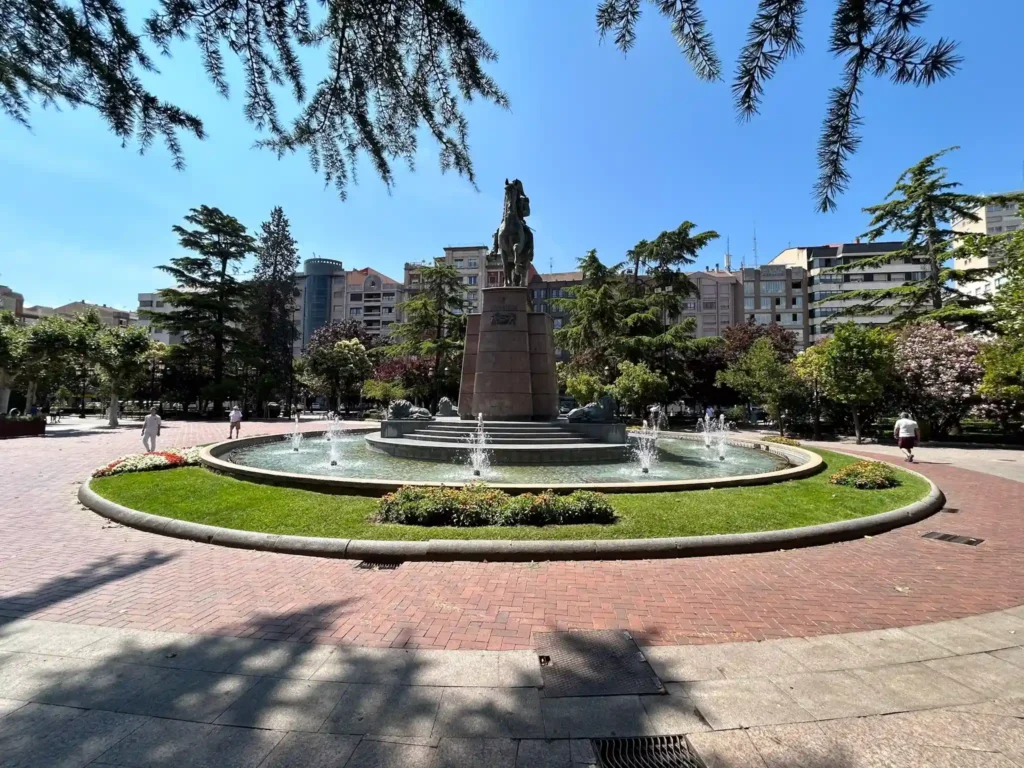
Don’t miss exploring the Espolón Park, which dates back to the early 19th century and originally got this name due to its location outside the city walls. In addition to its natural beauty, the park has significant historical value, as it pays homage to General Espartero, whose figure is represented in the equestrian statue that presides over it.
Espartero, who was married to Jacinta Martínez de Sicilia, a well-loved woman from Logroño, left a lasting legacy in the city, where he and his wife resided after his political retirement in what is now the La Rioja Museum, in Plaza San Agustín.Another highlight of the park is the Concha del Espolón, an open-air auditorium that hosts concerts and shows throughout the year. If you are interested in learning about the wine tradition of La Rioja, you cannot miss the iconic offering of the first must of the year to the Virgin, which takes place on this very stage during the San Mateo festivals, every September.
12. Logroño City Halls
Logroño has two buildings that serve as the City Hall seat: the Old City Hall and the New City Hall.
- Old City Hall: This building was located in the Los Chapiteles palace, a 16th-century building that functioned as the City Hall for 115 years, until 1980. Today, the palace is a place of historical and cultural interest, where you can enjoy exhibitions and events.
- New City Hall: Inaugurated in 1980, this modern building was designed by the renowned Spanish architect Rafael Moneo and clad in sandstone from Salamanca. Its Neoclassical architecture, with an imposing facade and a clock tower, makes this building one of the most representative symbols of Logroño. It is the current administrative headquarters of the local government and also hosts cultural activities and official events.
Both the old and new buildings are important points of interest in Logroño, each representing a different era in the city’s history.
13. Calle Laurel
A few minutes’ walk from the Paseo del Espolón, Calle Laurel invites you to enjoy one of the best gastronomic experiences in Logroño, famous for its tapas and pinchos. Known as “the path of the elephants,” this narrow and vibrant street is home to more than 60 bars, making it an ideal place to sample a variety of flavors while enjoying a wine or beer—just be careful not to get “trunked”!
At the beginning of Calle Laurel, you will also find the San Blas Market, an ideal place to buy typical products from the region.
As an interesting fact about the name of this street: in times past, women who worked in prostitution lived here, and so that clients would know who was available, they would hang a laurel branch on their balconies. During times of crisis, the street was full of laurel branches, which eventually gave rise to its name.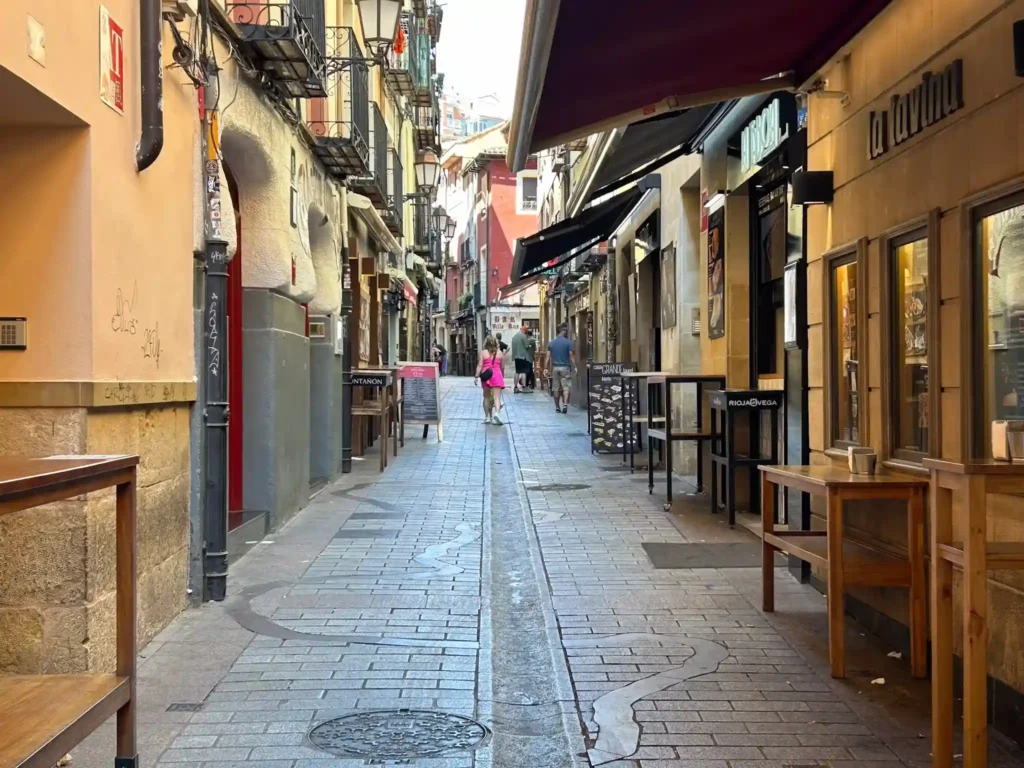
14. Café Moderno
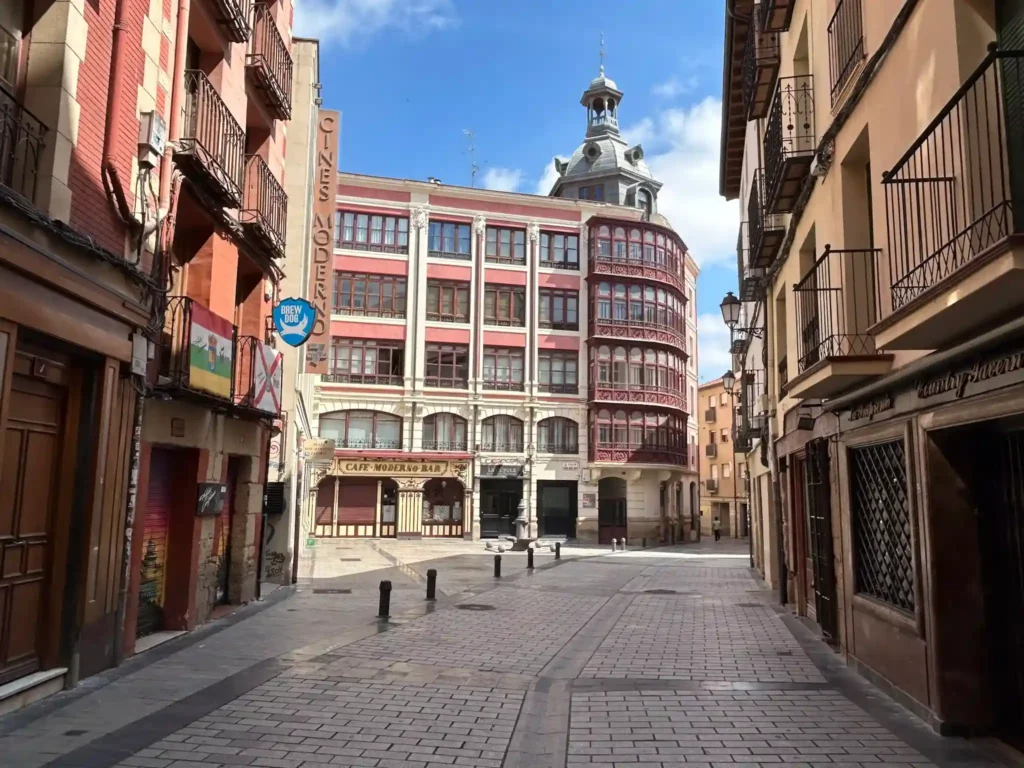
Just a few steps from the Plaza de Santiago and Calle Laurel lies one of the most representative spots in Logroño: Café Moderno, located on Calle Francisco Martínez Zaporta. Founded in 1916, this family business has hosted numerous artists over several generations.
It is especially known for its famous calamari sandwiches, although we could not verify if they are gluten-free as it was closed when we visited. Furthermore, Café Moderno has its own anthem, “Fibra de pájaro,” composed by Daniel Bravo, which plays every Friday and Saturday night, creating a unique and special atmosphere.
15. Visit a winery
Are you a wine lover like us at Glutendtrotters? Then our final recommendation is, without a doubt, visiting one of the wineries in the region. There, you can learn about the winemaking processes and, of course, take home a bottle of La Rioja as a souvenir of your trip. A perfect gift to enjoy the quality of Riojan wines!
Gluten-free in Logroño
Logroño is not only known for its wine tradition but also for its excellent gastronomy, and that includes options for those of us who follow a gluten-free diet! Here, we share some of the best places to enjoy delicious food in the Riojan capital:
Emociones en Boca
Located in the heart of the city, this restaurant surprises guests with carefully crafted dishes and gluten-free options that do not sacrifice flavor. An ideal place for those seeking a different and quality culinary experience.
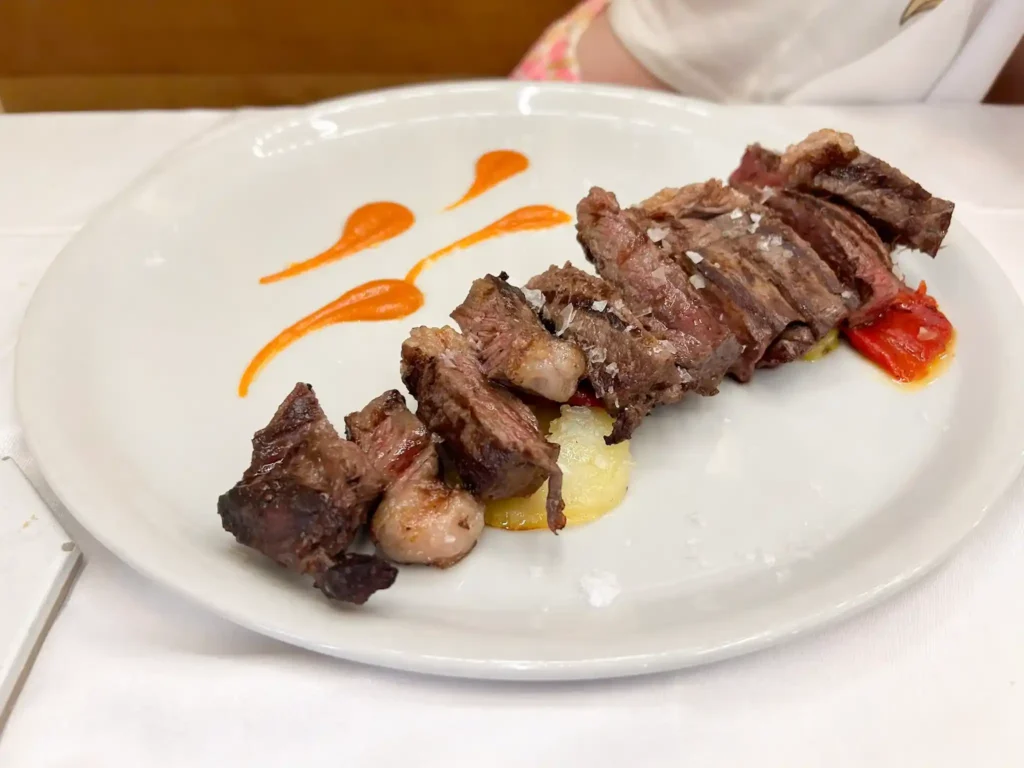
Taberna de Baco
Located a stone’s throw from Calle Laurel, this cozy spot, with incomparable service, combines traditional Riojan cuisine with gluten-free alternatives. It is an excellent option for enjoying a good wine accompanied by delicious tapas.
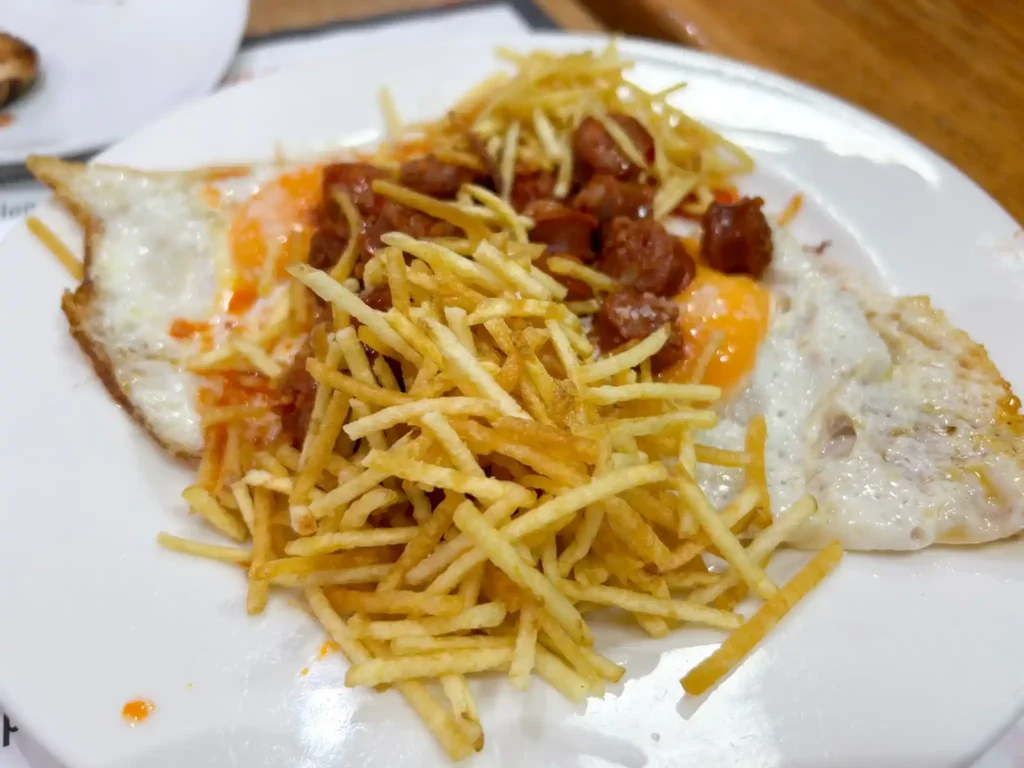
Blanco y Negro
A few meters from the Plaza del Mercado, this bar is famous for its star pincho, the “Matrimonio”: a small sandwich with anchovy and pepper, which you can also enjoy gluten-free. Additionally, they offer other small sandwich options and gluten-free beer.
Bar Jubera
Right in the old town, this bar is ideal for lovers of classic tapas. Their patatas bravas, which are also available in a gluten-free version, are an absolute delight, perfect for pairing with a gluten-free beer.

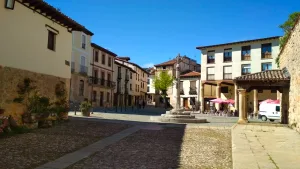
Crepecatessen
Located near the Plaza de San Agustín, this sweet and savory corner is a paradise for celiacs. Their menu includes crepes made without gluten, with both sweet and savory options, ideal for breakfast, a snack, or a quick meal. Website
Where to sleep in Logroño
We couldn’t resist the charms of the Silken Villa de Laguardia to stay during our weekend. Although it is not in the center of Logroño, the facilities and customer service make it worth it for a truly pleasant stay. The hotel has a spa and an outdoor pool surrounded by gardens, as well as a children’s play area. To put the finishing touch on the day, what better than to savor a delicious gluten-free dinner on the restaurant terrace. And if you want to make the most of your visit, do not hesitate to explore Laguardia, which is just a few steps from this wonderful accommodation.
If you prefer to stay in the historic center of Logroño, some of the most recommended hotels are the Sercotel Calle Mayor or the Eurostars Fuerte Ruavieja.
Where to park in Logroño
After exploring Logroño, we discovered that there is free parking right next to the Revellín Wall, which is our starting point in this guide. However, in our case, we opted to park in an underground parking lot on Paseo del Príncipe Vergara, which we accessed easily and is within walking distance of the city’s main points of interest.
Ready to discover Logroño?
Don’t just stick with the idea of visiting a city; live a complete experience in the cradle of La Rioja wines. Plan your getaway now and let the charm of Logroño, its delicious gluten-free gastronomy, and its vibrant history win you over.
If this guide has inspired you, share your experiences with us. What surprised you the most about Logroño? Leave us a comment or share it on social media. Your next adventure, Glutendtrotters, begins here!
Search on the Logroño map
* The cover photo belongs to Canva


