


If you’ve ever had a celiac genetic test, you’ve heard of HLA-DQ2 and HLA-DQ8: the genes doctors check to help rule the disease out. But carrying one of them doesn’t mean you’ll develop celiac disease. As much as 30-40% of the general population carries these genes, and only a small fraction of those people ever become celiac. A new study published on March 25, 2026 in the journal Scientific Reports (part of the Nature portfolio) has identified a set of other genes, unrelated to HLA, that also appear to influence who actually develops the disease.
What we already knew: the (partial) role of HLA-DQ2/DQ8
Celiac disease is an autoimmune condition in which the immune system reacts abnormally to gluten in genetically predisposed people. Almost everyone with celiac disease carries HLA-DQ2, HLA-DQ8, or both, which is why a negative genetic test is such a useful way to rule out the disease. A positive result, though, doesn’t confirm anything on its own: somewhere between 30% and 40% of the general population also carries these genes without ever developing celiac disease. That gap, many carriers, relatively few actual celiacs, is exactly what has kept researchers looking for years for the other pieces of the puzzle.
The new study: who did it, and how
The study, titled “Associations of non-HLA gene polymorphisms with celiac disease in India,” was led by Govind K. Makharia and Vineet Ahuja at the All India Institute of Medical Sciences (AIIMS) in New Delhi, together with researchers from other Indian institutions, and was published open-access in Scientific Reports.
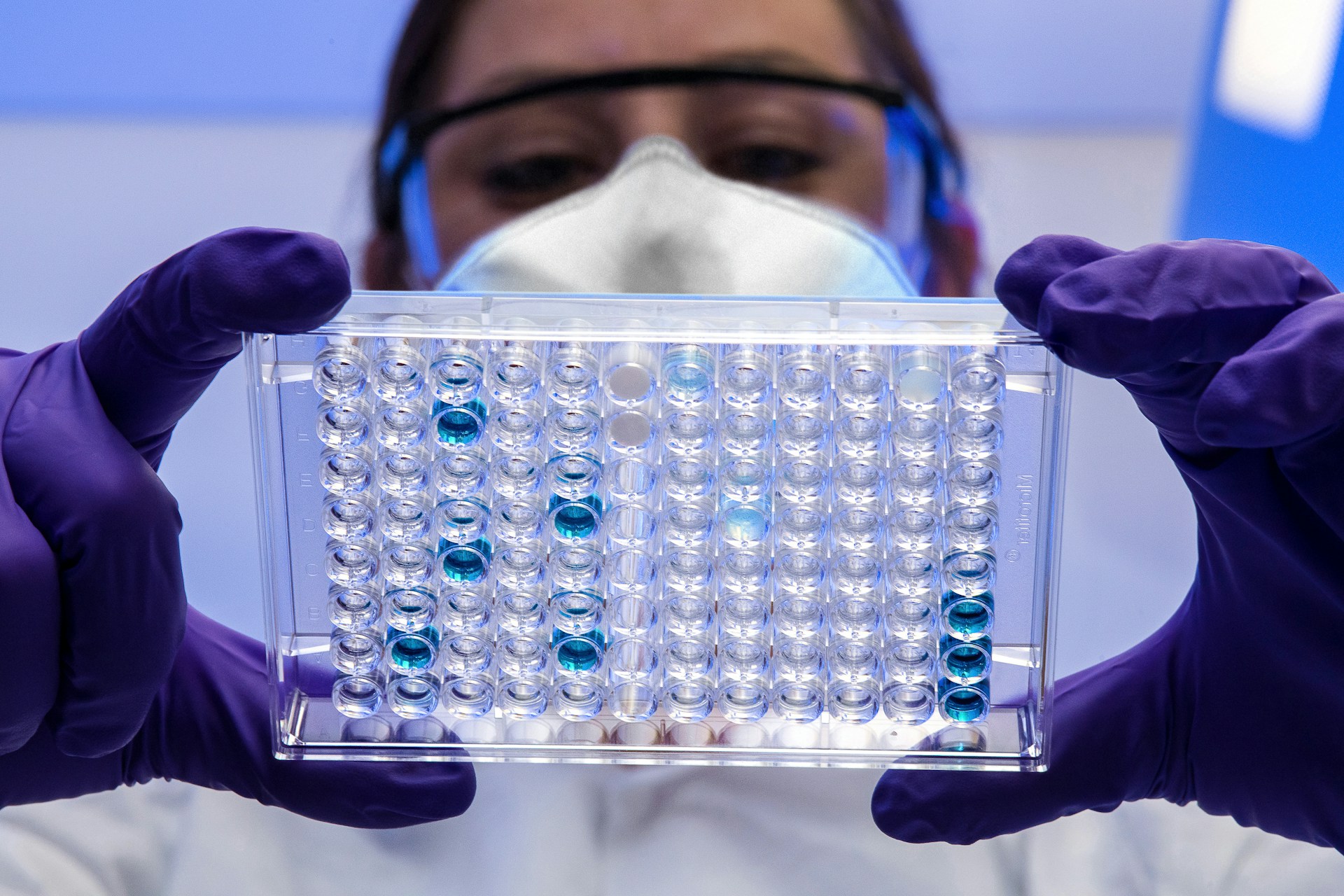
The team analyzed the DNA of 376 people with celiac disease and 736 people without it as a control group, mostly from northern India, with smaller groups from the northeast and south of the country. Using a genotyping method called KASP, they screened 51 candidate genes outside the HLA region for single nucleotide polymorphisms (SNPs), genes that earlier research, in this and other populations, had already flagged as possible suspects.
What they found
The researchers identified 18 genetic variants significantly associated with celiac disease in this population. As expected, the strongest associations were still in the HLA-DQ region. But beyond that region, they found variants in genes tied to four distinct processes:



- T-cell receptor signaling and T-cell activation, the immune cells directly responsible for the reaction to gluten.
- Immune cell migration into the gut, where celiac damage actually happens.
- Intestinal barrier integrity, the layer that controls what passes from the gut into the rest of the body.
- RNA regulation, one of the mechanisms that controls how and when other genes get switched on.
According to the authors, this points to celiac disease not being explained by a single genetic glitch, but by the combined effect of several smaller genetic defects, each with a modest impact on its own, spread across one shared biological pathway: first the underlying immune predisposition set by HLA, and then a series of further steps, T-cell activation, gut permeability, gene regulation, that would determine whether that predisposition actually turns into disease.
What does this mean for people with celiac disease (and their families)?
For now, nothing changes at the doctor’s office. Diagnosing celiac disease still relies on the same combination of blood tests, an intestinal biopsy when needed, and, where relevant, the existing HLA-DQ2/DQ8 genetic test. This is basic research, and it doesn’t introduce or validate any new clinical test ready for everyday use.
What it does offer is one more piece of the puzzle explaining why not every HLA-DQ2/DQ8 carrier goes on to develop celiac disease: if several additional genetic “hits,” on top of that baseline immune predisposition, are needed elsewhere along the same pathway, that would help explain why the HLA gene alone isn’t enough to predict who will actually become celiac. Down the line, mapping out this full pathway could help build more precise risk-stratification tools than today’s genetic test, something that would matter most for first-degree relatives of people with celiac disease, who already carry a higher genetic risk than the general population.
One important limitation is worth flagging, and the authors acknowledge it themselves: this research was carried out in an Indian population, and the frequency of these genetic variants can vary quite a bit between populations. Before assuming these same genes carry the same weight in European populations, the findings would need to be replicated in other cohorts, Spanish and otherwise, which is standard practice in the genetics of complex diseases before generalizing any single result.
In short, this is early-stage basic science: it doesn’t change treatment, which remains a strict gluten-free diet, still the only effective option today, nor does it change how celiac disease is diagnosed. What it does is help fill in the genetic map of a condition that, for decades, was explained mostly by a single gene.



Genetics is only one front where celiac disease research is moving. On the treatment side, researchers have found that an experimental drug could protect the whole body from gluten’s effects, while on the epidemiology side, Coeliac UK and Crohn’s & Colitis UK have just funded a new study on how many people actually live with coeliac disease.
Source: Ramakrishna, B.S., Singh, A., Srinivasan, P., Venugopal, G., Gayathri, R., Ahmed, A., Singh, N., Dutta, S., Ahuja, V., Makharia, G.K. “Associations of non-HLA gene polymorphisms with celiac disease in India,” Scientific Reports 16 (2026). DOI: 10.1038/s41598-026-45159-z.
What are the HLA-DQ2 and HLA-DQ8 genes, and why don’t they fully explain celiac disease?
They’re the genes checked in a celiac genetic test: almost everyone with celiac disease carries them. But so does 30-40% of the general population, without ever developing the disease, which tells us other factors, genetic and otherwise, are needed for celiac disease to actually appear.
What did this new Scientific Reports study find?
A team at AIIMS New Delhi analyzed 376 people with celiac disease and 736 healthy controls and found 18 genetic variants linked to celiac disease outside the HLA region, tied to T-cell activation, immune cell migration, intestinal barrier integrity, and RNA regulation.



Does this replace the current genetic test for celiac disease?
No. This is early-stage basic research. Diagnosis still relies on blood tests, an intestinal biopsy when needed, and the existing HLA-DQ2/DQ8 genetic test, none of which changes based on this study.
Do these findings apply directly to European or Spanish populations?
Not with confidence yet. The study was carried out in an Indian population, and how common these variants are can vary between populations, so the findings would need to be replicated in other cohorts, including European ones, before generalizing them.
What does this mean for family members of people with celiac disease?
Long term, mapping this full genetic pathway could help build more precise risk-stratification tools than today’s test, which would be especially useful for first-degree relatives, who already carry a higher genetic risk than the general population.


