If you are planning a visit to Ramales de la Victoria, get ready to discover everything this charming town has to offer. From stunning natural landscapes to a rich history and culture, there is much to see in Ramales de la Victoria.
The name “de la Victoria” (of the Victory) has its roots in an important battle during the Carlist Wars of the 19th century, where General Espartero and his liberal troops emerged victorious. But the history of Ramales goes back even further. Four centuries earlier, Emperor Charles V left his mark on the Camino Real after disembarking in Laredo. It was his final journey from the town of Laredo to Burgos, following the Asón river basin to head to the Monastery of Yuste, where he would pass away in 1558.
An ancient and artistic legacy
Long before Charles V, one of the most important artistic communities in Europe took refuge in the caves of Ramales de la Victoria, leaving us famous archaeological sites and world-renowned Paleolithic paintings. The Covalanas and Cullalvera caves are witnesses to this impressive prehistoric legacy, offering a window into the past that you cannot miss.
Before your visit to Ramales de la Victoria
🚗 The best way to get around between Ramales and the nearby towns is by car: compare rental options at Discover Cars.
🛡️ We never travel without IATI travel insurance (5% off for Glutendtrotters readers), a must for any trip.
📶 And if you’re coming from outside Spain, a Holafly eSIM (also 5% off for you) keeps you connected from the first minute for maps and schedules.
Things to do inRamales de la Victoria: Must-see tourist spots
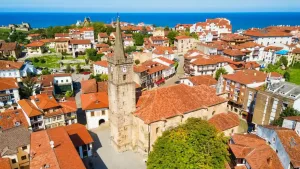
Church of San Pedro
This historical monument is a reflection of the region’s rich architectural heritage. The Church of San Pedro, built in the Gothic style, stands out for its impressive 18th-century Churrigueresque altarpiece. This altarpiece, with its lush and detailed ornamentation, is a masterpiece of Spanish Baroque and is one of the most notable examples of this style in Cantabria. In addition to its altarpiece, the church houses valuable sacred artworks and is a place of great historical and cultural importance.
Church of San Pedro in Ramales de la Victoria
Palace of Revillagigedo
With origins in the 16th century, the Palace of Revillagigedo was rebuilt in the Baroque style, although it was nearly destroyed during the Carlist conflicts of the 19th century. Despite its deterioration, the palace still retains its majesty, with its imposing turrets and large noble stone coats of arms. This historical building offers a fascinating insight into the architecture and history of the Cantabrian nobility. Although it is not in its best state, a visit allows you to appreciate the grandeur of its past eras and the resilience of its structure throughout the centuries.
Palace of Revillagigedo
Church of Nuestra Señora de Guardamino
Located in the Guardamino neighborhood, this church has a close connection to the history of Ramales de la Victoria. Here, the liberal General Espartero defeated the Carlist army of General Maroto in the famous Battle of Guardamino in the spring of 1839, during the First Carlist War. The current structure of the building is the result of a renovation carried out in 1640, directed by Andrés de Landeral, which included the construction of a vault, walls, belfry, and other elements. However, it is believed that the main chapel dates back to the 14th century and that these elements were added later. The main altarpiece, in a 19th-century neoclassical style, houses images dating from the 14th and 16th centuries.
Ermita de San Juan
Located in the Riancho neighborhood, in Gibaja, this small hermitage is an example of late 15th-century Gothic architecture. It consists of a single nave divided into three sections, and its simple and austere design reflects the sobriety of the Gothic style in its final phase.
Church of San Emeterio and San Celedonio
Located in Gibaja, this church features a nave divided into two sections. Its construction began in the early 16th century and it was rebuilt in the 17th century.
Prehistory in Ramales de la Victoria
The Covalanas Cave and the Cullalvera, along with other prominent Cantabrian caves such as Altamira, El Castillo, Las Monedas, Las Chimeneas, La Pasiega, La Garma, El Pendo, Hornos de la Peña, and Chufín, form part of the jewels of Cantabrian cave art. These caves represent a valuable cultural and artistic heritage that allows us to better understand the life and art of our ancestors. Due to their importance and popularity, we recommend booking your tickets in advance, as many of these caves tend to have high demand for visits, especially in high season.
Covalanas Caves
Declared a UNESCO World Heritage Site, the Covalanas Caves are famous for their impressive cave paintings, a jewel in the heart of Cantabria.
Cantabria is brimming with a wealth of caves that few areas in the world can match, and the Covalanas Cave stands out among all of them for several reasons. Located in the vicinity of the illustrious town of Ramales de la Victoria, the Covalanas Cave transports us more than 20,000 years into the past, that is, 7,000 years before the Bison of Altamira, allowing us to understand the life of the original Cantabrians.
Covalanas Cave
Visiting the Covalanas Cave with children is an essential stop whether you are visiting Cantabria or your little ones still don’t know it. The cave offers a combination of adventure and educational experience that children and parents will love. Are you in?
Access and visits
Access to Covalanas is open to the public throughout the year. Given the fragility of the cave paintings, the number of visitors to the Covalanas Cave is limited in order to ensure the conservation of this wonderful natural monument.
To book guided tours, visit the official website. To validate your ticket at the Visitor Center for your visit, you will need to be 15 minutes early near the cave.
Covalanas is one of the most complete caves in Cantabria, with its geological formations in the Music Gallery and its exciting geometric paintings and red does in the Painting Gallery, also known as the Cave of the Red Does. Keep this in mind if you want to visit during the high season.
Main entrance to the Covalanas Cave
History and cave art
The paintings in the Covalanas Cave were discovered on September 11, 1903, by paleontologists Herminio Alcalde del Río and Lorenzo Sierra. This is the second discovery of Paleolithic cave art in Spain, after Altamira. Lorenzo Sierra named it the “Cave of Tools” because of all the archaeological materials found at the entrance, attributable to the Upper Paleolithic and the Lower Middle Ages.
Below Covalanas lies the El Mirón Cave, where human occupations have been documented from 45,000 years ago to the Middle Ages. It is likely that some of the people who inhabited El Mirón were the authors of the paintings in Covalanas, which would explain a complementarity between both caves: Covalanas as an artistic-religious sanctuary and El Mirón as a living space.
The tour of the cave
Upon entering the Covalanas Cave, you pass through an entrance shelter and the cavity bifurcates into two practically parallel galleries: the Music Gallery and the Painting Gallery.
The Music Gallery is a corridor about 40 meters long with two turns; it gets this name because concerts from the 33rd and 34th editions of the Santander International Festival were held there.
The Painting Gallery has a straight length of about 100 meters, narrowing in its final section. It contains 188 red painting motifs, including 18 figures of does, a horse, a deer, an aurochs, and a possible aurochs-human hybrid.
The modest dimensions of the cave create an intimate atmosphere, with narrow passages and wavy reliefs that Paleolithic artists used for their depictions. What is most surprising is how the artists used the natural reliefs of the rock to give the figures volume and realism. The red color and dotted outlines are part of the style of the era, which extended throughout the Cantabrian region.
I want to make a special mention of my cousin, Alfonso Moure Romanillo, a historian, archaeologist, writer, and professor of Prehistory. Thanks to his dedication and work, today we can understand and value this incredible heritage.
The Caves of Ramales de la Victoria (Cantabria): Paleolithic cave art in the Covalanas and La Haza caves by A. Moure Romanillo, César González Sainz, and Manuel Ramón González Morales. University of Cantabria, 1991.
The Covalanas Cave: A Tribute to Animals and Prehistoric Art
The Covalanas Cave is a tribute to animals and the deep bond that existed between them and prehistoric humans. In this cave, humans take a back seat, highlighting the special relationship that transcended the artistic sphere. It is considered an intimate-style cave, as it is thought that all the paintings were made by a single artist. The figures were created using pictorial techniques, demonstrating that artistic activity was already developed in that era.
Cullalvera Cave
With a length of about 12 kilometers, the Cullalvera Cave in Ramales de la Victoria is one of the largest in Cantabria. Used as a refuge from the Paleolithic era until the Spanish Civil War, this impressive cave opens into the foothills of Mount Pando, surrounded by a charming forest of native holm oaks.
A Natural Monument of Great Value
The Cullalvera Cave is the perfect enclave to understand the relationship between humans and prehistoric caves. Its enormous entrance, 28 meters high and 14 meters wide, impresses from the first moment, emanating a cool draft of air with a constant temperature of 10ºC all year round. These dimensions are maintained for the first 1,500 meters of the tour, offering a unique and accessible experience, even for baby strollers or wheelchairs.
If you’re looking for the best things to do in Santander Fishing Quarter, this guide…
Cullalvera cave entrance
Exploring the Interior of Cullalvera
Although the cave is 12 kilometers long, the visit only covers the first 400 meters. During this journey, you can admire geological formations such as stalactites, stalagmites, curtains, flowstones, and waterfalls, created by the constant action of water, which often springs from the cave forming the Calera River, a tributary of the Asón. An underground river emerges under the walkway when it rains for several days, making the visit even more spectacular.
A Journey to the Past
Inside Cullalvera there are two large lakes, and surprisingly, Paleolithic humans reached 1,200 meters deep. Archaeological materials found in the cave show that it was occupied 13,000 years ago, with remains that include fragmented bones, flint, and ceramics. While humans lived at the mouth of the cave, making tools and consuming food, inside they dedicated themselves to painting.
Cave Art and Speleology
Cullalvera houses red claviform signs and black lines 650 meters deep, and at 900 meters, three black horses. These findings demonstrate contact between different groups of the Paleolithic era. At 1,200 meters deep, there are signs that seem to warn of danger; these are the deepest cave paintings in the Iberian Peninsula.
A Living and Accessible Cave
The visit to Cullalvera is accessible thanks to a ramp, and during the tour, expert guides explain in an educational way how stalactites and stalagmites are formed drop by drop. You can even see marine fossils that are 1.5 million years old. It is a highly recommended visit with children.
One of the most fascinating stories about Cullalvera is the legend of the little shepherdess. It is said that a young shepherdess, looking for her lost sheep, went into the cave without a lantern and could never find her way out. Since then, it is said that those who go into the cave can hear her sobs and laments, an extra incentive to visit this enigmatic grotto.
Plan Your Visit
Entrance to Cullalvera combines perfectly with a visit to the nearby Covalanas Cave, making Ramales de la Victoria a complete destination for the whole family. Secure your visit by booking in advance, especially in summer.
Outdoor Activities in Ramales de la Victoria
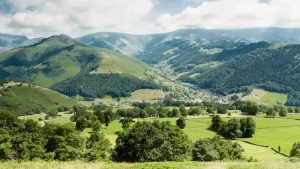
The nature in Ramales de la Victoria and its surroundings is simply spectacular. From the majestic waterfalls of the Asón River to the lush beech and oak forests, every corner will surprise you with its beauty. This is the ideal place for those looking to reconnect with nature and enjoy impressive landscapes.
For nature and adventure lovers, Ramales de la Victoria is the perfect place. You can enjoy a wide variety of outdoor activities.
Pico La Mortera
Hiking
The hiking in Ramales de la Victoria is a unique experience. Going on routes will allow you to immerse yourself in spectacular landscapes, surrounded by lush forests and impressive views. Each step brings you closer to nature in its purest state.
Asón Canyon
Mount Pando
Cubillas Park
Speleology
Speleology (caving) is another popular activity in the area, especially in the various caves that are found here. Exploring these cavities will allow you to discover a fascinating world underground filled with mystery.
Cubillas Park
Climbing
If you like climbing, Ramales de la Victoria offers you walls and challenging routes that will put your skills to the test. The rock formations of the region are ideal for climbers of all levels.
Collados del Asón Natural Park
The Collados del Asón Natural Park is a place where nature shows itself in all its splendor. This protected natural space since 1999 is a unique area of great interest, characterized by limestone outcrops, small beech forests, and unique Cantabrian holm oak groves, along with meadows created by man for livestock farming. This diverse habitat allows for the development of varied wildlife characteristic of the Cantabrian Mountains.
The park is located in an area that has traditionally been very sparsely populated, which has allowed the natural degree of the whole area to be high. Strolling through the Collados del Asón Natural Park is an experience that connects you deeply with nature, offering you the opportunity to see animals in their natural habitat and enjoy the tranquility of a pristine environment.
Torca del Carlista
The Torca del Carlista is one of the most impressive underground cavities in the region, at 349 meters deep in the Picón del Carlista. This cave, located in the westernmost part of the Vizcaya valley of Carranza in the Basque Country, has one of the largest interior chambers in the world. Located under Peña Ranero, a summit of Urgonian reef limestone, its entrance is very close to the top and is part of the Armañón Natural Park.
The Charming Architecture of Ramales de la Victoria
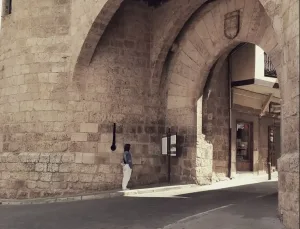
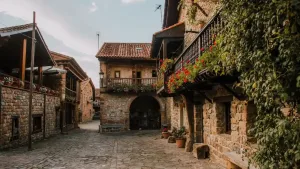
The architecture of Ramales de la Victoria is one of its great attractions, showing the character and tradition of this picturesque Cantabrian town. The mountain houses, with their characteristic wooden balconies and red tile roofs, faithfully represent the traditional construction of Cantabria.
Its cobblestone streets, stone houses, and flowered balconies will transport you to another era. This welcoming and picturesque atmosphere is perfect for those who seek to disconnect from the hustle and bustle of the city and immerse themselves in a quiet and authentic environment.
Crossroads of Paths
Ramales de la Victoria is located at an important crossroads, where the routes that unite the Cantabrian Sea with the plateau and those that connect Bilbao with Santander meet. This strategic location has significantly influenced the development and urban structure of the town.
The main street of Ramales also serves as a road, facilitating transit between different regions. Along this route, you can see the main hallmarks of the town: an architecture that mixes maritime and mountain elements, with wooden and glass viewpoints, and noble stone mansions.
Typical “Indiano” house in the center of Ramales de la Victoria
“Indiano” Houses and Palm Trees
Scattered throughout the municipality, you can find numerous palm trees. These plants indicate that the houses they shade likely belonged to neighbors who emigrated to the Americas. After amassing a small fortune, these “indianos” returned to their homeland and built imposing dwellings, known as “indiano” houses, planting palm trees as a reminder of their adventures in tropical lands.
Festivities in Ramales de la Victoria
Participating in local traditions and festivities will allow you to learn about the customs and culture of the region up close.
San Pedro (June 29)
The patron saint festivals of San Pedro are one of the most anticipated events of the year. This day, the inhabitants of Ramales de la Victoria gather to celebrate with parades, live music, and traditional dances.
San Valentín (June 30)
Just one day after San Pedro, San Valentín is celebrated, another important festivity on the Ramales calendar. It is a tribute to the couples and married people of the municipality.
Verbena del Mantón (First Saturday of July)
Declared a festival of regional tourist interest, the Verbena del Mantón commemorates the distribution of Manila shawls among all the women of the town. This tradition dates back to the time when General Espartero found these shawls in a trunk after the Carlist flight. During the dance, women wear these shawls while enjoying a night of traditional Madrid music such as the pasodoble and chotis.
Nuestra Señora del Carmen (July 16)
The festivity of Nuestra Señora del Carmen is another prominent event in Ramales de la Victoria. With religious celebrations and processions, this festival honors the patron saint of sailors and fishermen. It is celebrated in many towns in Cantabria due to our deep ties to the sea.
Fiesta del Milagruco (September 4)
The Fiesta del Milagruco in Ramales de la Victoria is not only a celebration of community unity, but it is also steeped in a mysterious legend that has endured over the years.
According to the story, during the Carlist Wars, Carlist soldiers caught a glimpse of strange lights in Vegacorredor. Upon approaching, they discovered a witches’ coven performing rituals. In their flight, the witches left behind various magical gadgets and spilled their potions onto these lands.
Concerned about the possible calamities these objects could bring to the town, the inhabitants of Ramales decided to bury them. This action, according to tradition, saved the community from great misfortunes and is considered a miracle, giving rise to the festival of the Milagruco.
Local Gluten-Free Gastronomy
The gastronomy of Ramales de la Victoria is a delight for the palate. This charming town offers a variety of dishes that reflect the rich culinary tradition of Cantabria.
Discovering the city through its flavors is a unique experience, especially when visiting the Charming…
Typical Dishes
One of the most emblematic dishes that you cannot miss is the cocido montañés. This hearty stew, made with beans, cabbage, and pork products, is ideal for replenishing energy after a day of exploration. Its robust flavor and comforting texture make it a favorite for both locals and visitors.
Artisan Cheeses and Sausages
Ramales de la Victoria is also famous for its artisan cheeses and sausages. These products, made with traditional methods, offer an explosion of authentic flavors that delight the palate. There is nothing like enjoying a good Cantabrian cheese accompanied by a piece of freshly baked bread and a good regional wine.
Fresh Products from the Cantabrian Sea
The proximity to the Cantabrian Sea allows the restaurants and taverns of Ramales de la Victoria to offer fresh seafood. Freshly caught fish and shellfish are prepared with mastery to offer fresh and delicious dishes, full of flavor and nutrients.
Where to eat gluten-free in Ramales de la Victoria
For those with special dietary needs, like us, Restaurante Los Acebos and El Ronquillo are worth considering, though it’s best to check ahead of your visit: according to its own website, El Ronquillo doesn’t have dishes specifically labelled gluten-free on the menu, but is willing to adapt dishes if you let them know in advance; we couldn’t confirm gluten-free options for Los Acebos in its reviews, so we’d recommend calling ahead to check. Either way, no restaurant can guarantee the total absence of cross-contamination, so always confirm the kitchen’s protocol if you’re celiac.
Landscapes of Ramales de la Victoria and rural charm
Finally, the landscapes of Ramales de la Victoria are one of its greatest treasures. Whether from natural viewpoints, rural paths, or mountain peaks, the views will leave you breathless. The combination of mountains, valleys, and rivers creates a unique environment that invites contemplation and photography, being one of the most beautiful aspects of what to see in Ramales de la Victoria.
Valles Unidos del Asón
The Valles Unidos del Asón (United Valleys of the Asón) are an authentic natural paradise that deserves to be explored. This set of valleys offers landscapes of indescribable beauty, with green meadows, lush forests, and crystal-clear rivers. Here, you will be able to enjoy activities such as hiking, mountain biking, and bird watching, all while immersing yourself in an impressive natural environment.
If you want to follow in the footsteps of Charles V, we invite you to discover the sources of two rivers that originate very close to one another: the Gándara and the Asón. These rivers begin their journey together and meet again in Ramales.
Source of the Gándara River
Originally known as the Soba River, this river adopted the name of the place of its birth, La Gándara, located below Peña Becerral. Although its initial flow is modest, it gains strength and volume as it descends. Historically, its banks housed up to 12 flour mills, a flour factory, and three ironworks due to its multiple waterfalls.
Source of the Gándara River Park in Soba
Before reaching the viewpoint, you will find a parking lot and an improved trail that crosses a recreational area with tables, located next to one of the old mills, now restored and converted into a Center for the Reproduction of Fluvial Species.
To appreciate the source of the Gándara River, head to the Mirador de la Reina, located beyond La Gándara. It is a metal and glass structure with a grid floor that offers an impressive view of the waterfalls known as “Las Fuentes del Gándara” and the entire valley. The best time to visit is in winter or spring.
Source of the Asón River
To reach the source of the Asón River, you must pass the Collado del Asón and descend a couple of kilometers along the road until you catch a glimpse of the karst wall from which the waterfall of the source emerges. The river is born at an altitude of 680 meters in the Collados del Asón Natural Park, forming a spectacular waterfall over 50 meters high in the shape of a ponytail.
Unlike the source of the Gándara, the source of the Asón can be contemplated up close, right at the point where the water falls in a cascade. On sunny days, the falling water creates beautiful rainbows, adding even more magic to this already impressive landscape.
Source of the Asón River
In short, Ramales de la Victoria is a destination that has it all: nature, history, culture, and delicious gastronomy. No matter if you are looking for adventure or relaxation, this charming town in Cantabria will offer you an unforgettable experience.
And if you have the adventurous soul of the Glutendtrotters, we invite you to discover some nearby places that you will surely love. Are you in?
Explore the Towns Near Ramales de la Victoria
Ramales de la Victoria is a wonderful destination, but there are also several nearby towns that deserve a visit and that will add variety and charm to your trip.
Ampuero
Ampuero is known for its festive atmosphere and its lively traditional festivals. Among its most outstanding events is the Virgen Niña festival and the famous “Semana Grande” (Big Week), where the streets are filled with music, dances, and parades. This town, in addition to its vibrant social life, offers beautiful landscapes and a rich cultural heritage that you will love.
Limpias is famous for the impressive Cristo de Limpias, a sculpture that has attracted visitors and pilgrims for centuries. This quiet town on the banks of the Asón River is perfect for a relaxing visit, allowing you to enjoy its serene atmosphere and historical heritage.
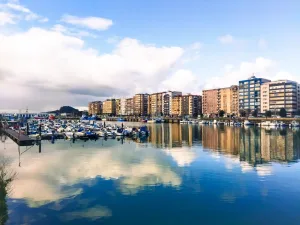
Colindres, another of the charming nearby towns, is known for its fishing port and its gastronomy based on seafood products. Stroll through its old town to discover beautiful stately homes and enjoy a delicious meal in one of its many restaurants with views of the port.
One of the favorite plans for families visiting Cantabria is the Cueva del Valle, also known as the Mammoth Cave, in Rasines. Located in the Asón Region, this cave is a great place to enjoy with your children and spend a family day.
The Paleolithic Park of the Cueva del Valle offers an educational and exciting experience, perfect for introducing children to the world of caving in a safe way. During the visit, you will be able to explore an impressive cave, walk along routes that include an old mine and the Silencio River with beautiful wooden bridges, and admire a life-size mammoth that delights the little ones.
This route is a door open to the cultural and natural diversity of Cantabria. Dare to explore and be amazed by these fascinating destinations!
This guide on what to see in Ramales de la Victoria and its surroundings invites you to immerse yourself in rich history, admire impressive landscapes, and live a unique experience. Discover and let yourself be enchanted by its incomparable beauty!
When is there a street market in Ramales de la Victoria?
The street market in Ramales de la Victoria is held on the third Tuesday of every month.
Where can you swim in Ramales de la Victoria?
Besides the municipal swimming pool that opens every summer, you can swim in the river as it passes through Cubillas Park (right next to the municipal pool), and you can also take a dip at the source of the Gándara River, although the water coming from the source is very cold. In the Asón River you will also find pools where you can cool off.
Which river runs through Ramales de la Victoria?
The river that runs through Ramales de la Victoria is the Asón River. Nearby, in Soba, you’ll find the source of the Gándara River, a tributary of the Asón, with a viewpoint overlooking its waterfalls.
Where can you eat gluten-free in Ramales de la Victoria?
Restaurante El Ronquillo states on its own website that, although it doesn’t have dishes specifically labelled gluten-free, it is willing to adapt dishes if you let them know in advance. For Restaurante Los Acebos, we couldn’t confirm gluten-free options through its official channels, so we’d recommend calling ahead. No restaurant can guarantee the total absence of cross-contamination.
What prehistoric caves can you visit in Ramales de la Victoria?
Ramales de la Victoria is home to the Covalanas and Cullalvera caves, with Paleolithic cave art. Access to Covalanas is limited to preserve it, so it’s best to book the guided tour in advance on the official Cantabria Caves website, especially in summer.
MAPOF RAMALES DE LA VICTORIA
Comparte en tus Redes Sociales
Rita
¡Hola, soy Rita! Cofundadora de Glutendtrotters y experta en turismo con más de 20 años en el sector hotelero. Apasionada de los viajes y mamá de tres hijas, comparto destinos y consejos para disfrutar aventuras inclusivas, especialmente para celíacos. Me encanta el teatro, la moda y una copa de vino al final del día.