

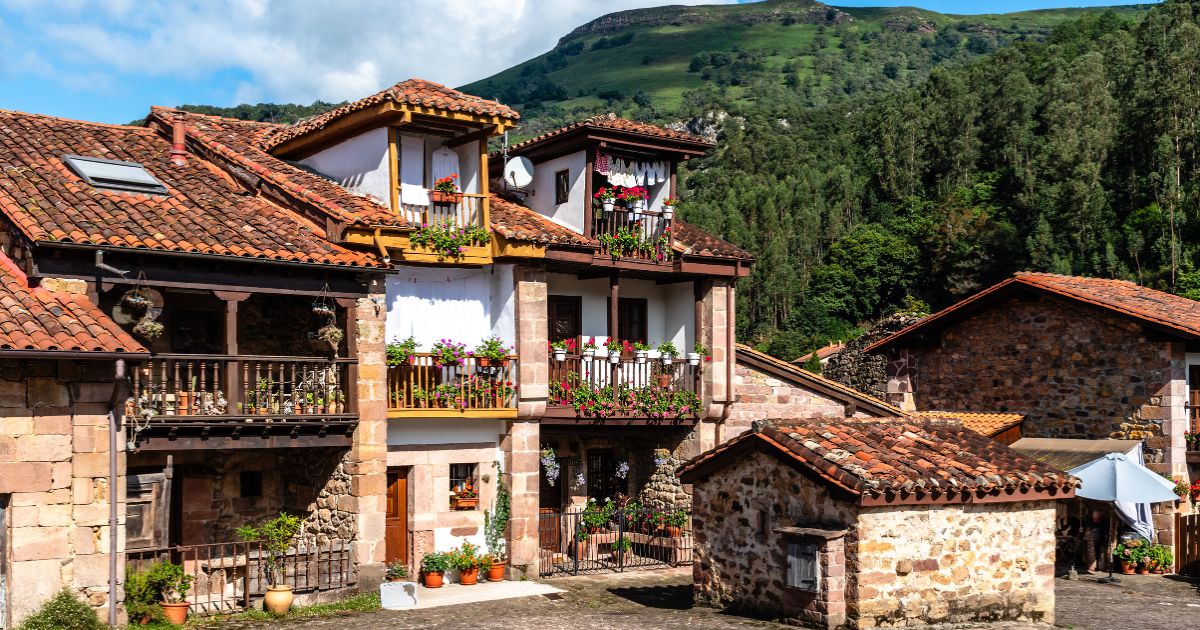
Some villages you visit, and others stay with you for good. Carmona, in the heart of the Cabuérniga Valley in Cantabria, northern Spain (not to be confused with the Carmona near Seville), is undoubtedly one of the latter. With barely 60 inhabitants, its cobbled streets, wooden balconies overflowing with geraniums, and that unique mountain silence invite you to switch off from the bustle. It also has a thoroughly deserved cinematic air: its corners have served as a film set.
We first set foot in Carmona completely by chance. Back then, Manuel and I loved getting in the car with no fixed destination and letting the road decide for us. Following a sign in the middle of the valley, we discovered this magical corner. We went back a second time, again just passing through, when the road was closed for the 10.000 del Soplao cycling race and we stayed to enjoy the atmosphere and the race.
In this article we tell you everything you need to know: what to see in Carmona, how to get there, and where to eat gluten-free in the area. Get ready to plan your getaway to one of the Most Beautiful Villages in Spain.

🚗 Carmona is in a rural part of the Cabuérniga Valley, so the easiest way to get around is by car, whether it’s your own or a rental: compare options at Discover Cars.
🛡️ We never travel without IATI travel insurance (with a 5% discount for Glutendtrotters readers). It’s essential on any trip.
📶 And if you’re visiting from outside Spain, a Holafly eSIM (also with a 5% discount for you) keeps you connected from the moment you arrive, so you can check maps and timetables.
A Historic-Artistic Site in the Quivierda Valley
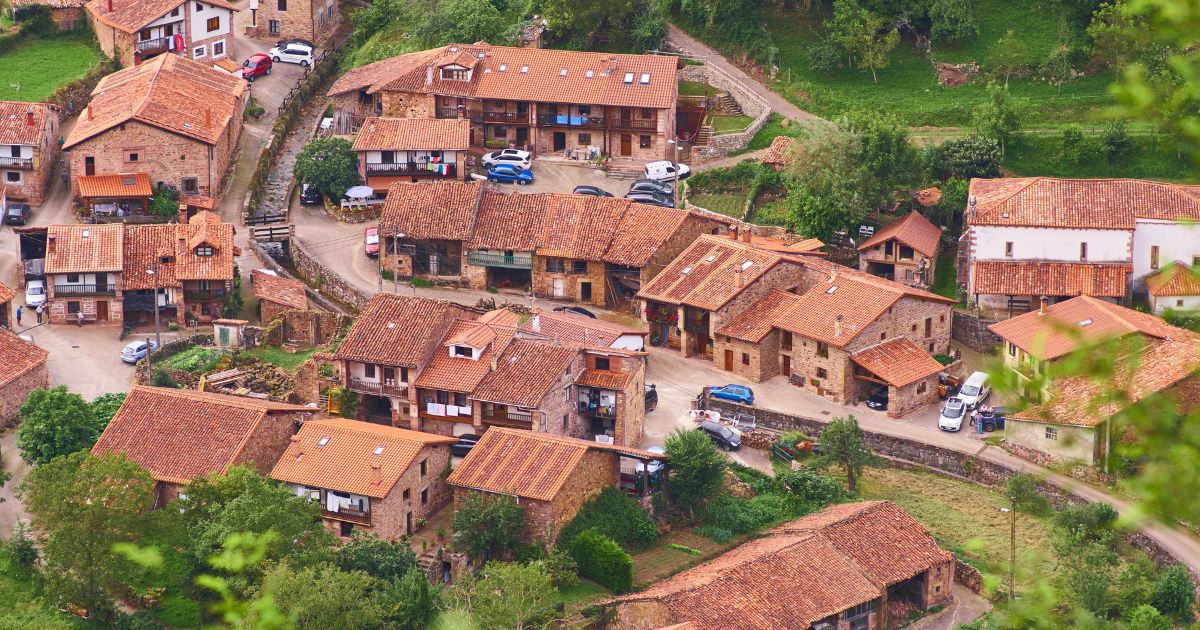
Carmona sits on the flat ground that the Quivierda River leaves between the mountains, within the Cabuérniga Valley. It’s a very particular model of village planning: the houses cluster together in an extraordinarily compact way, leaving as much land as possible for farming, the result of centuries of a mixed economy based on cattle raising (above all the Tudanca cow, a native Cantabrian breed) and subsistence farming.
That traditional way of life is exactly what earned it its designation as a Historic-Artistic Site (Conjunto Histórico-Artístico) and its place in the association of The Most Beautiful Villages in Spain, alongside others such as Bárcena Mayor and Santillana del Mar. Walking through Carmona means walking through a village that is still alive just as it was generations ago, not through a reconstruction designed for tourism.
What to See in Carmona
Traditional Architecture: Stone and Wooden Balconies
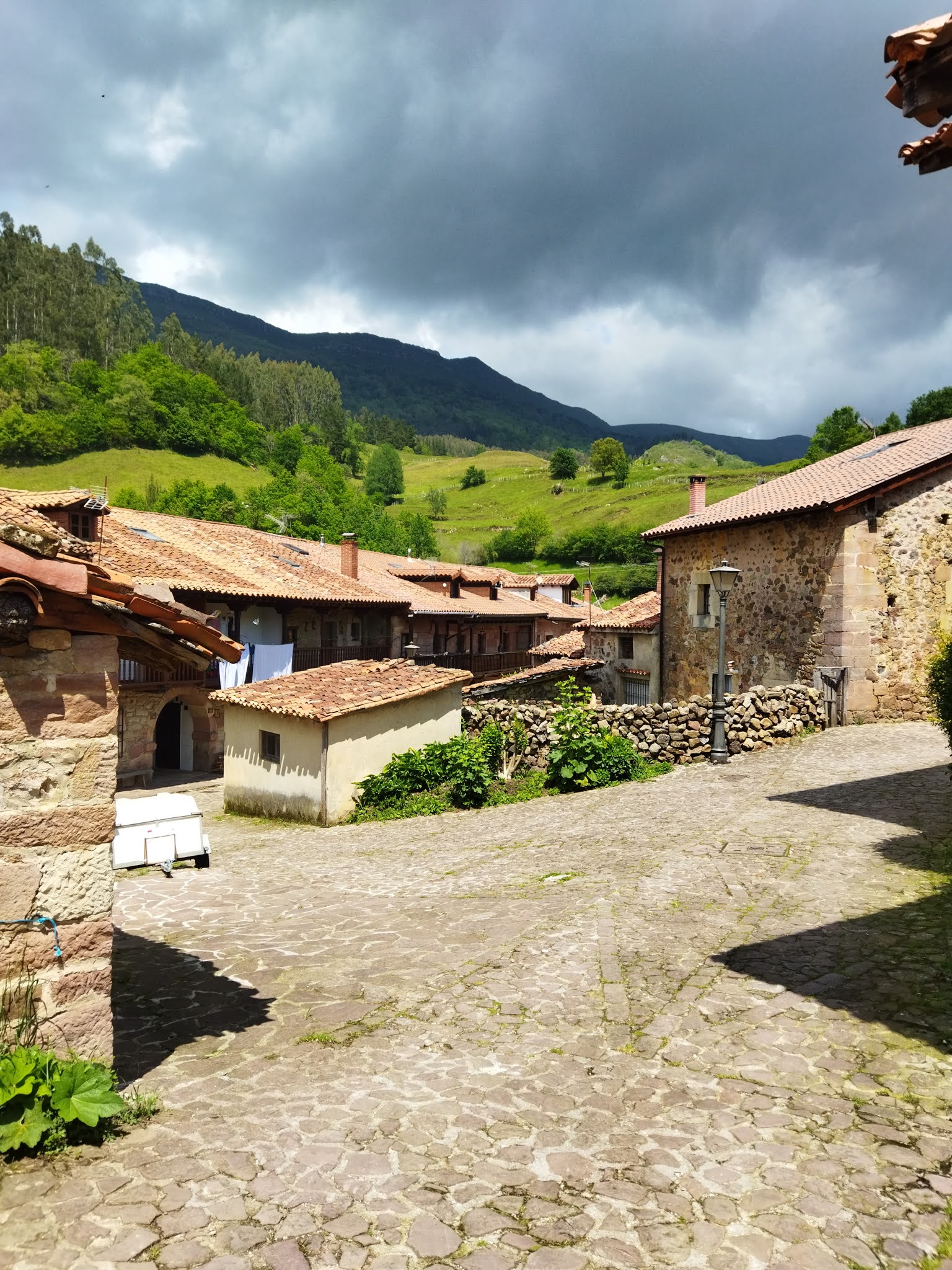
The first thing that wins you over in Carmona is its architecture: stone manor houses (casonas) with broad wooden balconies, many of them covered in geraniums in spring and summer. The village is divided into several neighborhoods with names of their own—La Pesa, El Robleu, El Pirujo, and El Otero—each with its own cluster of mountain-style manor houses that have survived almost intact through the centuries.
There’s no rush in Carmona: the plan is simply to wander its cobbled streets, notice the details of each wooden gallery (solana), and enjoy the silence, something that is increasingly hard to find in certain corners of Cantabria in high season.
San Roque Church and the Village’s Palaces
The Church of San Roque, neoclassical in style and dating from the 18th century, is Carmona’s main religious building and is worth a stop, even if only to admire its stone façade from the square. A short distance away are two examples of mountain civil architecture: the Rubín de Celis Palace and the Mier Palace, the latter an 18th-century Baroque gem that reminds us that Carmona, despite its size, also had its minor noble (hidalgo) families.
The San Pedro Quarter
The San Pedro quarter holds Carmona’s main square and some of its prettiest arcaded streets, with 17th- and 18th-century porticoes that still shade the locals on summer afternoons. It is also here, next to the bridge over the Quivierda, that you’ll find the restaurant we recommend further down for gluten-free dining.
Mirador del Ribero: The Postcard View of Carmona
If you only have time for one stop, make it this one. Driving up from the Cabuérniga Valley on the CA-281 road, just past the Collada de Carmona (a mountain pass), the Mirador del Ribero (also called the Asomada del Ribero viewpoint) opens up: one of the most beautiful panoramas in Cantabria, with the cluster of Carmona’s houses gathered beside the river, surrounded by meadows, and the Picos de Europa peeking out in the background on clear days.
It’s no coincidence that there’s a traditional folk couplet about this very spot: “If you climb the mountain pass and look out from the Ribero, from there you’ll see Carmona, the flower of the albarqueros.” In just a couple of lines, the couplet sums up what you can see from this point and links to one of the village’s most cherished traditions, that of the albarcas, which we’ll cover next.
The Living Tradition of Albarcas (Wooden Clogs)
That couplet doesn’t call Carmona’s residents “albarqueros” by chance. The area preserves the artisan tradition of making albarcas, hand-carved wooden clogs that for centuries protected the feet of Cantabrian shepherds and farmers from mud and cold. Even today you can still find artisans in Carmona and its surroundings who keep this craft alive, one that best sums up the mountain culture of the Cabuérniga Valley: wood as the central material of everyday life, from the balconies of the houses to the footwear.
Carmona on Screen
Carmona has a movie-set air, and in part that’s exactly what it was: its streets served as a backdrop for Seventeen (original Spanish title: Diecisiete), the film directed by Daniel Sánchez Arévalo, which was released on Netflix in 2019. If you already know the film, you’ll see the village with new eyes; if not, it’s a good excuse to watch it before or after your visit.
Where to Eat Gluten-Free in Carmona
In a village of barely 60 inhabitants, eating options are limited, so this tip is especially valuable: right in the San Pedro quarter, next to the bridge over the Quivierda, Restaurante El Puente is the local go-to for trying an authentic cocido montañés, the hearty Cantabrian mountain stew of beans, cabbage, and cured pork.
It isn’t a member of any celiac association such as ACECAN (the Cantabrian Celiac Association), so, as we always recommend, it’s best to call ahead (booking a table is advisable in any case, given the size of the place) and mention your intolerance when you arrive to confirm their protocol against cross-contamination.
We haven’t eaten there ourselves, but people have told us about it. Tell us in the comments!
How to Get There and When to Go
Carmona is a little over an hour’s drive from Santander, entering the Cabuérniga Valley and climbing the CA-281 road. Since there’s no public transport that gets conveniently to the village, the realistic way to visit is by car, whether your own or a rental (you can compare prices with Discover Cars), which also lets you stop at the Mirador del Ribero along the way.
Spring and early autumn are the best times: the valley is at its greenest and the balconies are in bloom, and you’ll avoid the summer crowds in the Cabuérniga area.
Carmona isn’t a place to tick off a list: it’s one of those villages best enjoyed slowly, with time to sit in San Pedro square and let the afternoon go by. If you combine your visit with other corners of the Saja-Nansa area, don’t miss the Villapresente Maze or the Cantabria Sequoia Forest, a short drive away and perfect for rounding out a single day trip. If you want to extend the trip, the Ucieda Oak Forest and the monastery of Santo Toribio de Liébana are also just a short hop away.
Tell us in the comments whether you already knew Carmona or whether it will be your next getaway in Cantabria. We love hearing about your experiences!
The Cypress Maze in Cantabria Where the Whole Family Gets Lost (Literally)
The Cantabria Sequoia Forest: The Fairy-Tale Spot You Didn’t Know Existed
Frequently Asked Questions (FAQ)
How many people live in Carmona, Cantabria?
Carmona has barely 60 inhabitants, according to the Most Beautiful Villages in Spain association. It is a declared Historic-Artistic Site and lies in the Cabuérniga Valley.
Where is the Mirador del Ribero?
The Mirador del Ribero (or Asomada del Ribero) is on the CA-281 road, just past the Collada de Carmona when driving up from the Cabuérniga Valley. It offers one of the best panoramas in Cantabria, with Carmona beside the river and the Picos de Europa in the background.
Why are Carmona’s residents known as “albarqueros”?
Because of the artisan tradition of making albarcas, hand-carved wooden clogs that for centuries protected Cantabrian shepherds and farmers from mud and cold, and that are still made in the area.
Can you eat gluten-free in Carmona?
Yes. Restaurante El Puente, in Carmona’s San Pedro quarter, has verified reviews from celiac customers confirming that they adapt the cocido montañés and other dishes to avoid gluten. It isn’t a member of ACECAN, so let them know when booking and confirm their cross-contamination protocol.
What film was shot in Carmona?
Carmona served as a setting for the film Seventeen (Spanish title: Diecisiete), directed by Daniel Sánchez Arévalo.
FIND IT ON THE MAP