


Anyone with celiac disease who has ever eaten out has asked some version of this question: were these fries cooked in the same fryer as the breaded onion rings or the chicken tenders? For years, the standard advice has been unambiguous — avoid anything cooked in a fryer shared with gluten-containing foods, full stop, no exceptions. A study published this month in the journal Nutrients is the first to put real numbers behind that risk at this scale, and the answer turns out to be more nuanced than the blanket rule suggests: not a flat yes or no, but a “it depends — and here’s what it depends on.”
What the study actually tested
The paper, titled “Shared Fryers May Not Always Be as Risky for Gluten Cross-Contact in Celiac Disease as Dietary Guidance Suggests,” went online on October 20, 2026, in Nutrients (vol. 18, issue 20, article 3433). The author list includes researchers from some of the biggest names in US celiac care: Vanessa Maltin Weisbrod and Meghan Donnelly McKeon from the Celiac Disease Foundation, Marisa Gallant Stahl and Edwin Liu from Children’s Hospital Colorado and the University of Colorado, Jessica Lebovits and Jackie Jossen from Columbia University’s Celiac Disease Center, and Maureen M. Leonard from Mass General Brigham for Children.
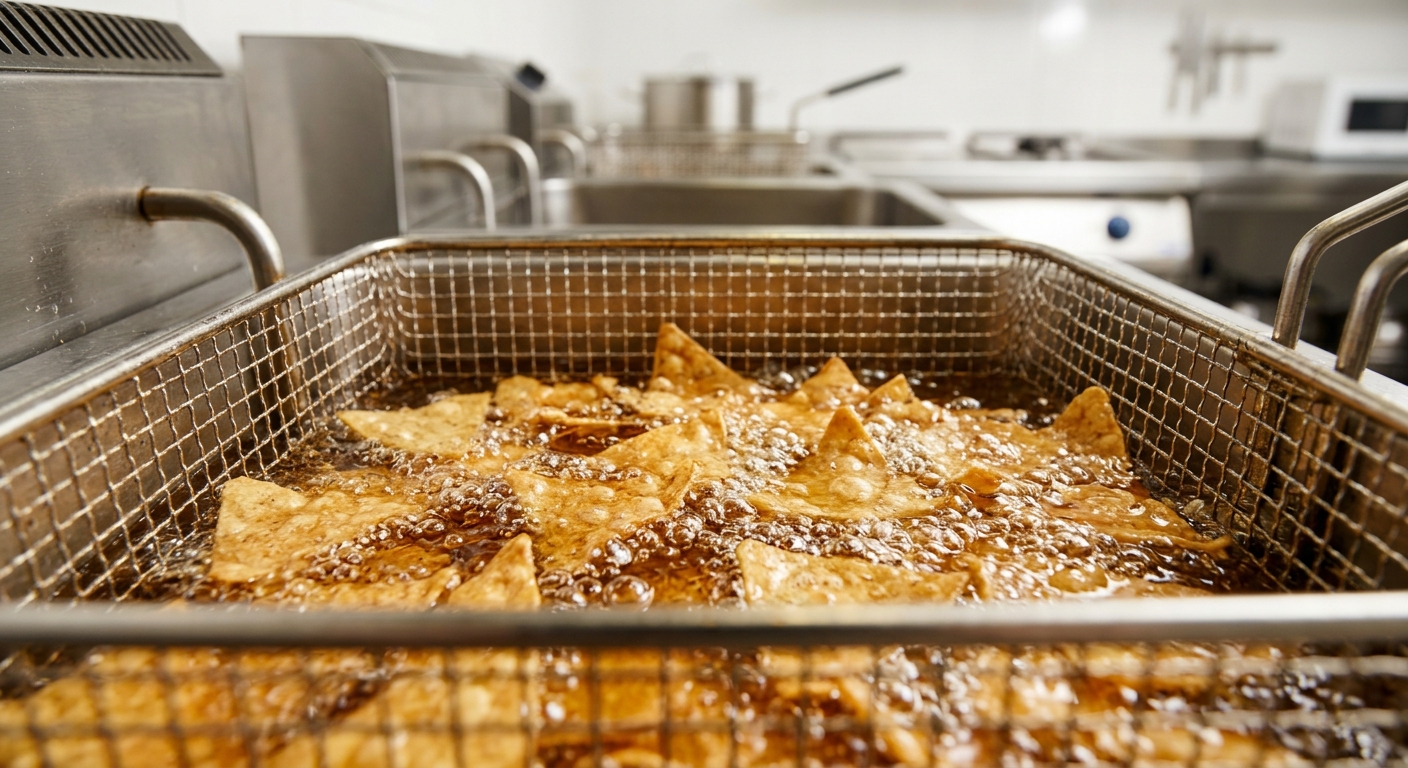
The team collected 98 samples of naturally gluten-free food — 55 orders of French fries and 43 of tortilla chips — cooked in fryers shared with gluten-containing items, from restaurants and food-service venues across 14 US states, between September 2025 and January 2026. Every sample was tested with an ELISA assay, using a 5 ppm limit of quantification and the 20 ppm threshold that both US and EU regulations use to define “gluten-free” labeling.
The numbers that matter
- 84 of the 98 samples (85.7%) came back under 5 ppm.
- 8 samples (8.2%) fell between 5 and 20 ppm.
- 6 samples (6.1%) came in above 20 ppm, with readings as high as over 80 ppm.
The clearest pattern in the data was about the food itself: all six samples above 20 ppm were French fries (6 of 55, or 10.9%). Not a single one of the 43 tortilla chip samples went above even the 5 ppm floor. That gap was statistically significant, though the authors admit they can’t tell whether it comes down to the food, or to how it’s prepared — for instance, whatever else was fried in that same oil beforehand.
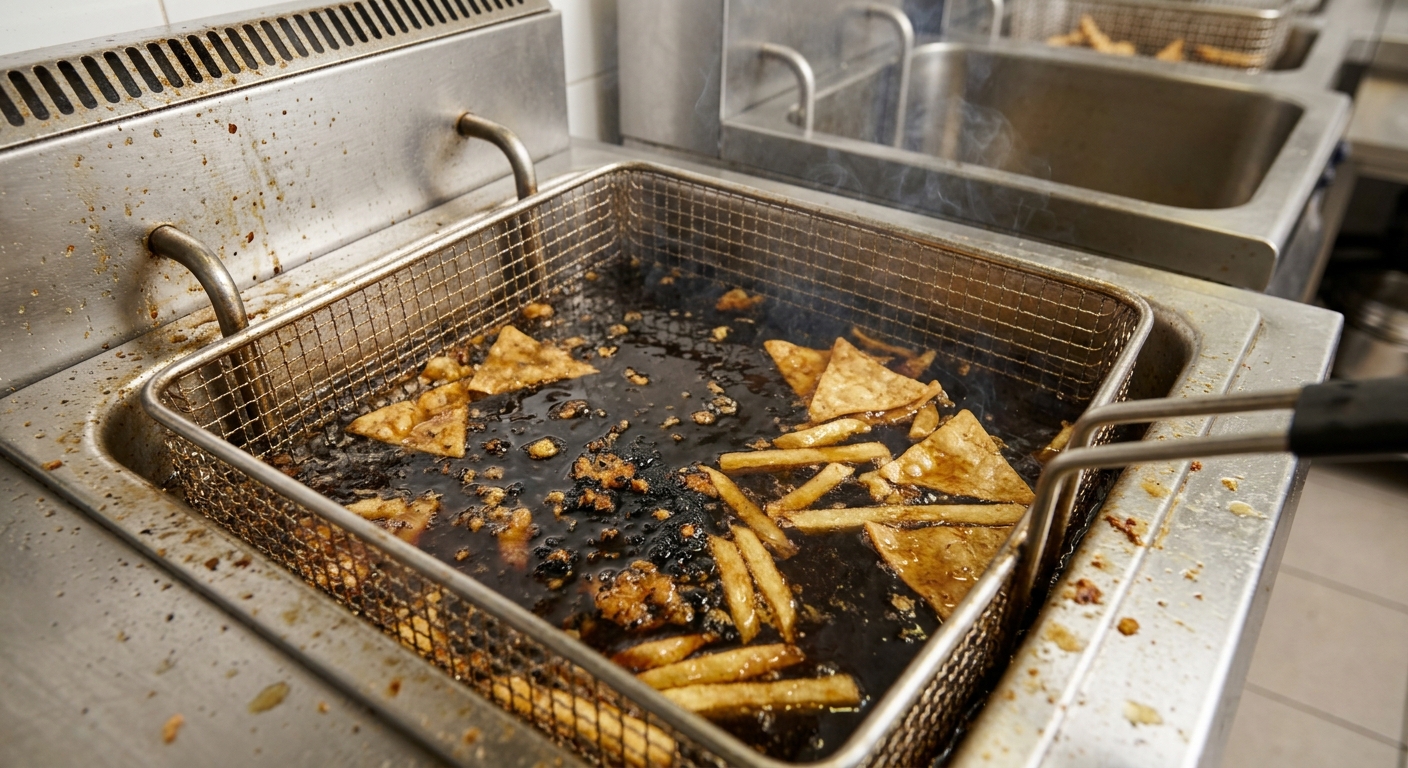
How often a restaurant changed its fryer oil mattered too: among the 39 locations that changed oil daily, zero samples exceeded 20 ppm; among the 35 that changed it weekly, 4 samples did (11.4%); and among the 24 that couldn’t say how often, 2 samples (8.3%) crossed the line. The daily-versus-weekly difference reached statistical significance, but the authors are careful to call it an association, not proof of cause and effect — and with only six exceedances in total, that particular conclusion is riding on very small numbers.
Based on all this, the authors argue that shared fryers “are not inherently high-risk sources of gluten cross-contact” across the board, and make the case that dietitians and physicians should help patients stratify risk rather than enforce a one-size-fits-all ban — the goal being to cut down on the food anxiety and quality-of-life hit that comes from reflexively avoiding every shared fryer when eating out.
The pushback: what Gluten Free Watchdog has to say
Gluten Free Watchdog, which has spent more than 15 years testing gluten-free-labeled products, published its own response that complicates the picture a bit. The group calls the study “a thoughtful reframing” with real merit, but flags one issue it considers significant: the paper doesn’t cite two 2025 FDA-led studies that point to a methodological problem underneath all of this.
Those FDA studies (led by Jiang and colleagues) found that gluten becomes progressively harder to detect by ELISA the longer it sits in hot oil — after ten minutes of frying, only about 44% of the gluten actually present could still be detected. In other words, normal frying temperatures may well interfere with detection, the opposite of what the Weisbrod study assumes, which would mean the measured values here — and in Gluten Free Watchdog’s own 2021 study — could be underestimating how much gluten is really there. The same FDA research also showed that oil reused for ten batches of breaded shrimp climbed from roughly 51 ppm to roughly 260 ppm of gluten, and that proper oil filtration meaningfully cuts residual gluten.
Gluten Free Watchdog’s bottom-line advice, despite appreciating the effort to stratify risk, stays conservative: avoid naturally gluten-free foods cooked in fryers shared with gluten-containing items whenever possible, and favor restaurants that keep a dedicated gluten-free fryer.
Where the study falls short
- Restaurants weren’t randomly selected, which limits how far the findings generalize.
- Oil-change frequency was self-reported by staff, with no independent verification.
- Only one sample per restaurant, on a single occasion — there’s no data on how much a given fryer’s gluten level swings over the course of a day or week.
- Filtration type, oil temperature, and cleaning practices weren’t recorded, even though Gluten Free Watchdog argues all three matter.
- The study measured gluten in the food, not any clinical outcome — no symptoms, no intestinal damage, nothing about what these exposure levels actually do to someone with celiac disease.
- It was conducted entirely in the US; there’s no equivalent data yet for restaurants in Spain or elsewhere in Europe, where kitchen practices can differ.
What this means for your next trip
This study is not a green light to order anything that comes out of a shared fryer. What it does offer is a useful nuance: the risk isn’t evenly spread, and it seems to cluster at restaurants that change their oil less often. Asking whether the fryer is shared, and if so, how frequently the oil gets changed, is a reasonable question with some science behind it now — though as Gluten Free Watchdog points out, even daily changes don’t guarantee zero risk, and a single question can’t capture everything else that matters, like how many batches have already gone through that fryer that day or what else is being cooked in it.
When you’re traveling — where you have far less control over how your food is actually prepared — caution still tends to be the safer bet: look for restaurants with a fryer dedicated solely to gluten-free items whenever that’s an option, especially in places where you can’t easily verify kitchen practices for yourself. As always, this is just one more piece of the broader cross-contamination puzzle: read the menu carefully, don’t be shy about asking questions, and when in doubt, pick something else.
Source: Weisbrod VM, McKeon MD, Stahl MG, Germone M, Nagle S, Jossen J, Lebovits J, Leonard MM, Perl J, Liu E, et al. “Shared Fryers May Not Always Be as Risky for Gluten Cross-Contact in Celiac Disease as Dietary Guidance Suggests”. Nutrients, 2026; 18(20): 3433. DOI: 10.3390/nu18203433. Cross-checked against coverage from the Celiac Disease Foundation (10/20/2026) and the analysis from Gluten Free Watchdog (10/20/2026). This article is for information purposes only and doesn’t replace advice from your doctor or dietitian.
Is it safe for someone with celiac disease to eat fries cooked in a shared fryer?
According to this study, it’s not uniformly unsafe, but it’s not risk-free either: 6% of the samples tested (all of them fries) came in above the 20 ppm threshold, with readings as high as over 80 ppm. The risk is real, just not evenly distributed.
What’s the difference between fries and tortilla chips in this study?
None of the 43 tortilla chip samples went above the 5 ppm limit of quantification, while 6 of the 55 fries samples (nearly 11%) came in above 20 ppm. That difference was statistically significant.
Does changing the fryer oil daily eliminate cross-contact risk?
It cuts it substantially: none of the samples from restaurants that changed oil daily exceeded 20 ppm, versus 11.4% at restaurants that changed it weekly. But Gluten Free Watchdog warns this isn’t a guarantee of zero risk, since gluten can build up between changes and may be harder to detect once the oil is hot.
Why doesn’t Gluten Free Watchdog fully agree with the study’s conclusions?
Because two 2025 FDA-led studies found that typical frying temperatures make gluten harder to detect by ELISA — after 10 minutes of frying, only about 44% of the gluten actually present was still detectable. That suggests the measured values in this and similar studies could be underestimating the real gluten levels.
What should I do if I want to order fries at a restaurant while traveling?
Asking whether the fryer is shared and how often the oil is changed is a reasonable question, but it’s not a guarantee. Whenever possible, it’s safer to choose restaurants with a fryer dedicated exclusively to gluten-free items.