


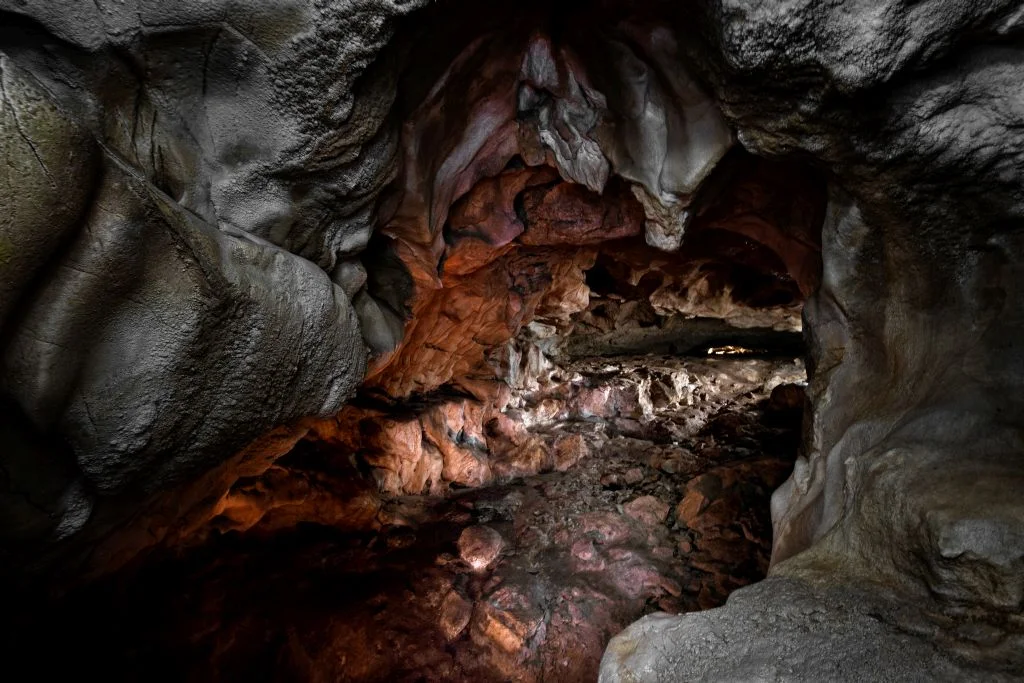
Chufín Cave is a natural monument located in the Nansa River valley, in an area of great beauty in Cantabria. It is located near the Palombera reservoir and the town of Riclones, and was considered a Site of Cultural Interest.
Are you a lover of cave art? Then don’t hesitate, come to Cantabria; you cannot miss it.
This cave owes its name to a character called the Moro Chufín (Moor Chufín), who, according to local residents, hid a treasure inside before retreating due to the advance of the Christians. Hence, it is also called the Cueva del Moro Chufín.
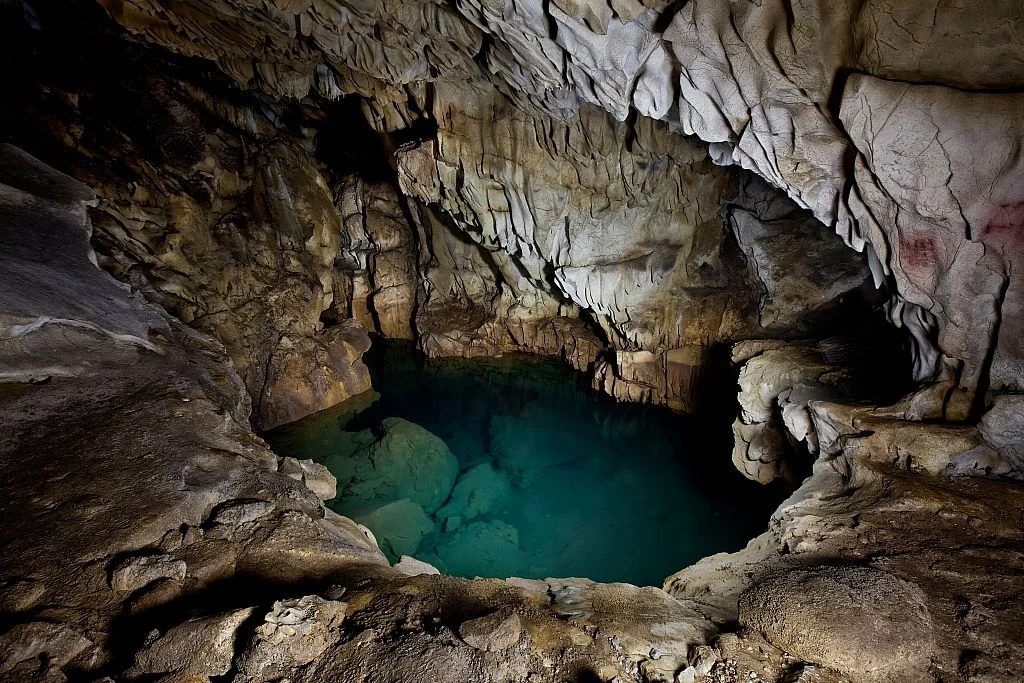
However, the true treasure of the cave is the red paintings that decorate its high ceiling and the exterior engravings, something rare in the cave art of the northern Iberian Peninsula. In recognition of its importance, this cave complex was declared a UNESCO World Heritage Site in 2008.

🚗 The cave is a little off the beaten path with limited public transport, so a car is the easiest way to get there: compare rental options with Discover Cars.
🛡️ We never travel without IATI travel insurance (5% off for Glutendtrotters readers), a must for any trip.
📶 And if you’re travelling from outside Spain, a Holafly eSIM (also 5% off for you) keeps you connected from the first minute to check maps and opening times.
What you will find in the cave
The cave contains two main parietal sets:
- In the exterior area, naturally lit, is the vestibule with carvings of animals such as a bison, an aurochs, a horse, and a large anthropomorph on the rock.
- In the dark area, there is a sanctuary of signs made with red dots, both figurative and abstract, made with fingers and arranged in rows. Access to the inside of the cave is achieved by crawling for the first 4 meters.
The rock art figures seem to have been made at different times throughout history.
This cave also has a unique feature: because water levels are affected by the La Palombera reservoir, a small lake forms in the room of the paintings that did not exist before the 20th century. However, this gives the place an almost magical appearance.
Due to its privileged location, Chufín Cave was excellent for hunting and also served as a control and surveillance point for the surroundings, which explains the continuous occupations over more than 18,000 years.
View this post on Instagram
Although the environment was modified by the construction of the La Palombera reservoir, Chufín Cave remains a place of great beauty.
Its cliffs, lush vegetation, and the constant presence of water make it a truly captivating place to visit.
Visiting and exploring it is an adventure that will stimulate the interest in archaeology for both adults and children.
And if you are passionate about these cultural expressions of Human History, Cantabria is your destination par excellence.

We can boast of having nine caves with Paleolithic art, included by UNESCO on the World Heritage List, which makes this region an unmissable cultural destination.
According to official information from the Visitor Reception Centre for the Caves of Cantabria, each tour of Chufín Cave is limited to a maximum of 6 people. During high season (June 15 to September 15) it is open Wednesday to Saturday from 10:00 to 14:00 and 15:00 to 19:00, and Sundays from 10:00 to 15:00 (closed Mondays and Tuesdays); during Easter week it opens Thursday to Saturday from 9:30 to 13:30 and 14:30 to 18:30, and Sunday from 9:30 to 14:30. It remains closed to the public the rest of the year. General admission costs €15 (ages 13+), with a reduced rate of €7.50 for children aged 4 to 12, seniors over 65, unemployed visitors, students, groups of 11 or more, and people with a disability of 65% or higher; children under 3 go free.
It is best to book your tickets in advance to ensure you don’t miss the opportunity to visit some of the most well-known caves in Cantabria, such as the El Castillo and Las Monedas Caves, the Altamira Cave and Neocave guided tour or El Soplao. These are very popular, so we advise you to have your tickets ready before traveling.
Wondering where to eat gluten-free near the cave? In Cabezón de la Sal (about a 20-minute drive, the main town for the area), Restaurante La Retama states on its own official website that it offers gluten-free options on its menu. As always, no restaurant can guarantee zero cross-contamination, so it’s worth mentioning it to staff when you arrive.
We also leave you our post on 20 perfect plans to get to know Cantabria so you can complete your visit to our community.
Come and tell us if you enjoyed stepping into the shoes of the world’s first creators of art!
You may also be interested in reading the following posts:
What to see in Cantabria in 3 days


Cantabria in 5 days: complete guide
Frequently Asked Questions (FAQ)
How much does it cost to visit Chufín Cave?
General admission costs €15 (ages 13+), with a reduced rate of €7.50 for children aged 4 to 12, seniors over 65, unemployed visitors, students, people with a disability of 65% or higher, and groups of 11 or more. Children under 3 go free. Source: Visitor Reception Centre for the Caves of Cantabria.
What are the opening hours of Chufín Cave?
During high season (June 15 to September 15) it is open Wednesday to Saturday from 10:00 to 14:00 and 15:00 to 19:00, and Sundays from 10:00 to 15:00 (closed Mondays and Tuesdays). During Easter week it opens Thursday to Saturday from 9:30 to 13:30 and 14:30 to 18:30, and Sunday from 9:30 to 14:30. It remains closed to the public the rest of the year, and each tour is limited to a maximum of 6 people.
Why is it called Cueva del Moro Chufín?
According to local residents, the cave owes its name to a character called the Moro Chufín, who is said to have hidden a treasure inside before retreating as the Christians advanced. That’s why it’s also known as Cueva del Moro Chufín.
Why is Chufín Cave a UNESCO World Heritage Site?
Its red paintings and exterior engravings are rare in the cave art of the northern Iberian Peninsula, which led UNESCO to declare the site a World Heritage Site in 2008, as part of the group of nine Cantabrian caves with Paleolithic art.
Where can I eat gluten-free near Chufín Cave?
In Cabezón de la Sal, about a 20-minute drive away, Restaurante La Retama states on its own official website that it offers gluten-free options on its menu. As always, no restaurant can guarantee zero cross-contamination.


