


The ochre buildings and the Medina’s tangled alleyways offer magical moments you won’t forget. If you are planning 3 days in Marrakesh, prepare for an explosion of color and life: palaces, mosques, markets, and gardens make this city an essential destination for any traveler.
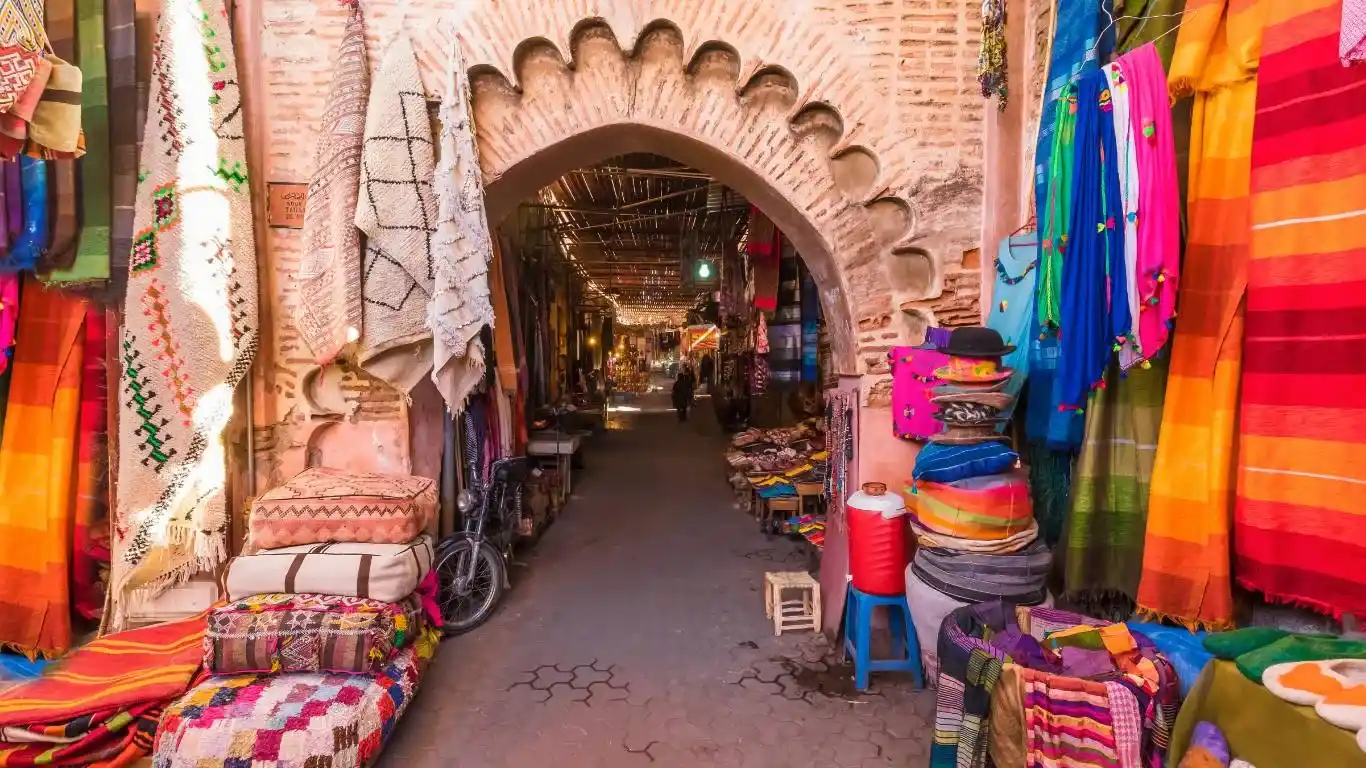
Although three days may seem short, they are enough to fall in love with the city and let Marrakesh leave a lasting impression on your soul, increasing your desire to return and explore more. Being the most visited destination in Morocco, you will encounter many other tourists, no matter the time of year, all eager to discover the charms of this magical city. Therefore, it is crucial to plan your visit carefully to enjoy an authentic and wonderful experience without any mishaps.
Stay connected in Marrakesh without the hassle!
Enjoy unlimited internet with Holafly, the eSIM that keeps you connected while you discover the charms of Morocco.
Get your eSIM here and save 5% with us, or if you prefer, enter the coupon GLUTENDTROTTERS.
START YOUR ADVENTURE WITHOUT WORRIES!
If your stay extends beyond three days, we encourage you to venture out on excursions to the desert or the Atlas Mountains for unforgettable experiences. Morocco offers a range of possibilities that go far beyond its cultural capital.
Our first tip to ensure an unforgettable trip is, if you can, to avoid the summer months during your visit. Temperatures can climb above 40 degrees Celsius (104°F), which can be a bit intense.

Also, shift your perspective, open your mind, and immerse yourself in the rich cultural differences of the country. Remember that you have crossed into another continent to explore the stunning diversity of Africa. Be respectful and kind to the local people and their traditions.
With these recommendations, you are ready to dive into the best that Marrakech has to offer. Prepare yourself for a trip that is sure to awaken your senses and enrich your adventurous spirit. Here is our perfect itinerary:
👉 Book good travel insurance for a hassle-free stay. You can enjoy a 5% discount with us.
🚗 And if you would rather explore on your own for the trips outside the city, you can compare and book your rental car with Discover Cars.
Day 1: History and Culture of Marrakesh
If you really want to immerse yourself in the local culture and live an authentic experience, we recommend staying in a riad. During our first day in Marrakesh, our local guide revealed to us that “riad” means paradise, and you will understand why as soon as you enter one of these charming, ancient Arab palaces. We recommend taking a free tour to get to know the city firsthand.
We recommend reading our post on the best 1-day excursions from Marrakesh
These typical structures are designed around a central courtyard usually adorned with plants and sometimes fountains or pools, whose sound of water adds a touch of tranquility to the environment. Staying in a riad is perfect due to its intimate atmosphere; the most traditional ones have a maximum of ten rooms, creating a cozy and very family-like atmosphere.
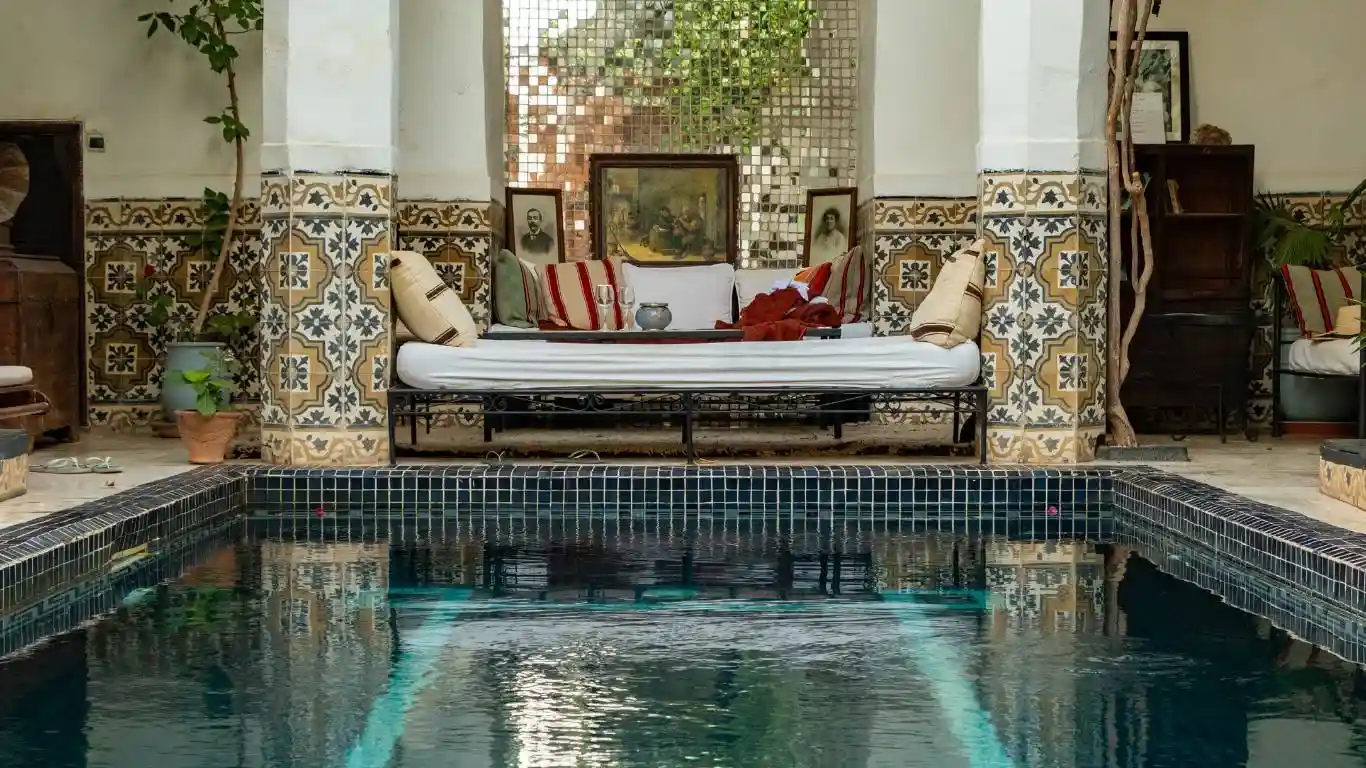
Spending the night in a riad also gives you the opportunity to experience Arab hospitality first hand, enjoy traditional breakfasts and dinners on the open-air “rooftop”, away from the hustle and bustle of conventional restaurants. We promise you it will be an experience you won’t forget.
Additionally, if you have the opportunity, do not miss visiting some of the most famous riads in Marrakech, such as La Mamounia, which offers free entry for everyone to admire its beauty, even if you are not staying there.
View this post on Instagram
In the morning:
The Walls of Marrakesh: Gates and Secrets of the Historic Heart of the City
Surrounding the ancient Medina of Marrakesh is a 15-kilometer wall, a historic barrier that separates the oldest part from the more modern neighborhoods. This essential monument is a key landmark for any visitor. Made of red clay and adobe, the wall has sections where it rises to an impressive height of 9 meters and has 10 spectacular access gates, with the Bab Agnaou Gate, a jewel of the12th century decorated with green Gueliz stone and exquisite bas-reliefs, being one of the most outstanding.
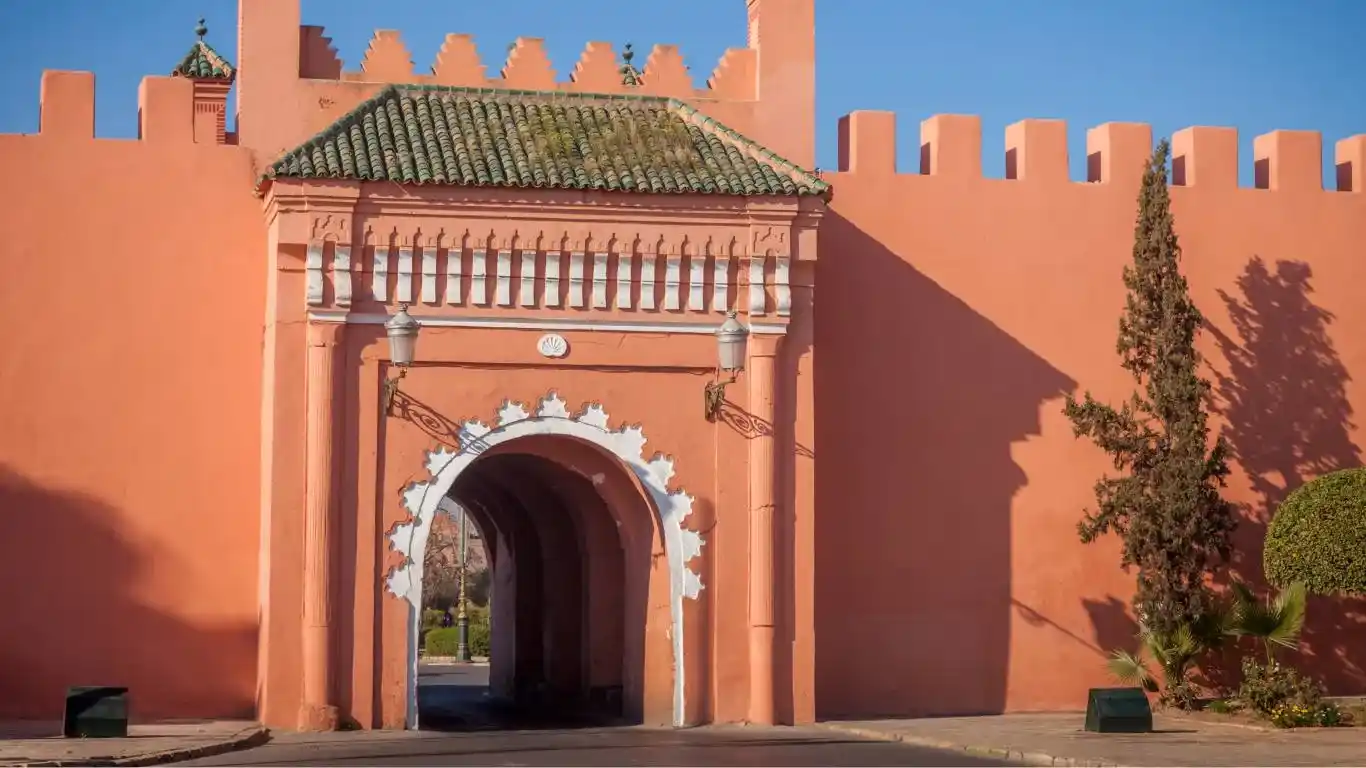
During our walk towards the Bahia Palace, we were able to appreciate the structure and design of the Medina up close. Observing how the atmosphere transforms with the different intensities and angles of light. Exploring other notable gates such as Bab el Robb, Bab Doukkala, Bab el Debbagh, Bab el Jadid, and Bab el Khemis enriches any visit, offering a unique perspective of the rich history and culture of Marrakech.
The Bahia Palace: An Architectural and Cultural Treasure in the Heart of Marrakech
Discover the grandeur of the Bahia Palace in Marrakech, an architectural marvel from the end of the 19th century designed to be one of the most impressive palaces in the world. This splendid palace bears the name “the beautiful one,” honoring the first of the wives of the vizier Si Moussa, which reflects the importance and status she held.
In Islam, a man can marry a maximum of four women, provided he has the financial means to support all his wives and their descendants on equal terms. He must also fulfill his obligations and treat each of his wives with fairness. This cultural context deepens the understanding of the design of the Bahia Palace, whose structure is divided into areas that reflect this marital practice.The palace covers 8 hectares and is organized into three main zones, each designed for different seasons: one for winter, another for summer, and a third for the temperate seasons. Each of these zones is further subdivided into four rooms, individually dedicated to each of the vizier’s wives, ensuring privacy and comfort throughout the year.
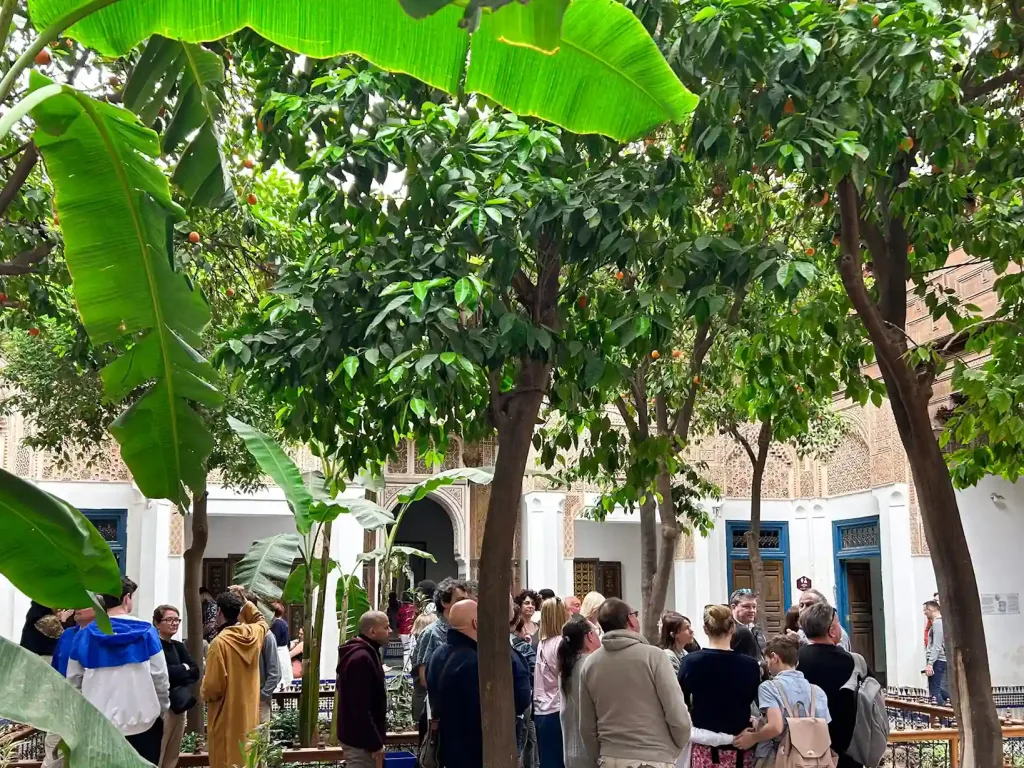
Although the Bahia Palace is located somewhat away from the busy Jemaa El-Fna Square, it is totally worth visiting. Inside, every detail of the decoration captivates the eye: from the meticulous wood carvings on the doors to the artistically embellished ceilings and carefully ornamented walls. The courtyards, decorated with orange trees and fountains, can evoke memories of the Alhambra in Granada for those who have had the privilege of visiting it.
The Bahia Palace is not only a reflection of the rich culture of Marrakesh, but also a window into Arab history and architecture that continues to capture the imagination of visitors from all over the world.
Exploring the Mellah: Journey through the Historic Jewish Quarter of Marrakesh
The Mellah, the historic Jewish quarter inside the Medina of Marrakech, stands out as one of the most intriguing sites in the city. Occupying 18 hectares, this area formerly functioned as a self-sufficient community, equipped with markets, workshops, synagogues, and cemeteries. Despite this, more than 10,000 Jews lived there in conditions of extreme poverty and overcrowding, except for those who held roles as royal advisors. With the turn of the century, from the 19th to the 20th, the more well-to-do members of the community moved to the emerging new neighborhoods, leaving the elderly and less fortunate families in the Mellah.
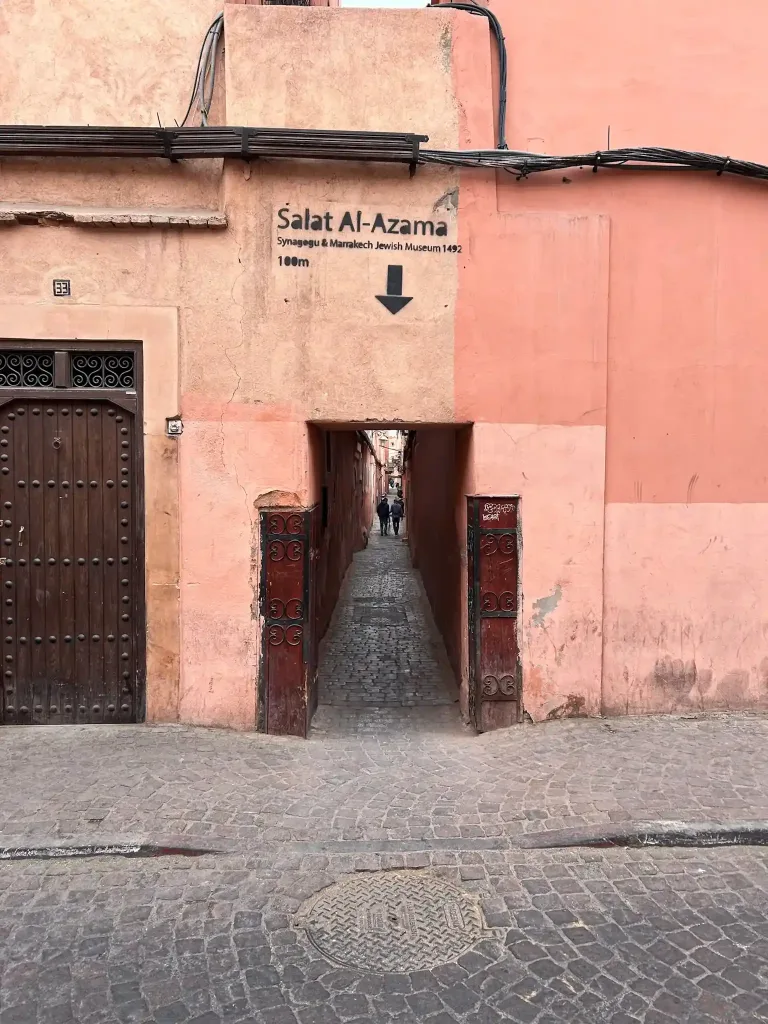
Today, the nearly 300 Jews who remain in Marrakech live mainly in modern neighborhoods, such as Gueliz, where a synagogue is still active. Within the Mellah, the residential structures retain the typical architectural characteristics of Jewish quarters, showing the deep artisanal heritage of their residents.
Two points of interest crucial for appreciating the historical significance of the Jewish community in Marrakech are the Salat Alzama Synagogue, which remains operational despite the disappearance of many others over the years, and the Jewish Cemetery. In the latter, within the enigmatic labyrinth of tombstones irregularly arranged throughout its 52 hectares, several mausoleums dedicated to rabbis and other prominent community figures stand out.
In the afternoon:
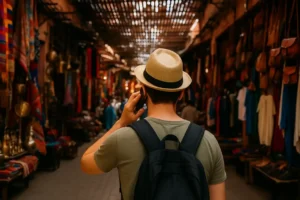
Tour of the Medina and its Souks: Discover Traditional Markets and Learn to Bargain Effectively
Discover the vibrantMedina of Marrakesh, where the main market offers a window into the beating heart of this historic city. Founded approximately in the year 1070 by the Almoravids, Marrakesh served as the capital of this nomadic group and still retains sections of 12th-century walls. In the heart of the Medina is Jemaa el Fna Square, a bustling center of activity and one of the liveliest places in Africa.
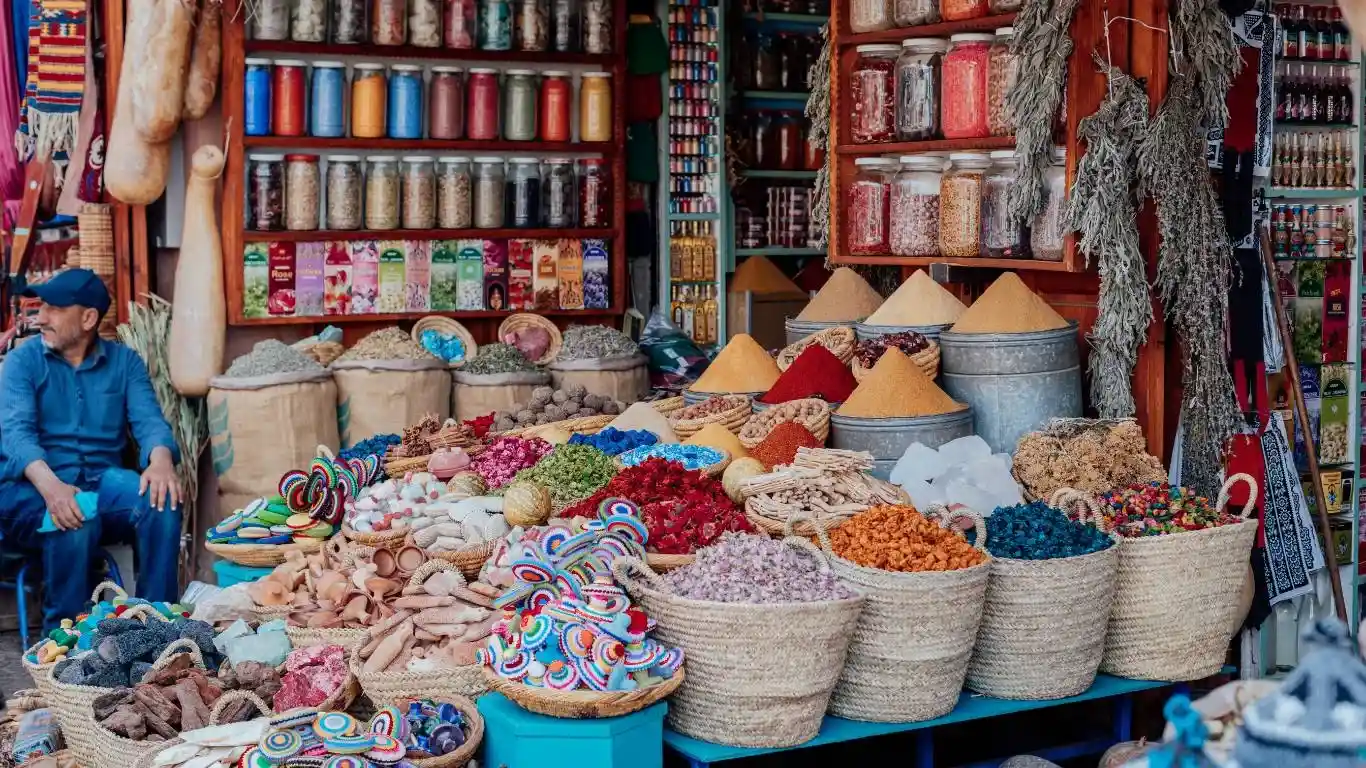
The bargaining in the souk is fundamental, considered an art between buyer and seller, where knowledge of prices and materials is key. According to the advice of the owner of our Riad, you should not offer more than half the initial price proposed by the seller to reach a good deal.
Each section of the souk specializes in different products: the Souk Laksour is famous for its lamps, while the Souk Kchacha stands out for its dried fruits and nuts. The Souk Smata is known for its leather, the Souk Sebbaghine for its dyed fabrics, and the Souk Semmarine for its leather goods. The Souk Ableuh is famous for its olives, and the Spice Square is the epicenter for carpets and spices.
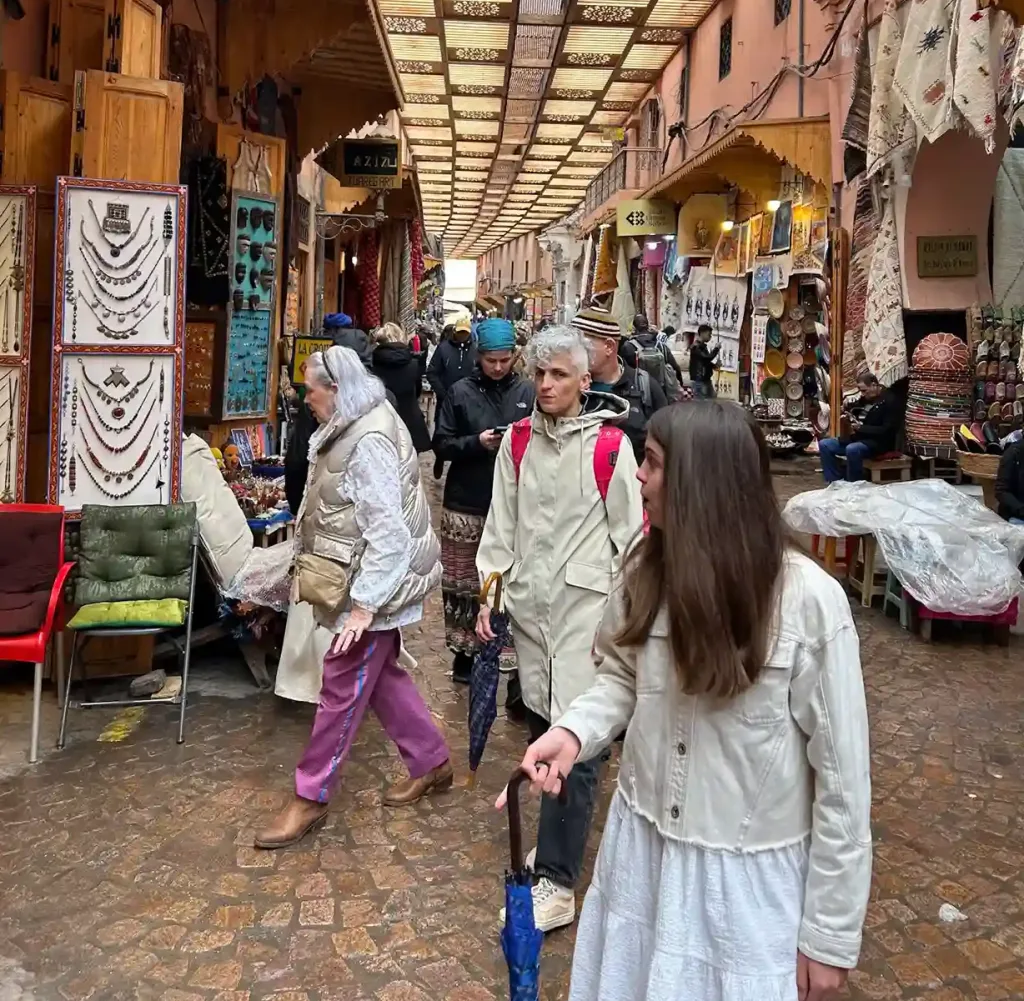
It is difficult to discern between the essential and the superfluous once you enter the captivating souk. However, purchasing babouches (slippers) or handcrafted wallets is almost mandatory, given that Marrakech is a prominent leather producer. Additionally, Fez pottery, with its characteristic cobalt blue, and cosmetic products such as argan oil and kohl are must-haves for any visitor. Don’t forget to take home green tea, dates, and spices, essential for recreating typical Moroccan dishes at home.
At night:
Jemaa El-Fna Square: A Window into the Soul of Marrakesh
Jemaa el Fna Square, located in the epicenter of the old Medina of Marrakesh, serves as the meeting point from which all routes to and from this historic neighborhood branch out. This space is truly the heart of the Medina and captivates visitors with its dynamic transformation throughout the day, offering a spectacle that captures the essence of Marrakesh in every moment.

In the morning, the square vibrates to the rhythm of sunrise. Visitors can watch the city wake up. At sunset, Jemaa el Fna reinvents itself. The setting sun gives way to a scene illuminated by lamps under which local chefs announce their specialties, transforming the square into a bustling night market of typical Moroccan food.
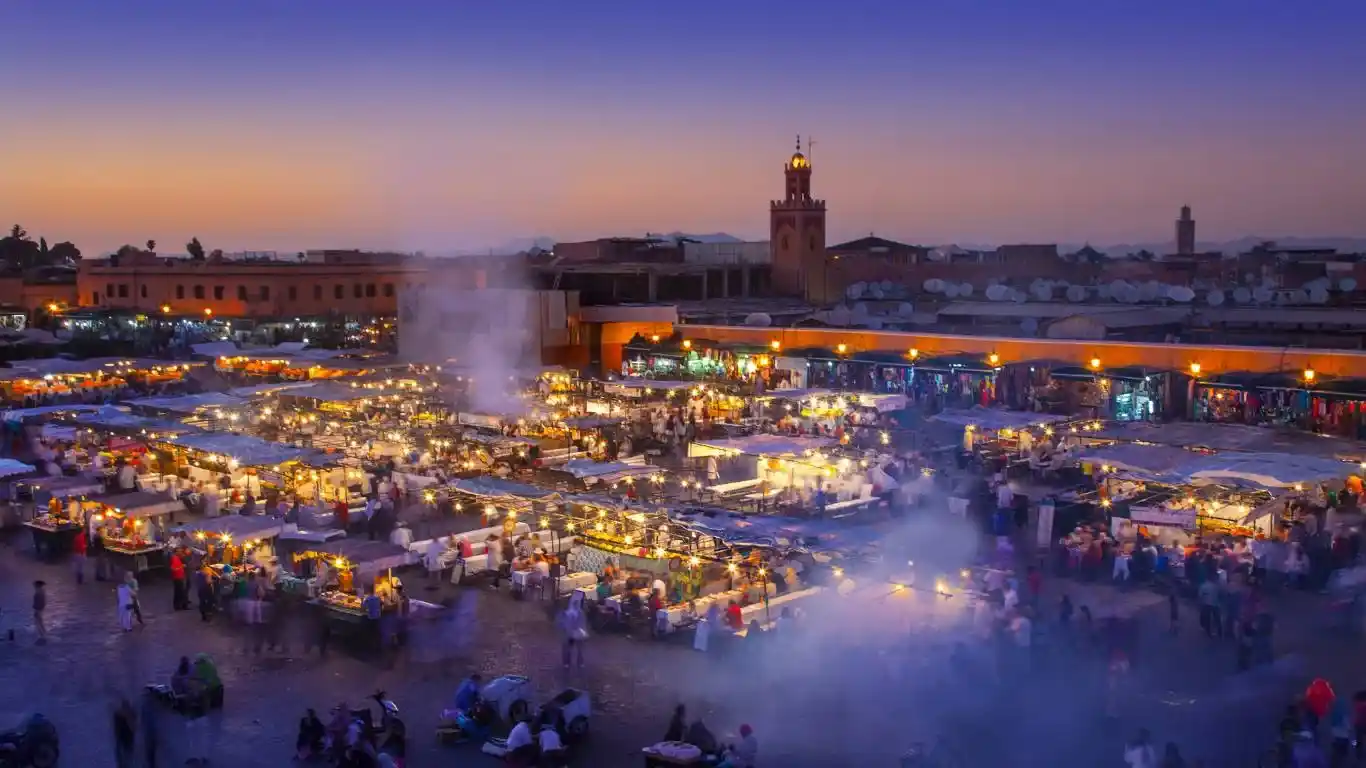
The amalgam of colors, aromas, lights, and the hustle of motorcycles zig-zagging through the crowd on the streets can be intense, but it is definitely worth immersing yourself in this unique experience that captures the vibrant essence of local life in this enigmatic place.
It is important to note that, while Jemaa el Fna Square is a place of rich culture and tradition, unethical practices have also been observed, such as animal shows including monkeys and snakes, which may involve animal cruelty. We urge you not to support these activities and to refrain from contributing financially. Similarly, we recommend you do not give money to children who approach you, as this could perpetuate their exploitation and not help them at all.Day 2: Unique Experiences and Relaxation
In the morning:
Koutoubia: The Majestic Minaret that Defines the Skyline of Marrakesh
The Koutoubia Mosque, also known as the “minaret of the booksellers” due to the historic manuscript stalls that once surrounded it, is a distinctive emblem of Marrakech. Its 69-meter minaret, topped with green tiles, is reminiscent of the famous Giralda of Seville, and it stands majestically on the skyline of the city.
Located very close to Jemaa El-Fna Square, this mosque is the most significant in Marrakesh. The best places to admire the minaret are from the gardens full of fruit trees that surround it, as well as from the terraces of riads and local restaurants, which offer the most Instagrammable perspectives of the minaret.
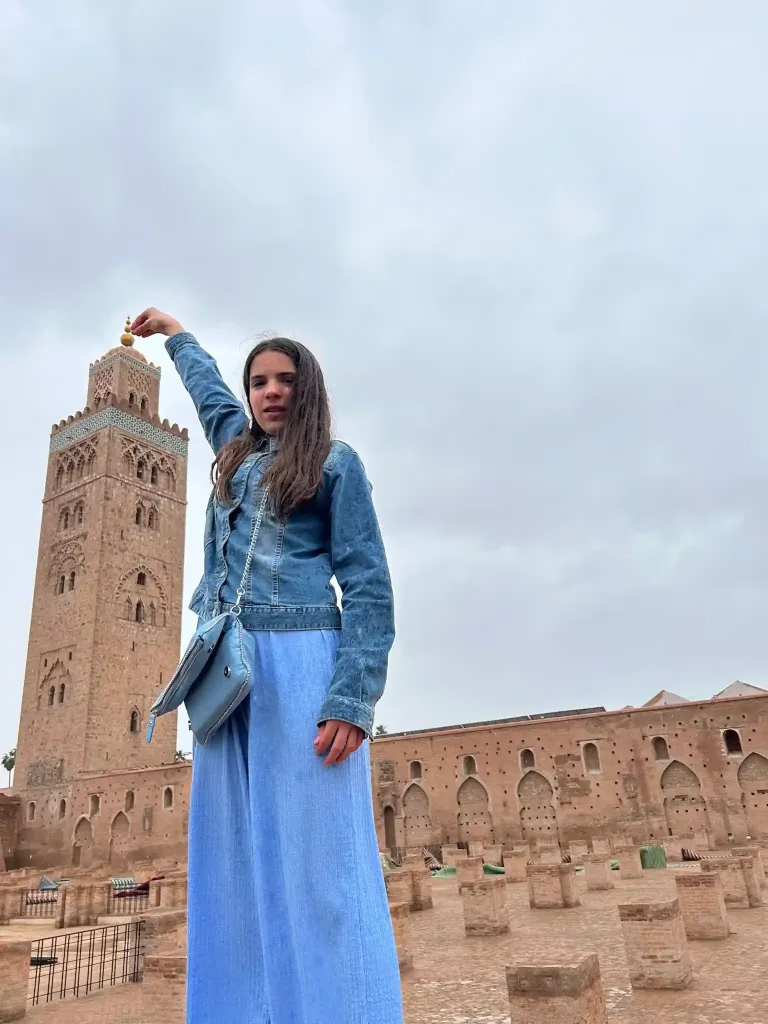
It is important to remember that, as with other mosques in the city, access is prohibited to non-Muslims. However, approaching during the calls to prayer can offer you a deep cultural experience, especially on Fridays, the holy day for Muslims, when the faithful dress in immaculate white to pray.Exploring the Ben Youssef Madrasa: A Treasure of Learning and Art in Marrakesh
If you are planning to spend three days in Marrakesh, an essential visit is the Ben Youssef Madrasa, the most important center of learning in Morocco until its closure in 1960. This prestigious educational institution illuminated minds for nearly five centuries, until it fell into disuse and was forgotten. Fortunately, in 1982, the Madrasa was restored and reopened to the public, allowing visitors to admire its magnificent historical legacy.
Upon crossing the entrance to the Ben Youssef Madrasa, you will be greeted by an inscription that encapsulates its noble mission: “Built for science and prayer by the Prince of Believers, Abdellah, descendant of the prophets. Whoever crosses this door, let him pray for him, that his greatest hopes may be granted.” This welcoming message immerses you in an atmosphere of historical and spiritual depth.
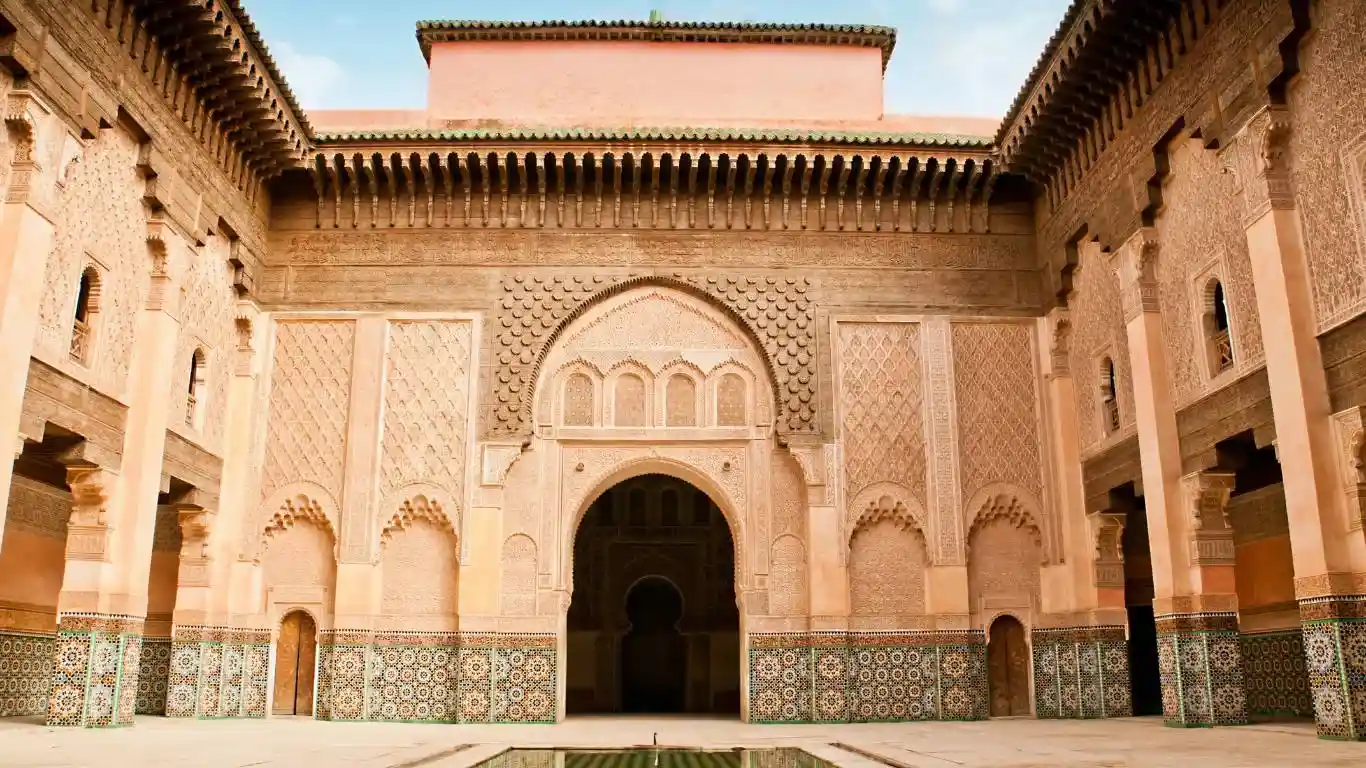
The Madrasa covers 1,720 square meters, organized around a central courtyard. The robust walls and harmonious layout of the space include 130 student cells distributed over two floors. An impressive stucco dome in the shape of stalactites crowns the entrance, and from a long vestibule, you reach the courtyard, whose white marble floor and central fountain contribute to an atmosphere of freshness and calm.
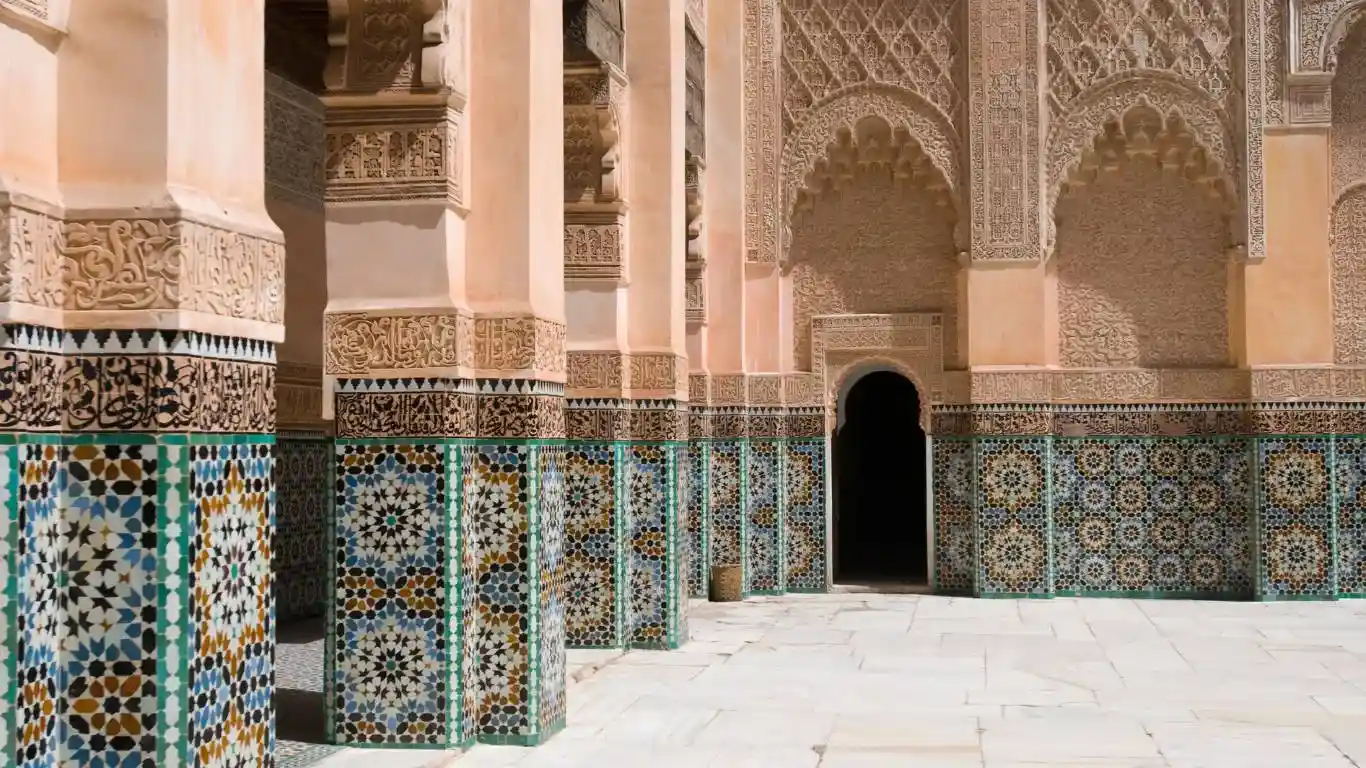
Do not miss visiting the adjacent mosque that bears the same name, Ben Youssef Madrasa. Founded in the 12th century, its minaret rises more than 40 meters above the ground, standing as a symbol of the spiritual and architectural legacy of Marrakech. Together, the Madrasa and the mosque offer an incomparable view of the rich history of the city and a cultural experience that you cannot miss.
In the afternoon:
The Secret Garden: An Oasis hidden in the Medina
Located just five minutes from the Ben Youssef Madrasa, The Secret Garden of Marrakesh is an essential stop that is worth discovering. Although finding it can be a true adventure, especially under the unpredictable Marrakech rain and amidst the sober architecture typical of the city, we believe it is worth it. We, unfortunately, did not manage to find it on our attempt, but we hope you can, and tell us about your experience.
The Secret Garden, or Le Jardin Secret, is part of an old palace built in the 16th century and restored in the 19th century. After falling into disuse and being forgotten since 1934, this charming space was revived by British landscape architect Tom Stuart-Smith. The restoration, which lasted eight years, transformed the place into a splendid Arab-Andalusian style garden open to the public since 2016.
They say that visiting The Secret Garden is like being transported to the time of the sultans. The gentle murmur of water falling from the central fountain creates a calming atmosphere that spreads throughout the garden. This green oasis, located in the heart of the Medina, offers a serene and cool refuge away from the hustle and bustle of the city. With more than 80 species of plants, the garden is divided into two areas: an exotic garden and an Islamic garden, each designed to offer a unique and relaxing experience.
The Secret Garden is not just a place to relax and enjoy peace, but also an opportunity to appreciate the rich history and botanical beauty in the middle of one of the most vibrant cities in Morocco.
Immerse yourself in Relaxation: Experience a Hammam in Marrakech
Visiting a hammam in Marrakesh is one of the must-do activities for any traveler looking to immerse themselves in local traditions. After a day full of discoveries and adventures, there is nothing better than relaxing in these Arab baths, whose origins date back to ancient Roman thermal baths. Fortunately, these spaces traditionally reserved for the local elite are now open to the public and tourists, offering a window into a luxurious aspect of Moroccan culture that was previously exclusive.
Initially, we were torn between choosing a local hammam for a more authentic experience or one more tailored to tourists. After consulting opinions and checking our guidebook, we decided to visit Le Bain Blue. Although perhaps not the most traditional, its quality and service are spectacular.
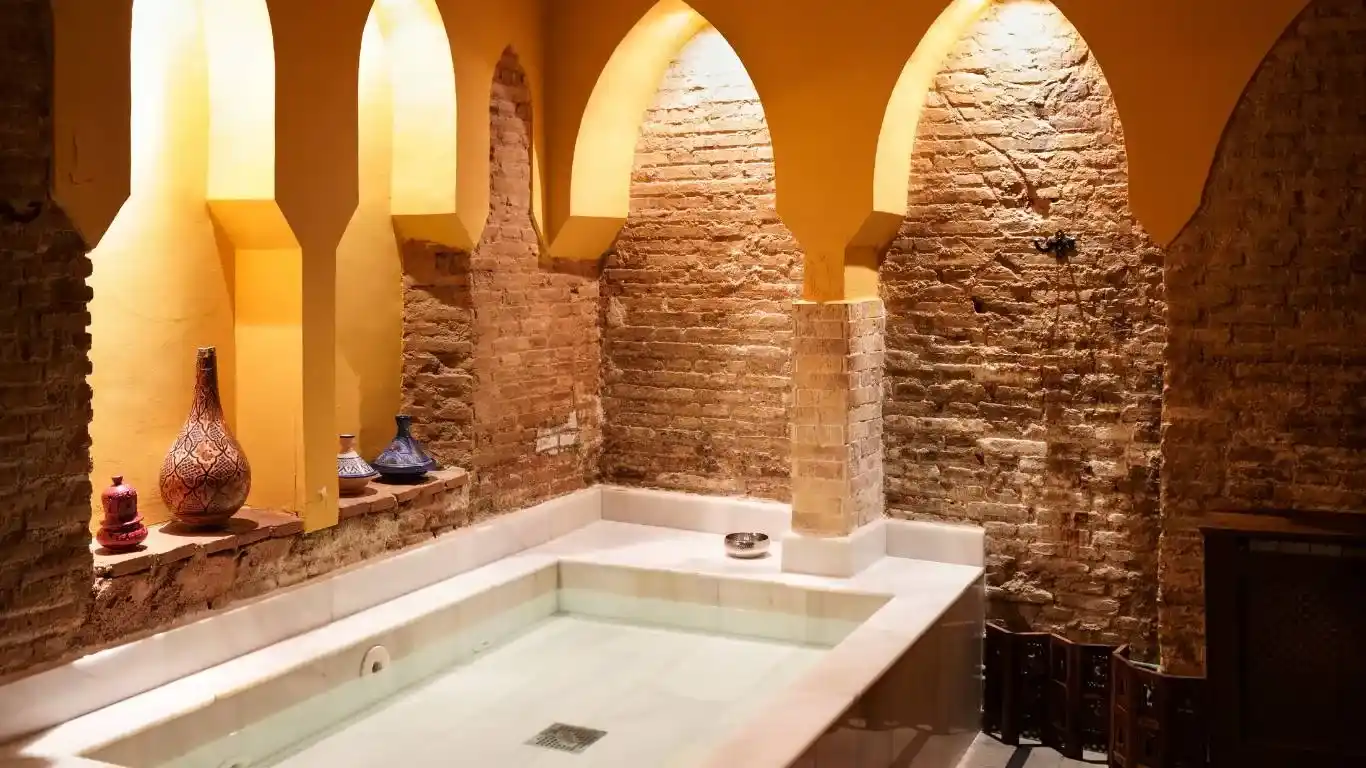
For those who are not familiar, the hammam ritual is a rejuvenating experience that you cannot miss. Everything starts in a tempered room, ideal for relaxing and preparing for the treatment. Then, you are taken to a private room with hot marble floors, where you undergo a deep exfoliation with black soap, removing dead skin cells and revitalizing your skin. The process culminates with a personalized bath, where soaps scented with herbs and argan oil envelop you in a feeling of absolute well-being.
Leaving a hammam is like floating on clouds, such is the relaxation and renewal that this treatment provides. Without a doubt, it is an experience that combines luxury, tradition, and relaxation, and that reflects the hospitable spirit of Morocco.
At night:
Traditional dinners in a Riad: An authentic gastronomic experience in Marrakech
Beyond the vibrant offer of street food and restaurants in Marrakech, a culinary experience you should not miss is enjoying a traditional dinner in a riad. During our stay at the Riad Assou, located in the heart of the Medina, we had the opportunity to live this unique experience. Simply by mentioning our interest, the staff organized a delicious dinner on the “rooftop”, serving us some of the most exquisite typical dishes of the region.
Moroccan hospitality shone through the kindness with which they served us and the dedication put into the preparation of each dish. We enjoyed a typical Moroccan salad and succulent chicken tagines with olives, all served under the light of lanterns that added a magical touch to an already enchanting night. The warm and welcoming atmosphere of the riad made the dinner even more special.
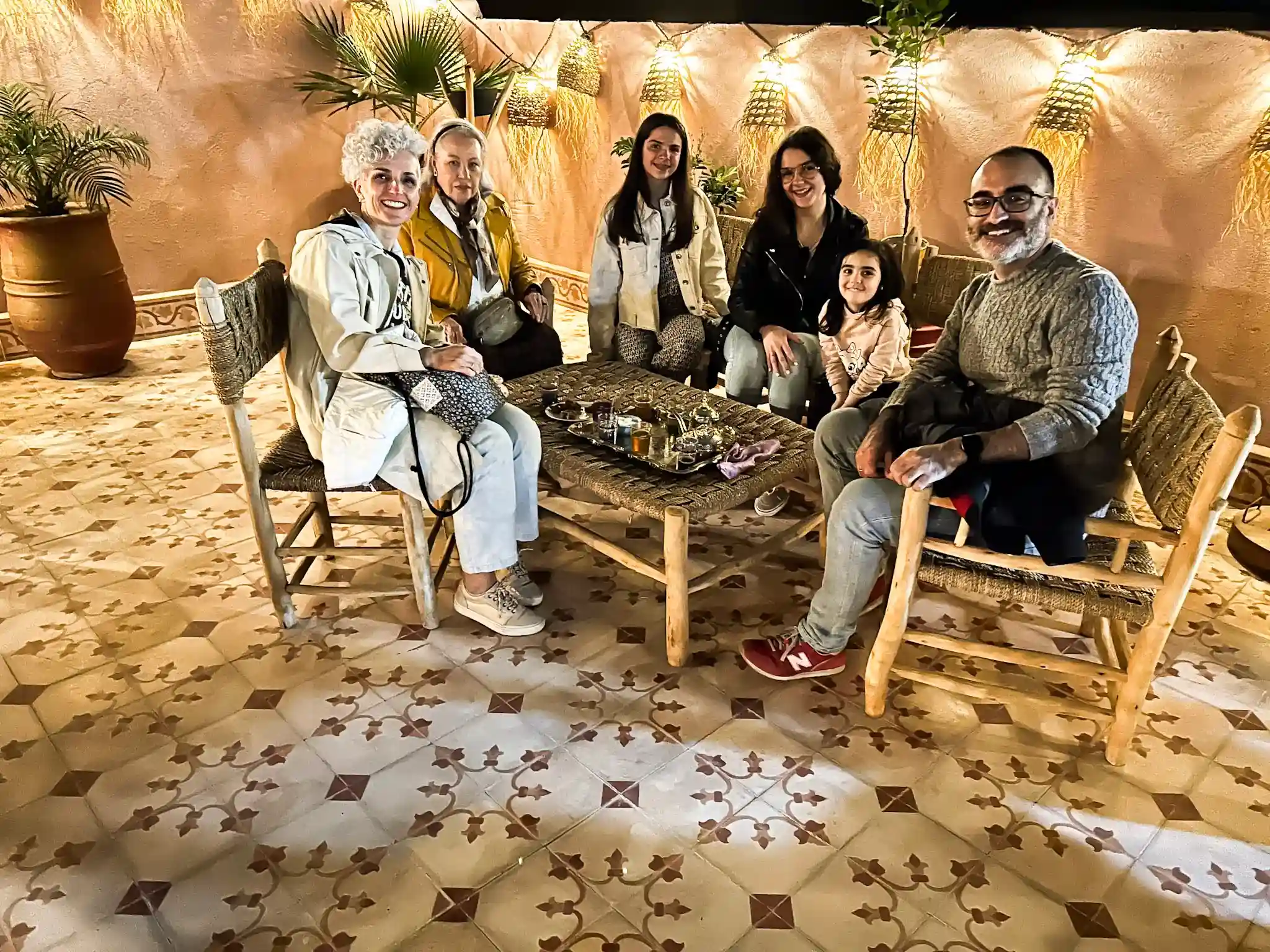
If you are looking for an even more enriching experience, there are other riads in Marrakech that offer dinners accompanied by live music. These evenings not only delight the palate but also allow for a deeper immersion in local culture, making each dinner an unforgettable memory of your visit to Marrakech.
Day 3: Adventure and Panoramic Views
As is customary on our trips, we started with a flexible itinerary and some previous bookings for activities and restaurants we want to explore. On this occasion, the weather was not on our side, as we experienced heavy rains during much of our trip. This prevented us from visiting all the points of interest that Marrakech has to offer, but there is always a good excuse to plan a return.
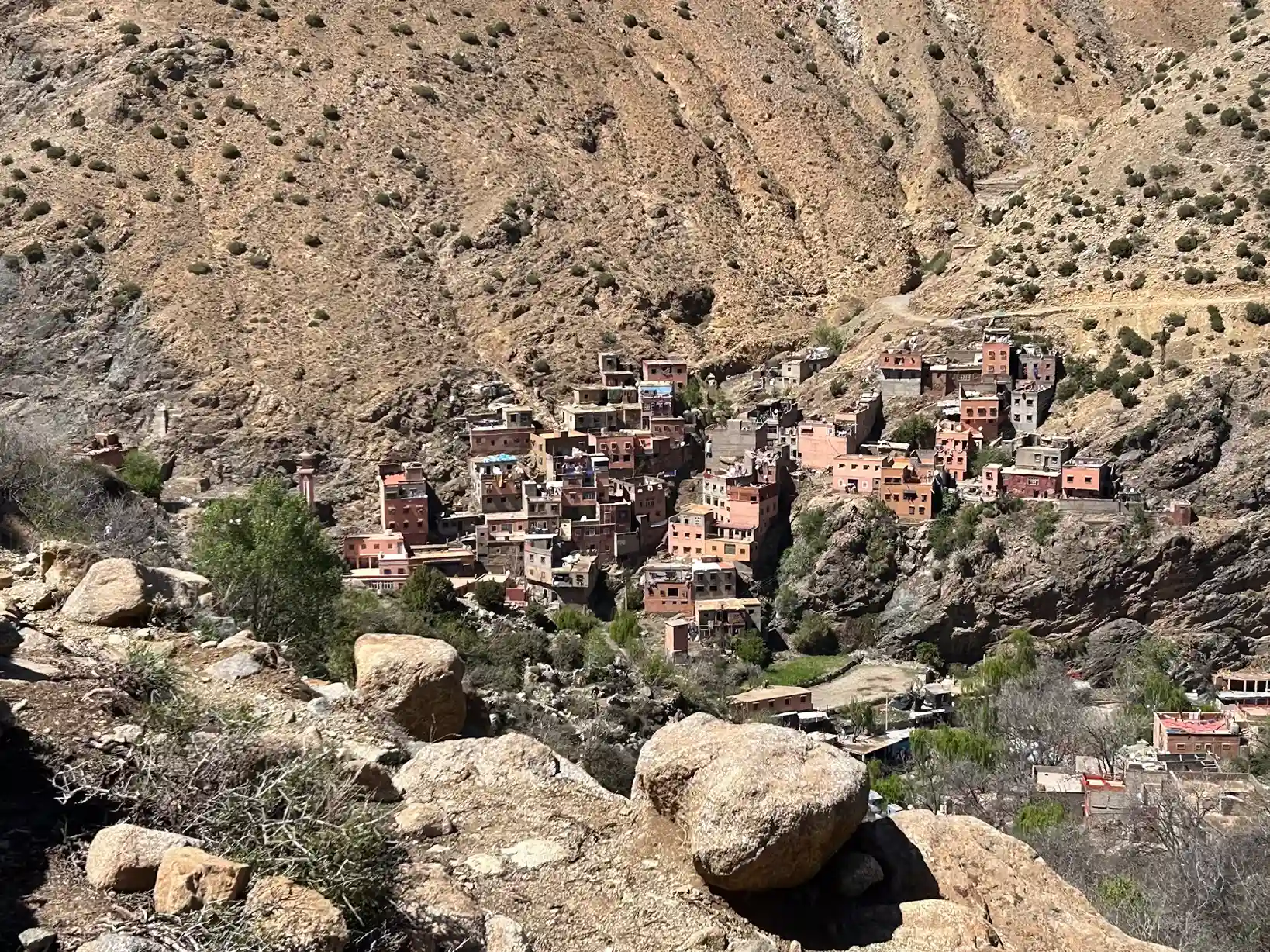
Despite this, we recommend including excursions to the areas near Marrakech for longer visits. In particular, the visit to the Ourika Valley was an impressive experience, highly recommended if you are traveling with children.
In the morning:
Excursion to the Ourika Valley: A Jewel of the Atlas
Located in the foothills of the Atlas Mountains of Morocco, an area that was severely affected by an earthquake last year, the Ourika Valley remains an essential destination to include in a three-day itinerary in Marrakech. Despite the adversities, the valley offers a unique experience that is definitely worth it. Book your excursion here to the Ourika Valley.
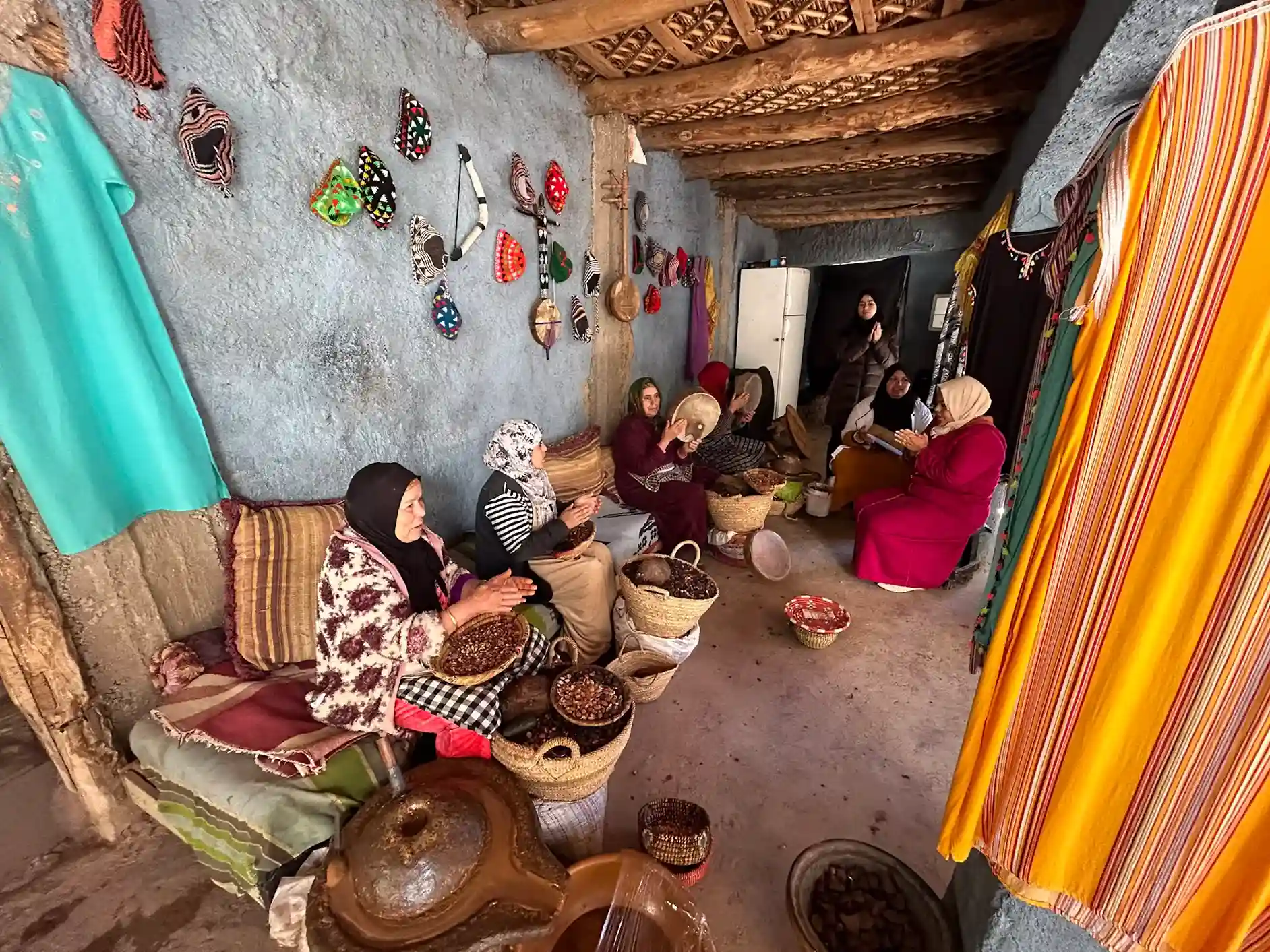
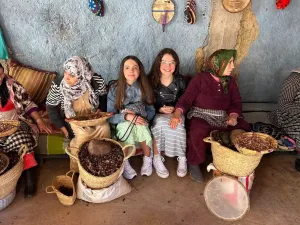
We hired a guided excursion with a Spanish speaker directly from our riad, which turned out to be an enriching experience. The road trip is short, which makes it comfortable for both children and adults. We made several interesting stops along the way, including a visit to a women’s cooperative that produces items based on argan oil and local shops where they sell local crafts. We even enjoyed a camel ride.
Read more: Ourika Valley
Our guide took us to the beautiful waterfalls of the Ourika Valley. The first waterfall is easily accessible, but to explore the following ones, you need an adventurous spirit and suitable footwear. Along the way, the touristic focus on Berber culture is evident, with vendors offering crafts, jewelry, and carpets. However, one of the greatest pleasures was enjoying the most delicious orange juice, chilled with mountain water, which tasted glorious after a hike.
The excursion culminated with a typical lunch at a peculiar restaurant, with outdoor tables on the banks of the river, decorated in Berber style with carpets and cushions for a relaxing chill-out experience. Although we could only enjoy an appetizer due to the lack of gluten-free options, this did not prevent us from fully enjoying the stunning natural beauty of the valley and the warmth of its inhabitants.
In the afternoon – evening:
A Permanent Souvenir: Henna Tattoos and Gastronomy in Marrakech
After a day full of explorations and discoveries that takes up more than half the day, there is no better way to conclude your visit to Marrakesh than by taking home an unforgettable memory. As a grand finale to your trip, we suggest getting a henna tattoo, a very emblematic practice of local culture.
In our search for a reliable and high-quality place, we discovered the Henna Art Café. This establishment not only offers an impressive variety of henna designs, but also guarantees expert and quick application by its tattoo artists. Although prices may be a bit higher compared to street vendors, the quality and safety of the materials used fully justify the cost.
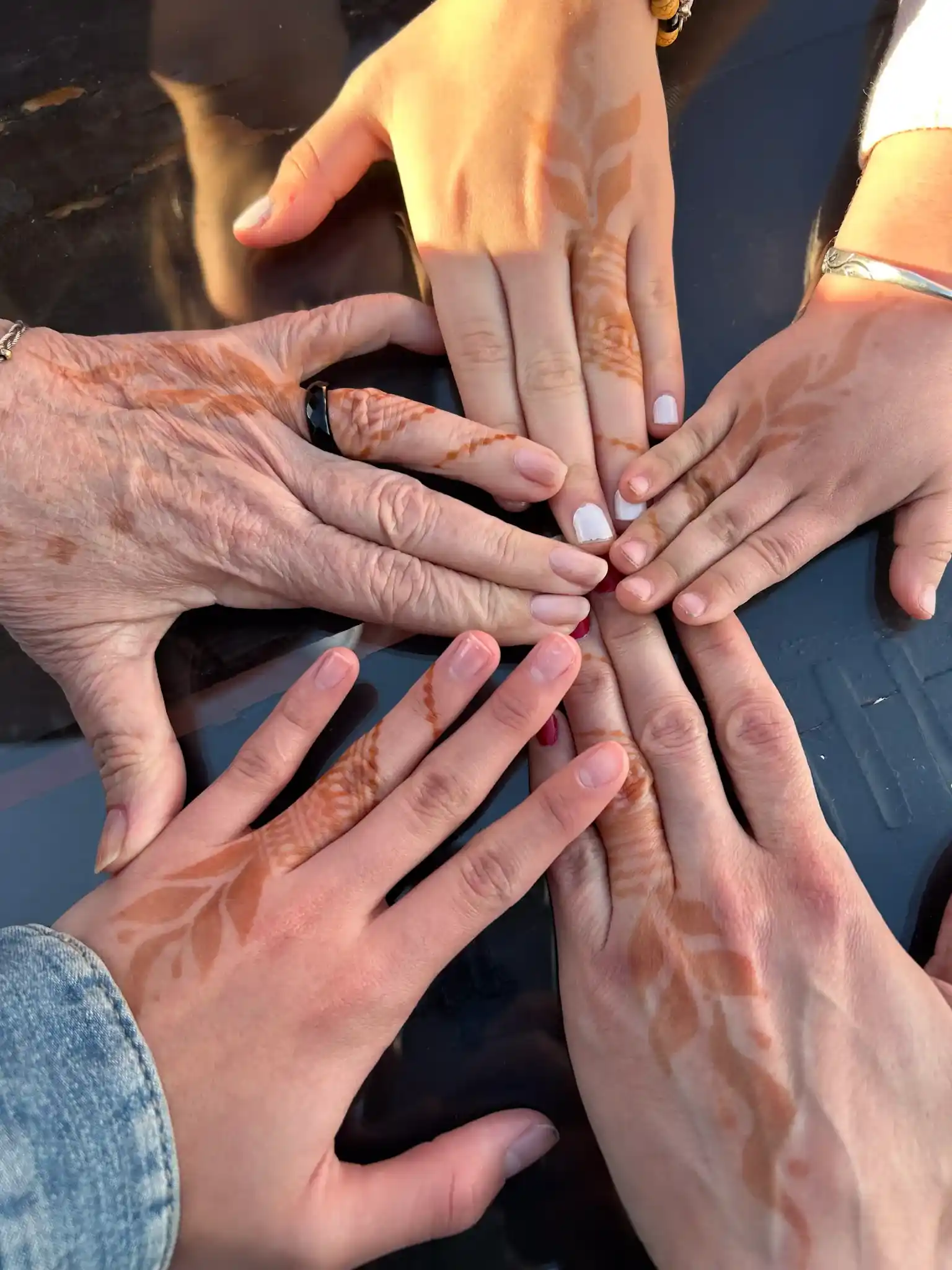
What really made the Henna Art Café stand out for us was its menu adapted to specific dietary needs, including gluten-free options, which made it a mandatory stop on our itinerary. We not only took home a beautiful henna tattoo as a souvenir, but we also enjoyed delicious local dishes adapted for being gluten-free.
Summary of the 3 days
Marrakech, known as the “red city”, is a vibrant destination that combines history, culture, and natural beauty in a unique way. If you plan to spend three days in this fascinating city, there is a series of essential experiences that capture its magical essence.
Start your adventure in the heart of Marrakech, exploring the ancient Medina, a hub of history and activity. Don’t miss the Bahia Palace, a stunning example of Moroccan architecture, and walk along the robust walls that tell stories of the city’s past. Discover the tranquility of The Secret Garden, a peaceful refuge in the middle of urban hustle.
For an authentic cultural experience, immerse yourself in the traditional Arab baths, the hammams, where you can relax and rejuvenate. Additionally, consider getting a henna tattoo, a beautiful and temporary souvenir of your trip.
Culminate your visit with an excursion to the Ourika Valley, where nature unfolds in all its splendor, offering a refreshing contrast to the urban environment of Marrakech.
This itinerary provides you with a comprehensive experience of Marrakech, from its impressive historical sites to its serene natural landscapes, ensuring that every moment of your stay is memorable and deeply enriching.
Must-See Tourist Attractions
We know that our itinerary does not cover every must-see in Marrakech, as we prefer to avoid overwhelming plans that don’t let us fully enjoy each destination.
However, to ensure you don’t miss the best of the “red city”, here is a list of some of the main tourist attractions in Marrakech that we did not mention in our perfect itinerary:
- Almoravid Koubba: A remnant of Almoravid architecture in the city.
- Marrakech Museum: Housed in an old palace, it exhibits Moroccan art and historical artifacts.
- Saadian Tombs: Royal mausoleum that stands out for its intricate decoration.
- El Badi Palace: Ruins of an old palace that evoke the grandeur of the past.
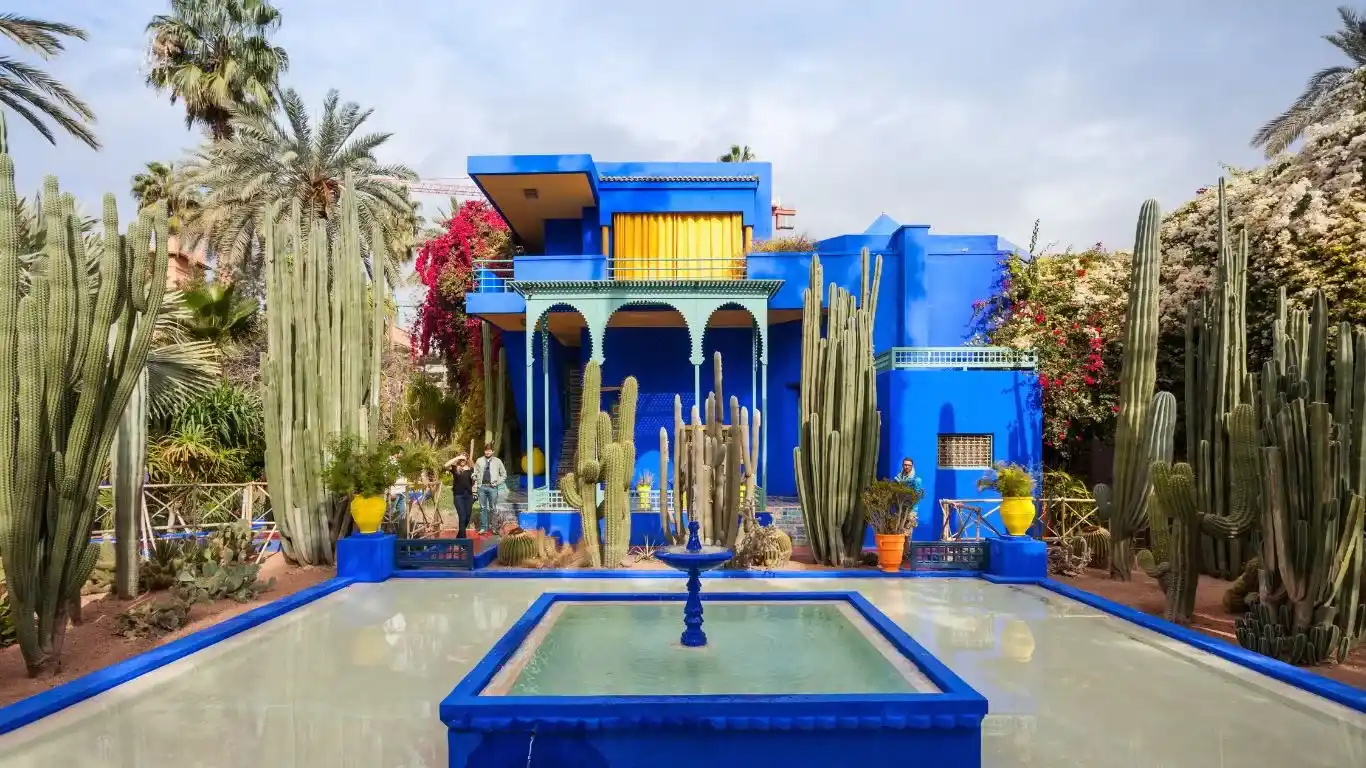
- Majorelle Gardens: Designed by French artist Jacques Majorelle and maintained by Yves Saint-Laurent.
- Palmeral: A vast area of palm trees that offers an escape from the city.
Final Tips for Travelers
Each of the following points offers a suggestion to ensure that your visit is as enriching as it is exciting:
- Book a free tour or private tour, both available with Spanish-speaking guides. This will allow you to get a comprehensive introduction to the Medina and Jemaa el Fna Square, and will help you better plan your itinerary in this charming city.
- Planning: Although Marrakech is fascinating, it can be overwhelming without proper planning. Organize your visits and activities in advance to make the most of your time.
- Climate: Avoid the summer months to escape the intense heat that can exceed 40 degrees Celsius (104°F).
- Local Culture: Open your mind to rich cultural traditions and show respect for local customs. This will not only enrich your experience, but also help you connect more deeply with the community.
- Mobility: Be prepared to walk a lot, especially in the Medina. Wear comfortable footwear suitable for walking on cobblestone streets. And if you are going to take excursions outside, our advice is to hire them from an agency with a driver and not venture out to rent a car and drive in a city you don’t know.
- Safety: While Marrakech is generally safe for tourists, it is always wise to keep an eye on your belongings and avoid giving money to children or participating in activities that exploit animals.
With these tips and a well-thought-out itinerary, you are ready to dive into the best that Marrakesh has to offer. Prepare for a trip that will not only awaken your senses but also enrich your adventurous spirit. Enjoy Marrakesh and everything this incredible city has to offer!
Read more: Essential tips for traveling to Marrakech
Essential Excursions from Marrakesh for your next adventure
Although we have already explored a lot, there are still many things to do in Marrakesh in 3 days or more, and we are sure that we will return as many times as necessary to discover it all. Although we prefer to organize our trips independently to enjoy greater flexibility, we have observed that Marrakesh offers a wide range of organized excursions at quite affordable prices, which can be booked both from Spain and directly at the destination, both options being completely safe.
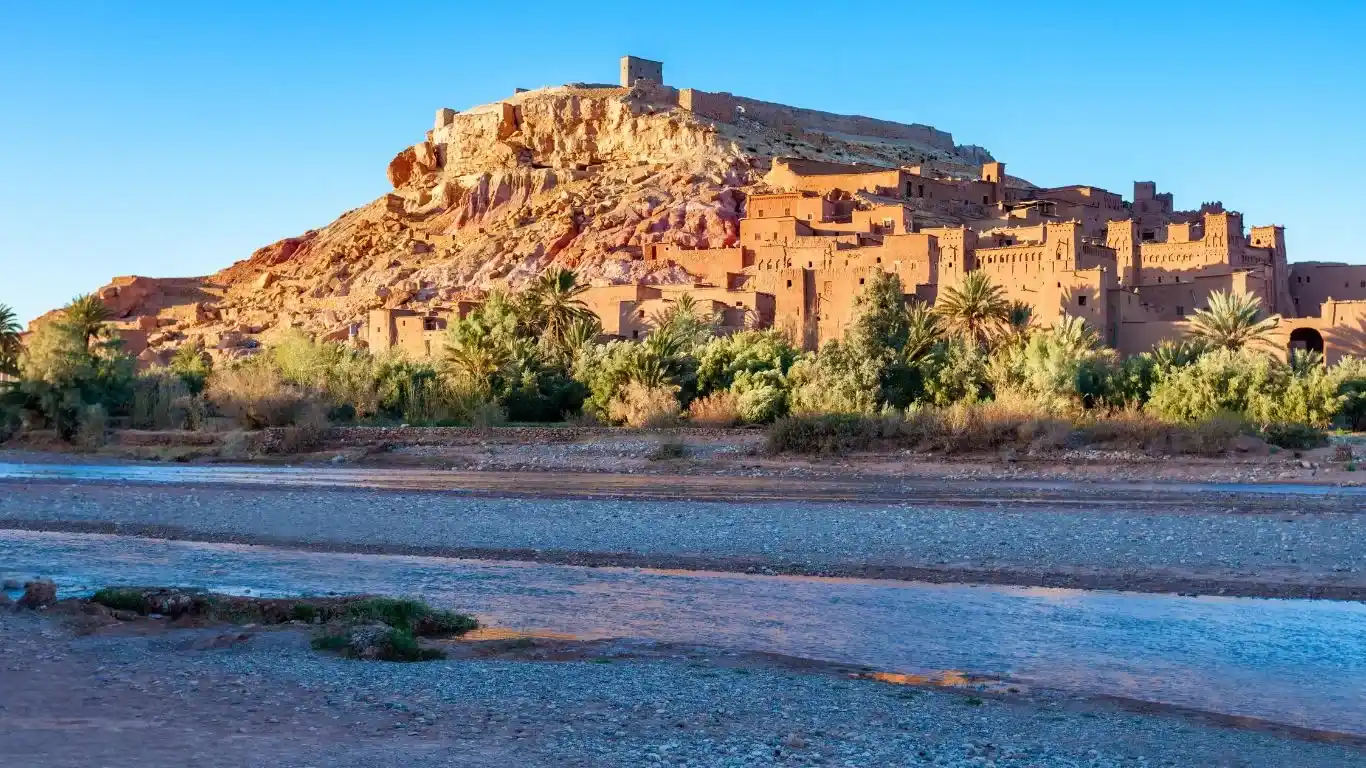
Among the excursions that we find especially attractive and that we hope to take in the future are:
- Three-day excursion to the Merzouga Desert: Experiencing sleeping in the desert is something that, without a doubt, must be unforgettable.
- Excursion to the Ouzoud Waterfalls: Ideal for nature lovers, this excursion promises to be a favorite for those visiting Marrakech.
- One-day excursion to Essaouira: This charming fishing village is one of the most picturesque on the Moroccan Atlantic coast.
- Night in the Agafay Desert: Spend an authentic evening in the Agafay Desert and enjoy the experience of sleeping in a haima (tent).
- Excursion to Ouarzazate: Known as the Hollywood of Morocco, Ouarzazate has been the setting for numerous films and series, including “Game of Thrones“.
These excursions not only enrich your experience in Marrakesh, but also allow you to appreciate the cultural and natural diversity that Morocco has to offer.
Read more: Discovering the Ourika Valley: a hidden gem in the High Atlas
Where to Eat Gluten-Free in Marrakesh
Marrakesh has captivated us in many ways, but where it has really left a lasting mark is in its rich gastronomy. The city has enveloped us with its intoxicating mix of aromas, colors, and flavors, offering a culinary experience that is both diverse and delicious. Thanks to the growing availability of gluten-free options in many restaurants in Marrakesh, we have been able to delight in the typical dishes of Morocco, exploring a variety of flavors that we still have the pleasure of continuing to discover.
We are deeply grateful for the warm hospitality received and the thoughtful attention to our dietary needs. The willingness of the restaurants and the riad where we stayed to adapt and offer us delicacies that we can enjoy without worries has made our stay not only easier, but also more pleasant.
If you are looking for a restaurant that lists gluten-free options on its menu, the gluten-free guide by MarocMama, a blog specialising in travelling to Morocco on this diet, mentions Pepe Nero, an Italian and Moroccan restaurant in the Medina that flags gluten-free options on its menu. That guide was published in 2019 and last updated in 2023, so confirm with the restaurant when you book and always tell them you are coeliac: very few restaurants in Marrakesh can guarantee a completely gluten-free kitchen, so it is worth asking about cross-contact.
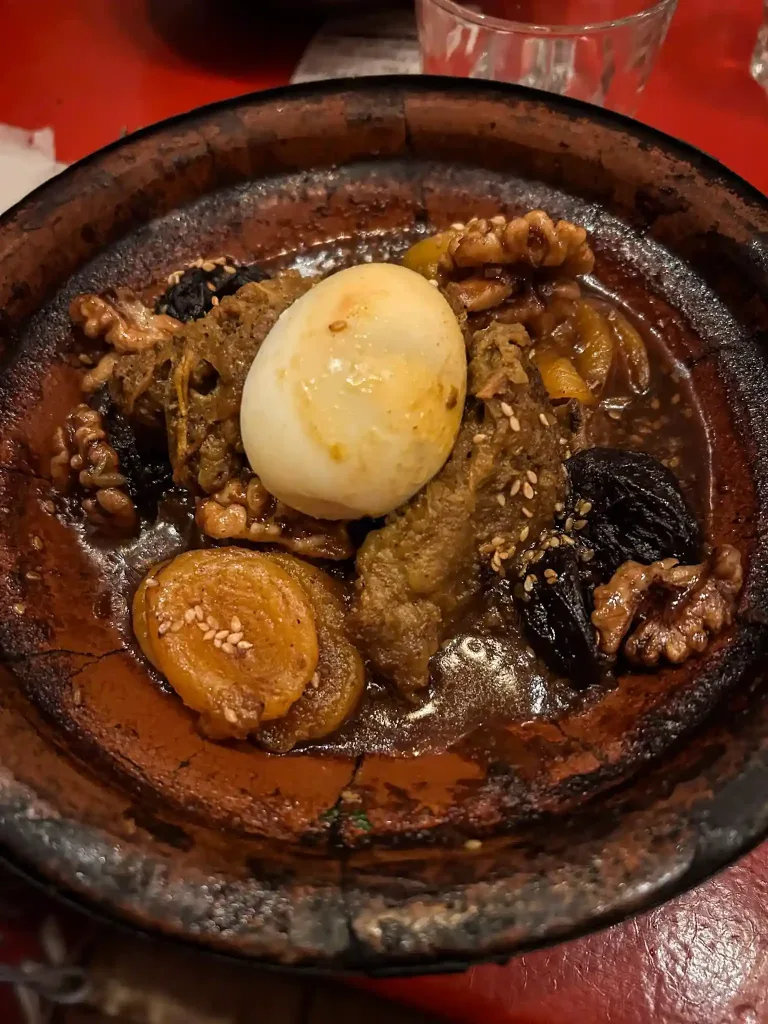
We hope that our suggestions on what to do in Marrakesh in 3 days inspire you to plan your own adventure in this vibrant city. Marrakech is a place that offers an endless array of discoveries, and we are sure that, like us, you will be captivated by its rich history, its vibrant culture, and its delicious gastronomy.
We would love to hear about your experiences after visiting Marrakesh. What places impressed you the most? What dishes have you tried? How was your interaction with the local culture?
Share your stories and let us know if our tips have helped you enjoy your stay to the fullest. We look forward to your anecdotes and discoveries in the fascinating red city!
Until the next adventure, Glutendtrotters.
You might also be interested in reading:
Frequently Asked Questions (FAQ)
What should you not miss in Marrakesh?
Don’t miss Jemaa El-Fna Square, the souks, Koutoubia Mosque, Bahia Palace and the walls of Marrakesh. But what we recommend most is spending time with its people: wander through the souks, chat, haggle, and take in the bustle, the colours and the smells of the spice stalls. And of course, don’t miss a good hammam.
How many days should you spend in Marrakesh?
We recommend at least three days (two nights). For Morocco enthusiasts like us that is short, but three days is enough to see the essentials. The main thing is not to rush from site to site or try to see everything: it is better to leave something for another visit.
Is Marrakesh expensive?
Not at all. Marrakesh is an affordable destination for any budget, from very cheap riads to luxury 5-star hotels. Eating is very cheap; we still remember a dinner for 6 people at a restaurant on Jemaa El-Fna Square that came to less than 50 euros in total. When it comes to shopping, it depends on how well you haggle, and if you move a little away from the shops closest to the square you can find real bargains.
Where can you eat gluten-free in Marrakesh?
According to the gluten-free guide by MarocMama, a blog specialising in travelling to Morocco on this diet, the restaurant Pepe Nero in the Medina lists gluten-free options on its menu (the guide was published in 2019 and updated in 2023, so confirm with the restaurant when you book). Very few restaurants in Marrakesh can guarantee a completely gluten-free kitchen, so always tell them you are coeliac and ask about cross-contact. You will find more ideas in our gluten-free Marrakesh guide.
What is the best time of year to visit Marrakesh?
Our first tip is to avoid the summer months: temperatures can climb above 40 degrees Celsius (104°F), which is very intense when exploring the Medina and the souks.


