


The light from the historic lighthouses along the Cantabrian coast will guide you into a world of incredible legends, perfect for even the most demanding story-seekers. There are 9 guardians protecting these 280 km of coastline, and here we show you 5 lighthouses to illuminate your trip through Cantabria.
Stirring because of their location in incredible landscapes or unreachable islets in the middle of the sea, awe-inspiring for their battle against the fiercest waves during the worst storms, and protagonists of haunting fables—their image is one of the most representative elements of the maritime world.
Although some are already decommissioned, they have been renovated, and their protective role has given way to a more educational function, opening to the public as interpretation centers or exhibition halls. Their tourist appeal is undeniable for any traveler.
We’ll show you the 5 lighthouses to illuminate your trip through Cantabria that we like the most, from west to east along its impressive coastline.
1. Punta del Torco de Afuera Lighthouse
Located at Punta del Dichoso, in the town of Suances. It began operating in 1863 in a strategic enclave on a small peninsula, between the beaches of La Concha and Los Locos, to aid navigation at the entrance of the San Martín estuary and to mark the five islands located near Punta del Cuerno.
Built at the mouth of the San Martín de la Arena estuary, where a medieval fortification once stood to defend Suances from enemy invasions. Today, it is a reference point for surfers all year round.
History tells us that its light served to save seven crew members of the Italian brigantine ‘Franceschino‘, which sank in 1880 after a leak opened in its hull. It was also the setting for visits by King Alfonso XII and Queen Maria Christina on several occasions during their trips to Cantabria.
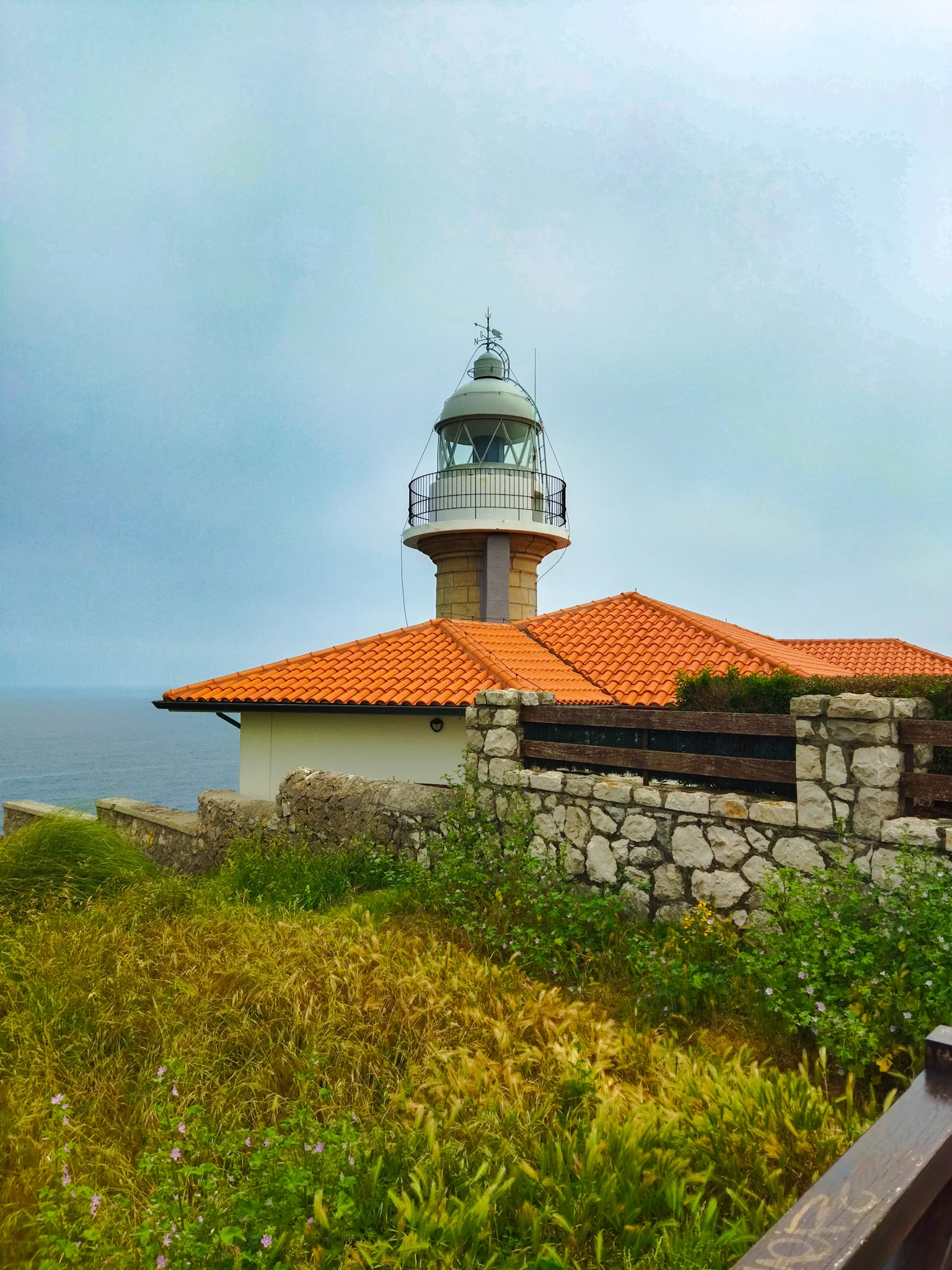
In 1960, the building was reconstructed to match the rest of the residential buildings in Torco and its surroundings, giving it its current villa-style appearance.
From the base of the tower, visitors can follow a path to the edge of the cliff for spectacular views. Additionally, you can listen to the relaxing sound of the sea from Roca Blanca, a natural monument just a few meters from the lighthouse.
Couples looking to immortalize their romance with the spectacular views offered by the Punta del Torco de Afuera Lighthouse have made it a witness to the eternal love of countless stories.
2. La Cerda Lighthouse
Inaugurated in 1870 in the privileged setting of the Magdalena Peninsula, where the former summer residence of King Alfonso XIII is located: the Magdalena Palace in Santander.
It takes its name from the Santa Cruz de la Cerda battery, which in medieval times was intended to protect Santander Bay from enemies. However, this has not been its only name; de la Argolla or the Punta de la Cerda beacon have also been used at different times to refer to it.
As a curiosity, we’ll tell you that technically it is not a lighthouse due to the short range of its light, but rather a beacon.
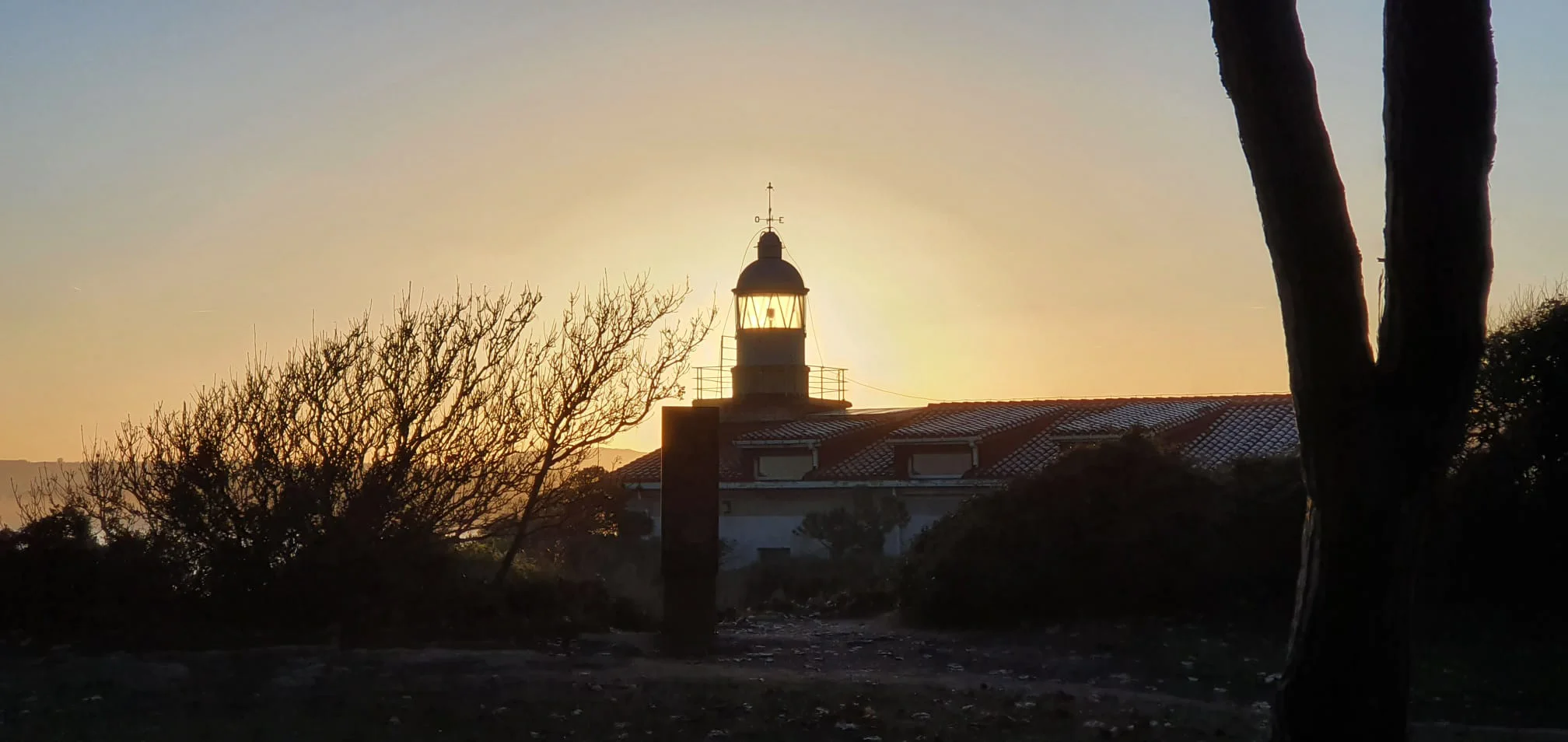
Strategically positioned just before the tide gauge and the royal pier, it allowed for the unloading of dangerous materials arriving in Santander before they entered the bay itself, to avoid tragedies like the explosion of the ship Machichaco, in 1893. One of the most grotesque events remembered in the history of this city.
Where to eat gluten-free in Santander
Gluten-free flavors: the most charming cafes in Santander
3. Mouro Island Lighthouse
This regal guardian has been protecting Santander Bay since 1860. Located on the mysterious Mouro Island, in the middle of the entrance to the Cantabrian capital’s port, it is unfortunately known for the numerous accidents that have occurred there and its poor accessibility during stormy days.
Its unusual situation caused the isolation of the most seasoned lighthouse keepers on multiple occasions until 1921, when it was automated to prevent the death of those working there.
This unique lighthouse, built on rock in the purest English style, is the indisputable protagonist of the harshest storms in the Cantabrian Sea, when waves often exceed the 18-meter-high tower.
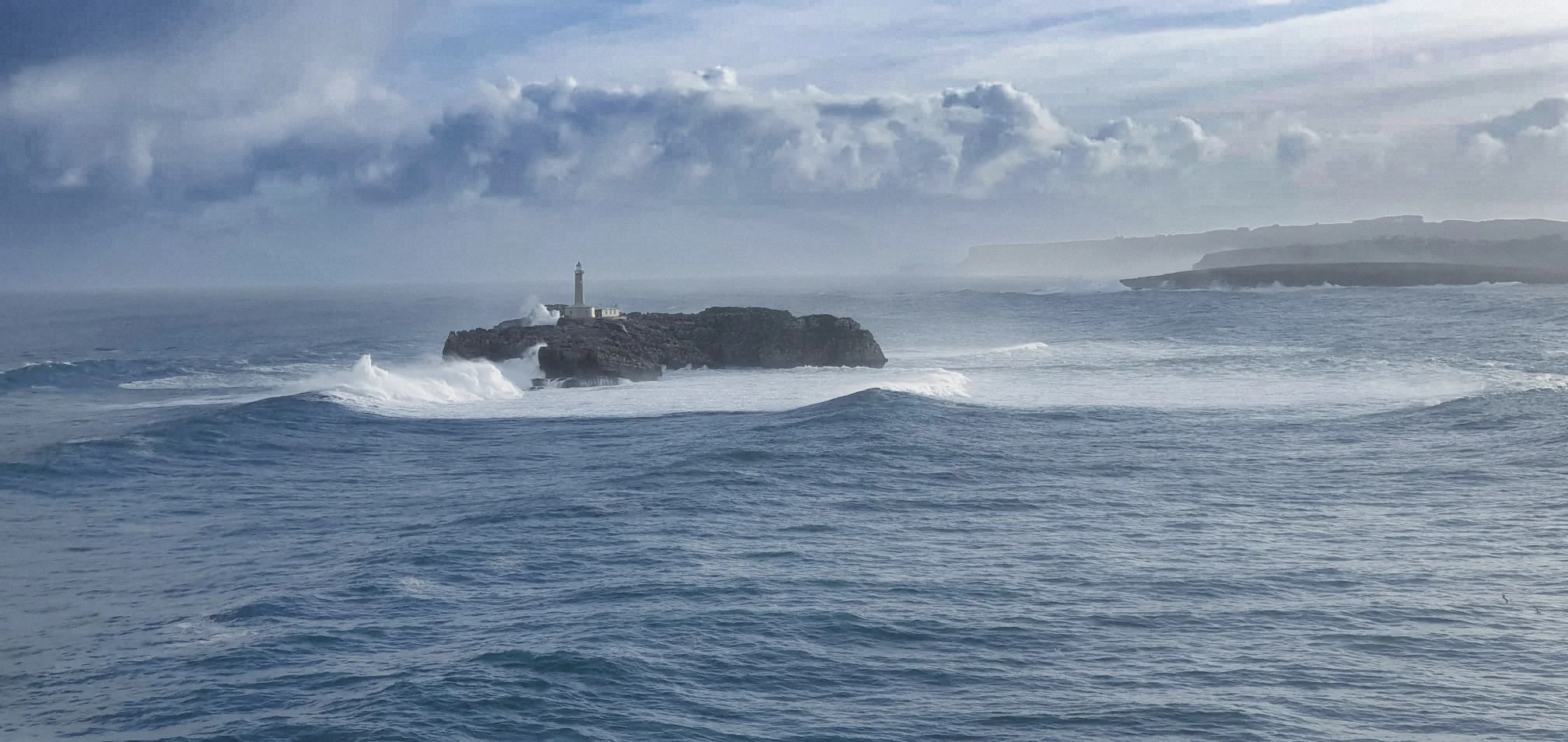
Beneath the waters surrounding Mouro Island lies a great biodiversity where divers can enjoy the 40 census-recorded fish species that inhabit the area. For this reason, it was declared a Natural Reserve in 1986.
In addition to contemplating its splendor from the mainland, you can observe its majesty thanks to the boat trips through the bay offered by the famous company Los Reginas de Santander.
Read more >>> What to see in Santander in 1 day
4. Ajo Lighthouse
At the northernmost point of Cantabria lies the most modern lighthouse in the region, the Ajo Lighthouse, in the municipality of Bareyo.
Its history begins in 1907 when its construction was planned, but it wasn’t finally inaugurated until 1930, following several accidents on the cape’s reefs. In 1980, engineer Fernando Rodríguez Pérez designed a new circular concrete tower just 50 meters from the old location, and the current lighthouse began operating in 1985.
Want to delight in Cantabrian gastronomy?
Read our post: where to eat gluten-free in Cantabria
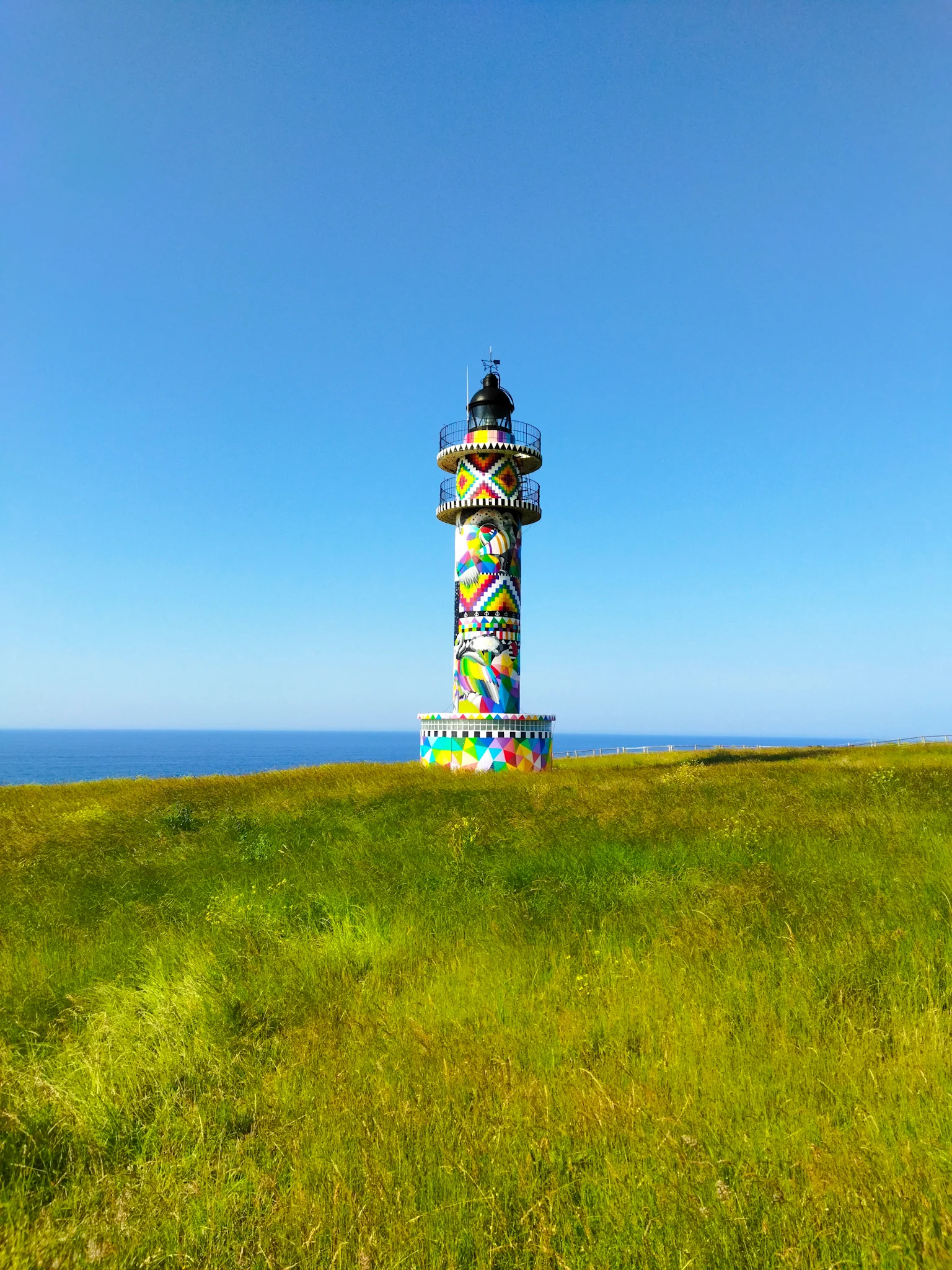
However, it gained true fame in 2020, when international artist Okuda San Miguel transformed it with one of his ephemeral works, “Infinite Cantabria”.
The controversy over its vibrant colors and its temporary nature have turned it into one of Cantabria’s biggest attractions. The 16-meter tower features 72 different shades that allude to the natural richness of the area around the Ajo Lighthouse. It is expected that its originality will be enjoyed for 8 years, after which it will return to its original state in 2028.
WHERE TO PARK AND HOW TO GET THERE
Entrance is free and is accessed via a beautiful walk from which you can enjoy wonderful views where the sea and mountains meet, as is always the case in Cantabria. Cars can be parked in a residential area just before the 16 hectares of farmland that surround it.
Access is limited, so before venturing out, it is best to check the opening hours at the Bareyo tourist office. It is not open every day, and schedules change depending on the season.
You cannot visit the inside of the Ajo Lighthouse, but the views from the paths leading to it are spectacular. It has become a top-tier tourist draw—especially at sunset, when you can capture the most beautiful photos of this colorful spot.

Before you road-trip to Cantabria’s lighthouses
🚗 These lighthouses are spread out along the coast, so a rental car is the easiest way to reach them all. Compare prices with Discover Cars.
🛡️ We never travel without IATI travel insurance, especially on trips with coastal trails and cliffs like this one.
📶 And to keep your GPS running smoothly between lighthouses, a Holafly eSIM keeps you connected the whole trip.
5. Caballo Lighthouse
This surprising lighthouse is one of two located on Monte Buciero. It began lighting up Santoña Bay in 1863, serving ships for 130 years.
The spectacular views from the site and the wonderful environment well deserve the title of one of the most beautiful lighthouses in Spain. The odyssey of descending the staircase of more than 700 stone steps is worth it to enjoy the amazing vistas and crystal-clear waters.
HOW TO GET TO THE LIGHTHOUSE
As an anecdote, I’ll tell you that those steps were rebuilt by the prisoners of the El Dueso Penitentiary, which is located just a few meters from the Caballo Lighthouse and can be seen while hiking the circular Monte Buciero trail.
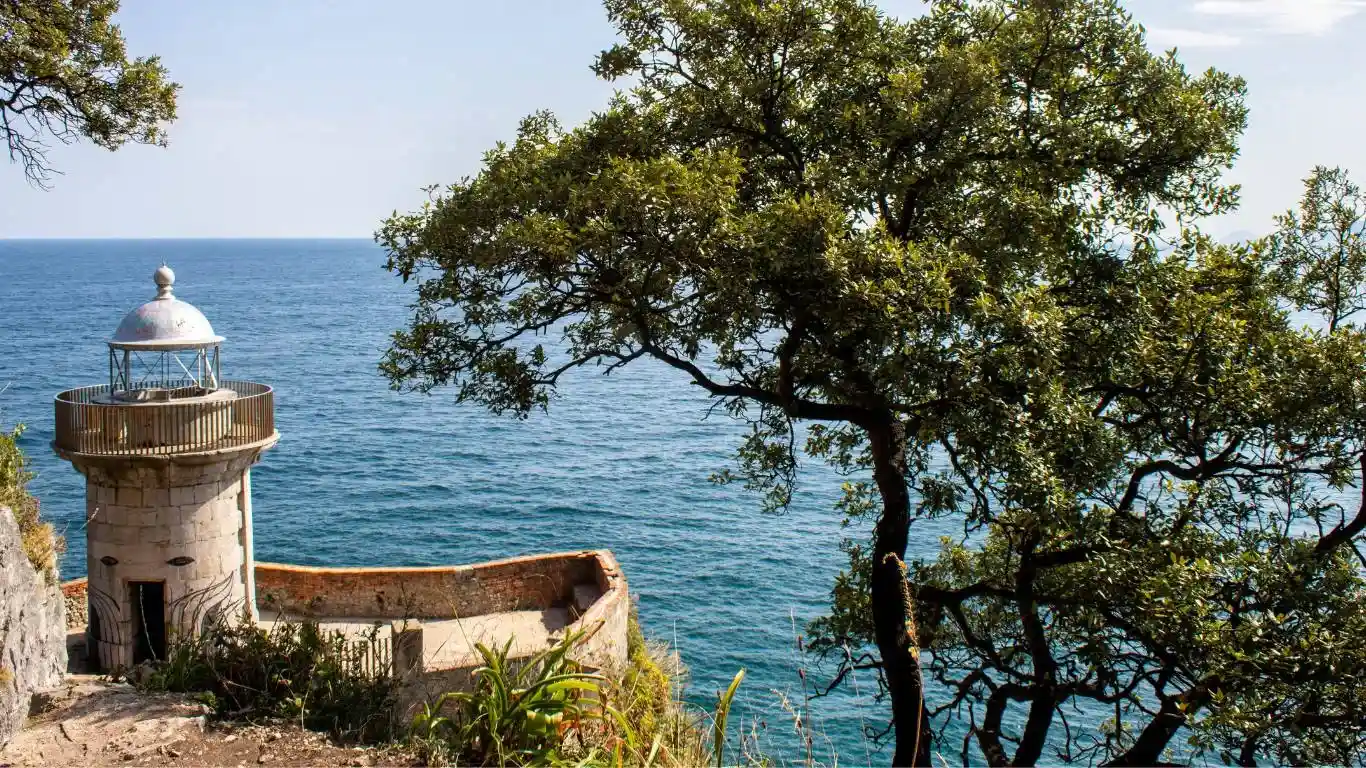
Access to this Cantabrian treasure on foot takes us along a wonderful path, starting with stone and soon passing through a romantic grove, accessible for the whole family.
The only thing to keep in mind is that there are no refreshment spots during the walk, so you must bring necessary provisions with you. Oh! And the muscle soreness the next day from climbing up and down to the lighthouse is probably unavoidable, though it is undoubtedly worth it.
If you prefer to enjoy this idyllic place in a more relaxed way, you can book a panoramic tour that takes you through the entire Santoña Bay, including the marshes, all the way to the Caballo Lighthouse.
Or for the more adventurous, book a kayak excursion to explore these pristine waters.
The “Emerald Coast”, as it is known, has become one of the most visited places in Cantabria in recent years thanks to this lighthouse. It is a true gift for the senses. It was chosen as the best corner of the year in 2014 by the Repsol Guide.
OTHER LIGHTHOUSES YOU CAN SEE
We hope we have illuminated your next trip to Cantabria with these magnificent lighthouses. Remember that there are 4 more you can add to your guide to complete the adventure:
San Vicente de la Barquera: Punta Silla Lighthouse
Santander: Cabo Mayor Lighthouse
Santoña: Pescador Lighthouse
Castro Urdiales: Santa Ana Castle Lighthouse
Fun fact: the Cabo Mayor Lighthouse, the most visited in Cantabria, is no longer just something you admire from outside. Through the Centro de Arte Faro Cabo Mayor, run by the Santander Port Authority, you can now book guided visits inside the tower (small groups of up to 6 people plus a guide, around 45 minutes) to see the old lighthouse keeper’s quarters and, weather permitting, step out onto the tower’s outdoor terrace.
We have shared the ones that captivated us the most, but we can’t wait for you to tell us what you thought of them and which are your favorites.
Additionally, as always, we provide information on the main points of interest in Cantabria so you can make your visit to this beautiful community a complete journey.
And, of course, some reference spots to eat gluten-free in Cantabria.
We don’t just want you to fill your mind with beautiful images of Cantabria, but also to enjoy its gastronomy.
We always say it: Cantabria is Infinite.
Frequently Asked Questions (FAQs)
How many lighthouses are there in Cantabria?
Along its 280 km of coastline, Cantabria has 9 working lighthouses. In this guide we cover our 5 favorites (Torco de Afuera, La Cerda, Mouro Island, Ajo, and Caballo), plus where to find the other 4: Punta Silla in San Vicente de la Barquera, Cabo Mayor in Santander, El Pescador in Santoña, and the Santa Ana Castle lighthouse in Castro Urdiales.
Which is the most photographed lighthouse in Cantabria?
The Ajo Lighthouse, also known as the Okuda Lighthouse, is one of the most photographed in the region thanks to the artwork that international artist Okuda San Miguel painted on its tower in 2020. Its 72 different shades are expected to remain in place until 2028.
Can you go inside any of Cantabria’s lighthouses?
You can’t go inside the Ajo Lighthouse or the Caballo Lighthouse, but the Cabo Mayor Lighthouse in Santander does offer guided visits to its interior through the Centro de Arte Faro Cabo Mayor, run by the Santander Port Authority. Visits require advance online booking, are limited to small groups of up to 6 people, and last around 45 minutes.
How do you get to the Caballo Lighthouse?
The Caballo Lighthouse, on Monte Buciero near Santoña, is reached on foot along a path that starts on stone and later runs through woodland, with no refreshment stops along the way, so bring water and snacks. You can also see it from the sea on a panoramic boat tour of Santoña Bay or on a kayaking excursion.
What’s the best time of day to photograph the Ajo Lighthouse?
Sunset is the best time to photograph the Ajo Lighthouse, when the light brings out the colors of Okuda San Miguel’s artwork on the tower especially well.


