Truly spectacular scenery awaits you on this road trip through Cantabria: discover its hidden paradises and experience them for yourself.
Manuel and I have driven hundreds of miles across our “infinite region.” One of our favorite activities is taking a road trip through Cantabria with no fixed destination to discover unique landscapes.
On this occasion, we want to take you to one of the most spectacular and bucolic beaches in and out of Cantabria; 9 out of 10 people don’t know it… do you?
If you still don’t know how many days to spend in Cantabria and what to see, we recommend reading the following posts about the “Tierruca”:
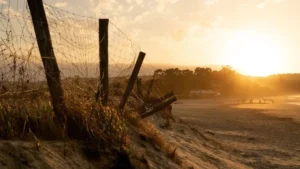
In the beautiful setting of Val de San Vicente, you’ll find a paradisiacal stretch of sand with crystal-clear waters and an incomparable environment. Some compare it to the wild beaches of Thailand, and it truly has nothing to envy them.
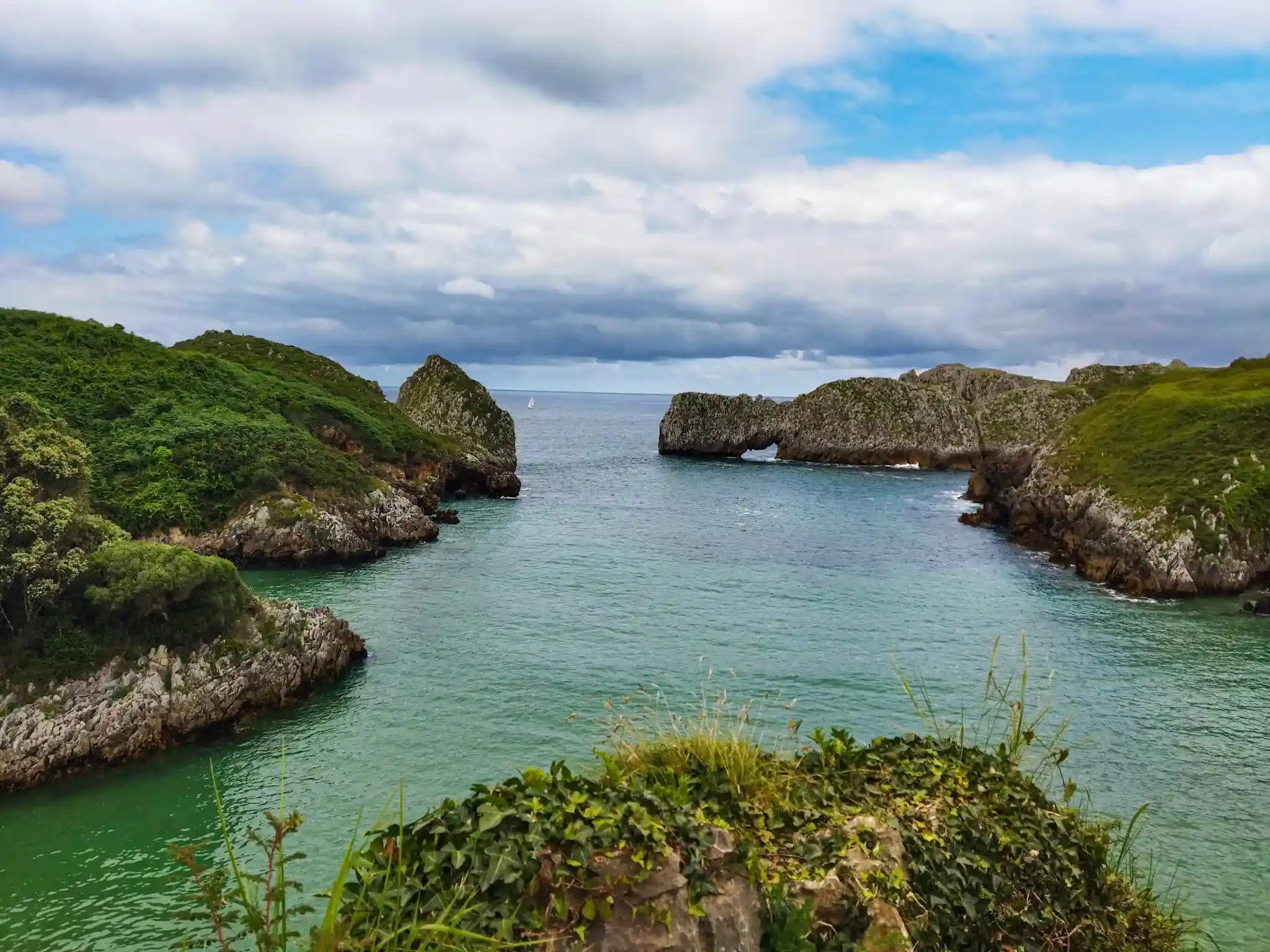
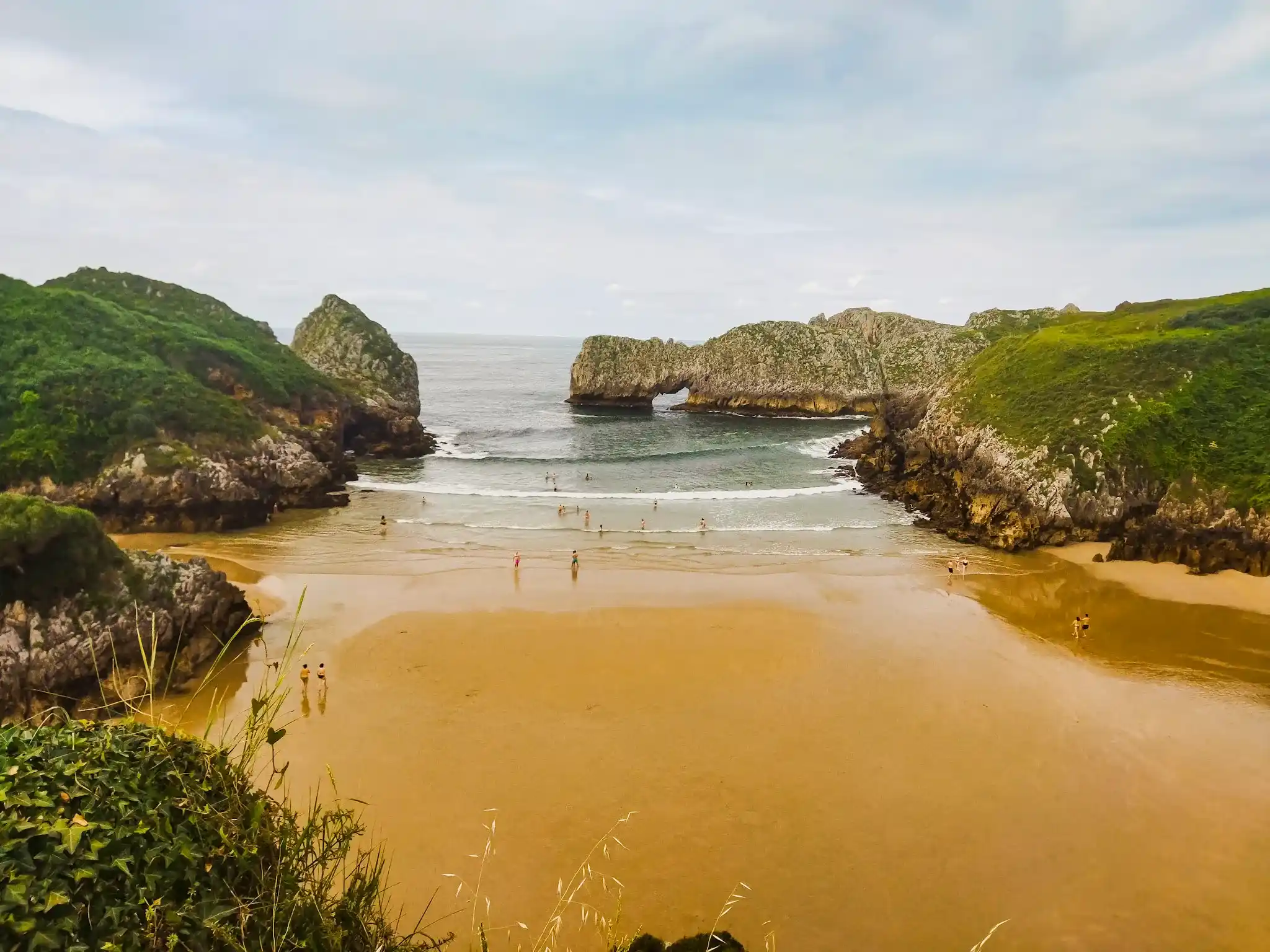
In the village of Prellezo, along a quiet path surrounded by nature, you reach Berellín Beach. The turquoise of its waters, the green of its surroundings, and the roar of the sea against its cliffs make this privileged spot a perfect setting for your Cantabrian vacation.
Berellín Beach in Prellezo at high tide
It is truly a place to lose yourself in its beauty and peace. Here, you even lose mobile signal, as this corner of paradise is meant for disconnecting from the world and connecting with pure nature.
No one who has enjoyed this secret Eden fails to recommend a visit with fascination.
Cantabria hides many places as authentic as this one.
Berellín Beach in Prellezo
And you know how I am—since I can’t help telling you about them so you can enjoy this beautiful land as it deserves, I’ve put together a custom itinerary starting from this spectacular garden, a unique road trip through Cantabria tailored just for you.
Aren’t you even a little curious?
Come with me! You provide the car, and I’ll provide the route so you don’t miss a thing.
Berellín Beach is located very close to the Nansa river basin. From this point on the coast, you can take an excursion into the region’s interior between the Peña Labra and Peña Sagra mountain ranges, which is truly worthwhile.
The vast beech and oak forests, the charming villages filled with noble manor houses, and a wonderful gastronomy will make you fall in love with one of the most beautiful areas of Cantabria.
📶 And to stay connected for GPS and everything else through these rural corners, a Holafly eSIM keeps you online throughout the whole route.
2.PECHÓN
After visiting Prellezo, it’s not easy to find a place that lives up to it, but El Alto de Pechón, in Pesués, offers a spectacular natural environment located just a few yards from Las Arenas beach.
Ideal for enjoying a day surrounded by nature near the sea. It is a paradise for lovers of the ocean and water sports, such as surfing and paddle surfing.
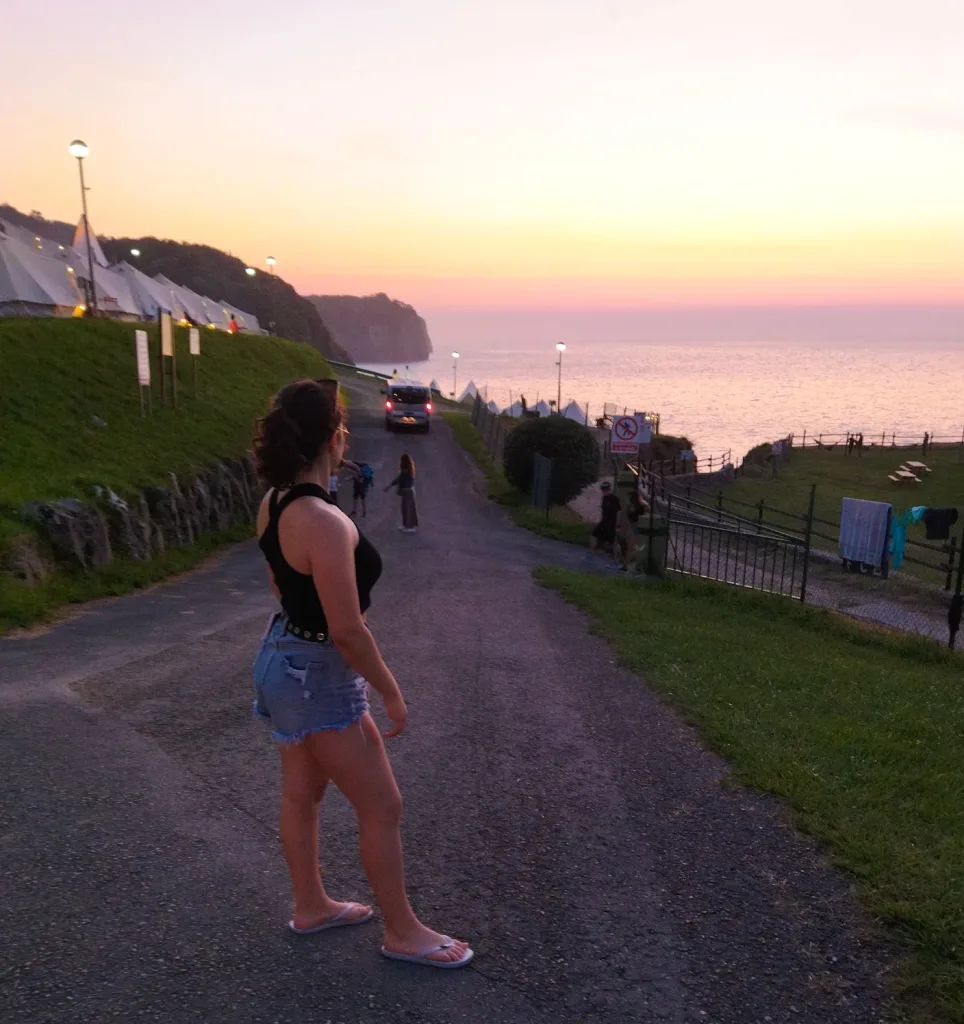
Aitana at the Las Arenas Campsite
The privileged location of Alto de Pechón allows you to enjoy impressive sea views with the majestic Picos de Europa mountain range as a panoramic backdrop.
In addition to its proximity to the beach, this location offers the opportunity for a wide variety of outdoor activities. You can explore the trails and paths surrounding the area, go mountain hiking, or simply relax and enjoy the surrounding natural beauty.
Aitana, Paola, and Manuela at the Las Arenas Campsite
If you like adventure, the Pechón campsite offers comfortable facilities and services to ensure a pleasant stay. You can camp with your own tent or enjoy all the comforts of glamping in the middle of nature for an unforgettable holiday.
In short, Alto de Pechón in Pesués is a dream location perfect for breathing fresh air in a unique natural setting.
The Ferrería and the Cades Mill, located near the Nansa River, form an 18th-century rural complex representing a traditional way of life linked to the land. This solid construction was finished in 1752 and has recently been completely renovated, including the ironworks, its machinery, the adjacent mill, and its surroundings.
Before planning a stop here, note that according to the site’s own official website (ferreriadecades.es), the complex is currently temporarily closed for improvement works. It’s worth checking their website or social media before heading over, to confirm whether it has reopened and to check current hours and prices.
This is one of the few examples of hydraulic installations that can still be seen in operation today. Water is captured from the Nansa River and transported through a canal that powers two flour mills, in addition to the ironworks themselves. The site is completed with a heraldic house and a traditional “panera” (granary), adding a singular historical complexity to the place.
Inside the complex, you’ll find a small exhibition and an audiovisual presentation that complement the explanation of how it all works.
After this discovery, you can enjoy a relaxing walk through the nearby forest of beech, ash, and hazel trees, which is a perfect way to conclude your visit.
A guided tour of the Ferrería de Cades is one of the best options for families with children in Cantabria, as it allows them to learn about local history and tradition in an interactive and educational way.
Our Cantabria road trip continues.
4.EL SOPLAO
El Soplao Cave is an impressive cavity discovered at the beginning of the 20th century during the exploitation of the Florida zinc and lead mines. However, Cantabrian geologists only began exploring it in 1975.
It is located between the municipalities of Herrerías, Valdáliga, and Rionansa, about 85 km from Santander.
Its location is exceptional, offering wonderful panoramic views of the central massif of the Picos de Europa and the Nansa River valley from the parking lot. It is close to the beautiful towns of Comillas and San Vicente de la Barquera.
Inside, you can observe geological formations such as stalactites, stalagmites, columns, and flowstones. The most impressive formations are the so-called ‘eccentrics’ (helictites)—helical formations that defy gravity and carpet the floors, ceilings, and walls throughout the tour.
In addition to its geological value, the cave houses an exceptional Industrial Mining Archaeology Heritage, with galleries, calcination kilns, washing areas, and more.
The Moro Chufín Cave is a natural monument located in the Nansa River valley, in an area of great beauty. It is near the Palombera reservoir and the town of Riclones, and is considered an Asset of Cultural Interest.
This cave owes its name to a character called Moro Chufín, who, according to local legend, hid a treasure inside before retreating due to the Christian advance.
However, the true treasure of the cave are the red paintings decorating its high ceiling and the exterior engravings, which are rare in the cave art of the northern Iberian Peninsula.
In recognition of its importance, this rock art site was declared a UNESCO World Heritage site in 2008.
Visiting and exploring it is an adventure that will stimulate the archaeological interest of both adults and children.
The San Pedro neighborhood, located in the capital of the Rionansa municipality, is a place of great architectural interest due to its traditional “casonas montañesas” (mountain manor houses). This neighborhood has been declared a Historic-Artistic Complex because of its heritage value.
The row houses in the San Pedro neighborhood follow a common typology for the area. They are two stories high and feature a façade with arches and balconies set between side walls. The architecture of these buildings is representative of the region and boasts ornamental details that deserve to be appreciated.
The stone decoration on the door lintels and the pillar fronts is especially striking, featuring motifs such as oak leaves, rosettes, diamonds, and other symbolic elements. These details carved in stone give the houses a distinctive and charming appearance.
Additionally, wood also plays an important role in the decoration of these mountain manor houses. You can see artistic carving on the handrails of the balconies, in the beams, and in the eaves of the houses. This meticulous attention to detail in the wood carving adds an artistic and traditional touch to the local architecture.
The conservation and protection of the San Pedro neighborhood as a Historic-Artistic Complex allows visitors to immerse themselves in the cultural and architectural richness of the region and appreciate the historical legacy that these row houses represent for the local community and the architectural heritage of Rionansa.
7. CARMONA
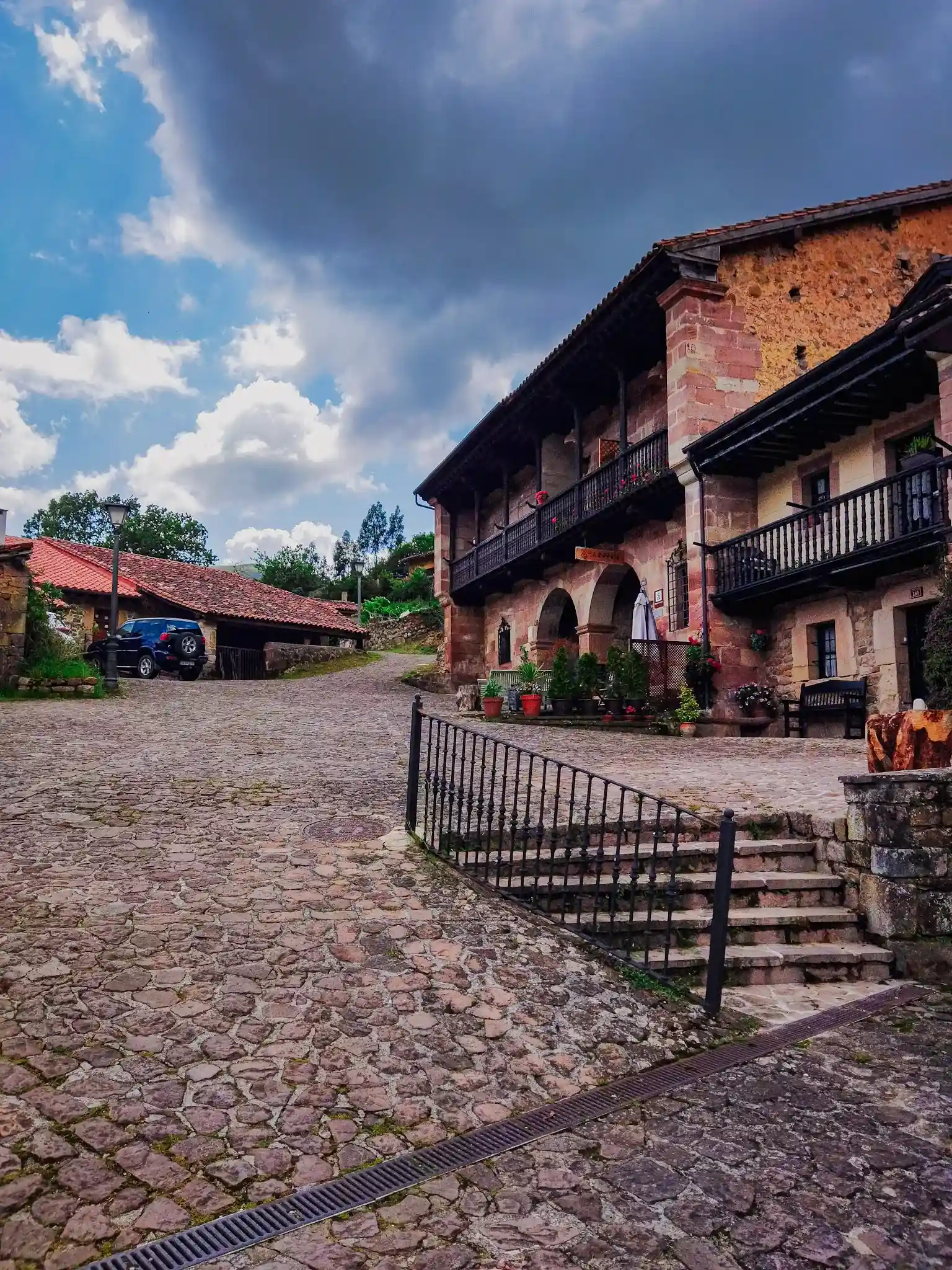
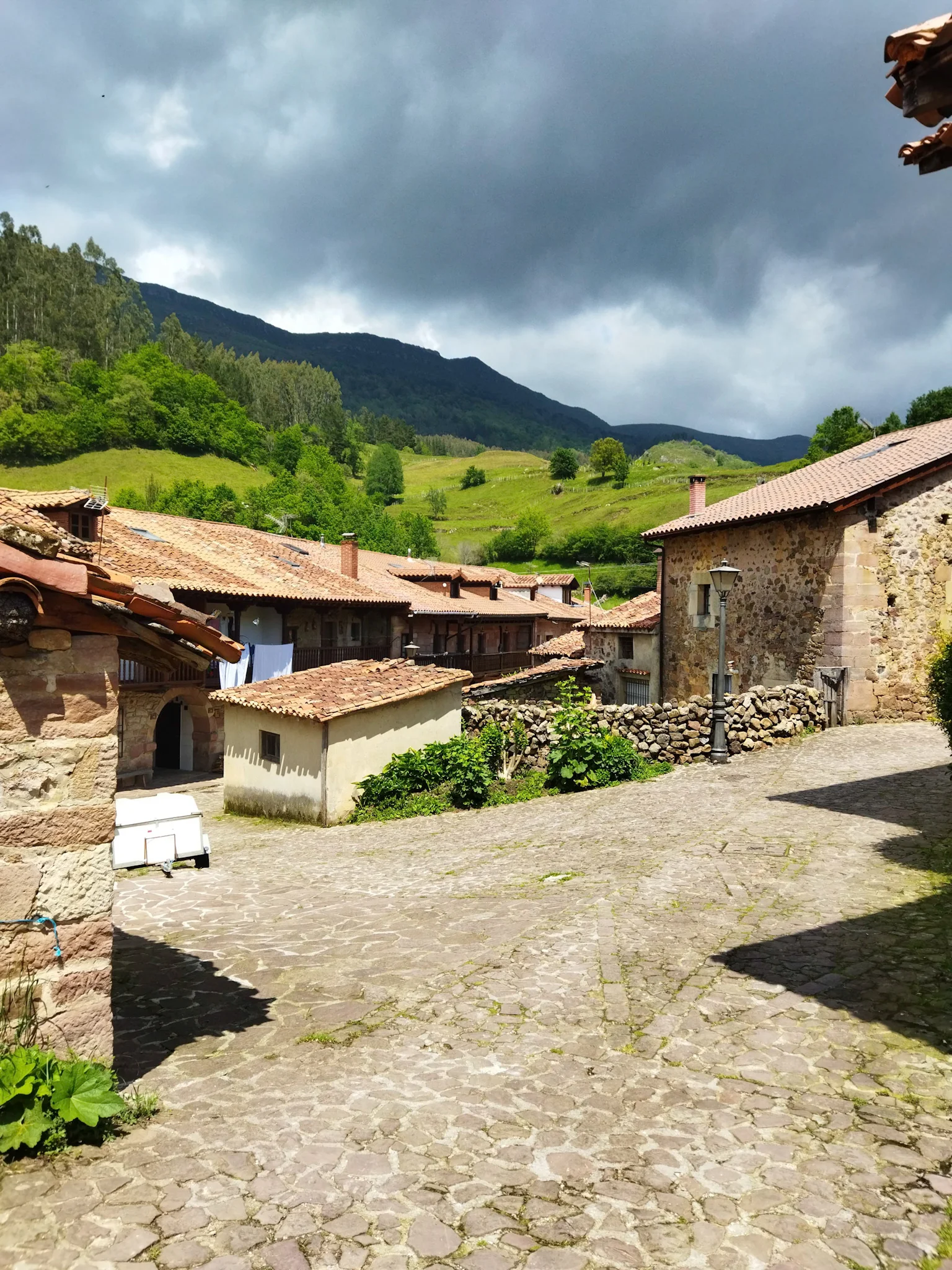
From Puentenansa, you can reach Carmona, one of the most beautiful villages in Spain, located in the Cabuérniga municipality and declared a historic site. If you’re interested in visiting the most representative building in Carmona, you must head to the Palacio de los Mier.
Manor houses in Carmona
The Palacio de los Mier is a construction dating back to the early 18th century. Its structure consists of a central body and two towers at the ends. In the center of the façade, the coat of arms of the Díaz, Cossío, Calderón, and Mier families stands out, a distinctive element of this historic building.
In the 90s, the Palacio de los Mier was converted into a regional Parador, which means it now functions as a hotel establishment that allows visitors to enjoy the architectural beauty and history of this place while staying there.
Carmona
The Palacio de los Mier is a prominent example of local architecture and reflects the historical importance of the local nobility. Your visit will allow you to appreciate the elegance of its design and the preservation of its original details. Furthermore, Carmona itself offers a charming rural environment and a rich cultural tradition that complements the experience of exploring this village declared a historic complex.
8. LA COHILLA RESERVOIR
The La Cohilla Reservoir is a double-curvature arch dam located in the Peña Bejo canyon. It has a height of 116 meters above the lowest point of the foundations and a length of 184 meters. The thickness of the dam decreases from 26 meters at the base to 2 meters at the crest.
At the time of its opening, the La Cohilla dam was the tallest arch dam in Spain and remained the tallest overall for a long time.
During construction, prisoners of the Civil War were used to perform the labor as a form of sentence reduction. The barracks where the prisoners were housed can still be seen in the village of La Lastra.
In 1950, the dam’s bottom outlets were closed, and partial flooding began. The following year, on the feast of Santo Domingo de la Calzada, the patron saint of civil engineers, the reservoir was filled for the first time.
9. LA CRUZ DE CABEZUELA
The Cruz de Cabezuela Viewpoint is an impressive lookout located in Cantabria, along the “High Nansa” Route. It sits at an altitude of 1,140 meters, on a pass between two valleys: the Polaciones Valley and the Liébana Valley.
From this point, you can enjoy spectacular panoramic views of the mountains and surrounding landscapes, including the Picos de Europa.
The viewpoint is presided over by a sculpture titled “Encounter of Purriego and Lebaniego”, created by Cantabrian sculptor Salvador G. Ceballos. It symbolizes the meeting between a resident of Polaciones (known as a Purriego) and a resident of Liébana (known as a Lebaniego).
Both populations share this road, and the sculpture represents the understanding and fraternity between these neighbors. It is a beautiful symbol reflecting the importance of cooperation and harmony in our world.
And we reach Tudanca, the final touch of this road trip through Cantabria.
10. TUDANCA
This village is particularly notable on our route, as it was declared a national historic-artistic site in 1983. Numerous rustic houses can be found here, the most emblematic being the Casona de Tudanca, built during the reign of Philip V.
This property once belonged to the writer and scholar José María de Cossío, who donated it to the Regional Council of Cantabria. During the time Cossío lived there, the house was an important center of intellectual activity and hosted prominent figures such as Unamuno, Giner de los Ríos, Alberti, and Gerardo Diego.
Today, the Casona de Tudanca is a museum housing an impressive library with over 25,000 volumes, including manuscripts by Federico García Lorca and Camilo José Cela.
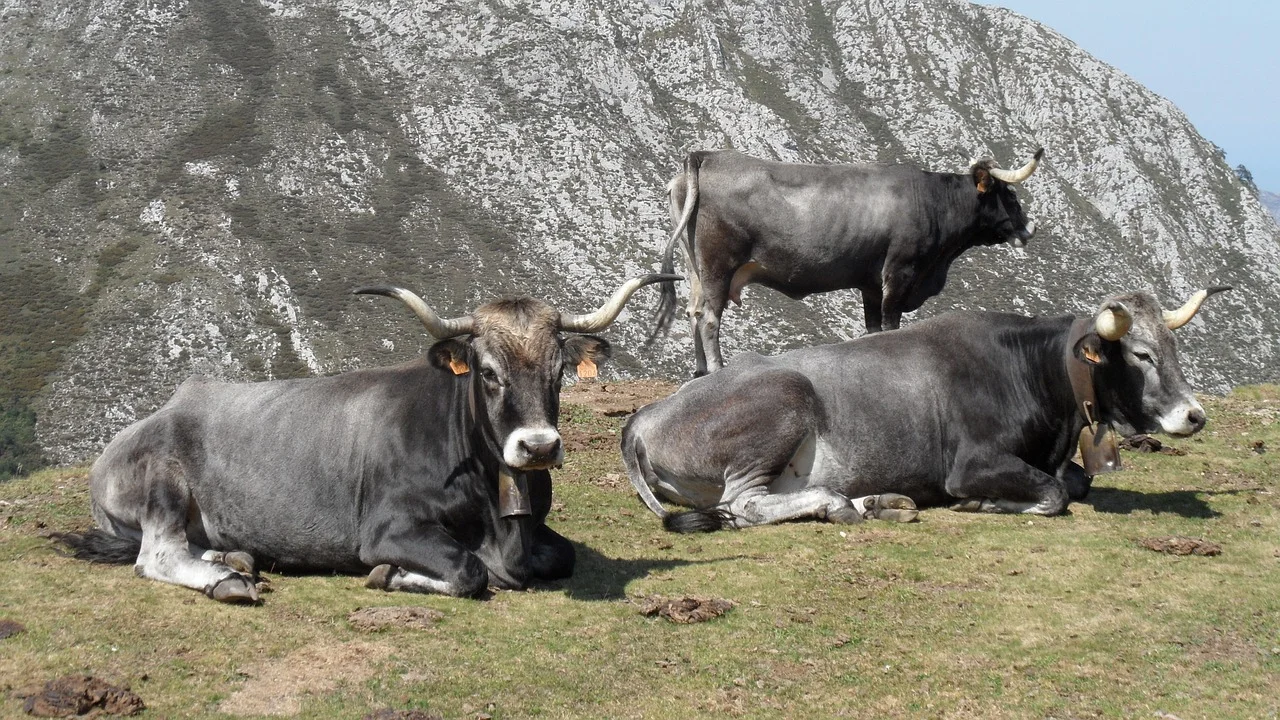
In addition to its historical value, Tudanca is also known for its autochthonous cattle breed, which bears the same name. The Tudanca breed is hardy and primitive, raised mainly for high-quality beef production thanks to its natural lifestyle.
Tudanca cow
The old town of Tudanca has been declared an Asset of Cultural Interest as a Historic-Artistic Complex. In addition to the village of Tudanca, the municipality includes other areas of special interest, such as La Lastra, Santotís, and Sarceda.
Tudanca has several monuments and sights to visit, such as the El Potro viewpoints, from which you can contemplate the Nansa River landscape, and the Cueto Forcada viewpoint.
Yes, we’ve reached the end, but I suggest you try this road trip through Cantabria yourself and at your own pace. Depending on how much each point of interest piques your curiosity, it could take you a day or much longer. Don’t rush and savor each one as it deserves.
The important thing is that you do it and let us know if you liked it and if we’ve missed any details that you’d like to share with us.
We remind you that you can visit truly incredible places in this beautiful land as we propose in the following posts:
Moreover, this isn’t the only one we’re going to show you. If you love losing yourself on a road trip as much as we do, you’re sure to enjoy all the ideas we’re going to propose.
Shift into gear and hit the road! Road trips through Cantabria have just begun.
SEE THE ROUTE ON THE MAP
Frequently Asked Questions (FAQs)
How long does this Cantabria road trip take?
It depends on how much time you want to spend at each stop: you can cover it in a single day if you only make short stops, though it’s best split over two days so you can properly enjoy the caves, the villages and Berellín beach without rushing.
Can you visit the Ferrería de Cades at any time?
Not right now: according to its official website, the Ferrería and Cades Mill are temporarily closed for improvement works. Before adding it to your route, check ferreriadecades.es to confirm whether it has reopened.
Which caves can you visit on this Cantabria road trip?
Along the route you can visit El Soplao Cave, a former mine turned into one of Cantabria’s most spectacular cavities, and Chufín Cave, with rock art and geological formations by the Nansa River.
Is there mobile signal at Berellín beach?
Not always. It’s a little-visited beach within an isolated natural setting in the village of Prellezo, so it’s common to lose mobile signal once you reach it.
Which villages can you combine with this Cantabria road trip?
The route passes close to Comillas and San Vicente de la Barquera, and goes through Puentenansa, Carmona and Tudanca, three inland villages with traditional Cantabrian architecture well worth exploring at a relaxed pace.
Comparte en tus Redes Sociales
Rita
¡Hola, soy Rita! Cofundadora de Glutendtrotters y experta en turismo con más de 20 años en el sector hotelero. Apasionada de los viajes y mamá de tres hijas, comparto destinos y consejos para disfrutar aventuras inclusivas, especialmente para celíacos. Me encanta el teatro, la moda y una copa de vino al final del día.