

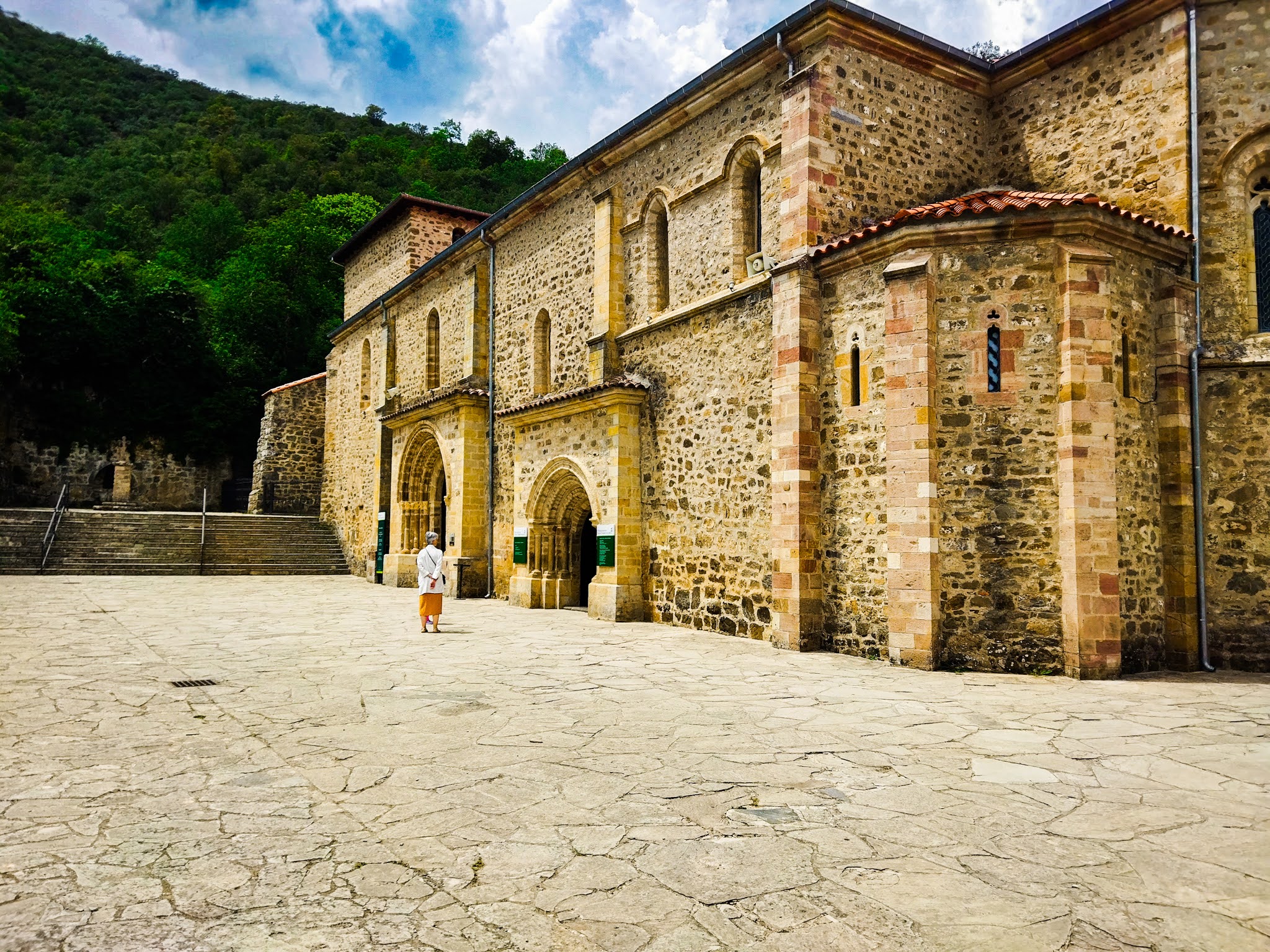
Tucked into the foothills of the Picos de Europa in Cantabria, northern Spain, the Monastery of Santo Toribio de Liébana is one of the great pilgrimage destinations of the Christian world. Its claim to fame is the Lignum Crucis, the largest known surviving piece of the True Cross, the cross on which Jesus is said to have been crucified. The monastery is also one of the five Holy Places of Christendom, alongside Jerusalem, Rome, Santiago de Compostela and Caravaca de la Cruz, where pilgrims can obtain a jubilee (a plenary indulgence).
You don’t need to be religious to appreciate it: the setting is dramatic, the history goes back to the 6th century, and the Door of Forgiveness opens only in a Lebaniego Jubilee Year. Below you’ll find the story of the monastery, how the jubilee works, what to see in and around it, and where to eat gluten-free nearby in Potes.

Before your visit to Santo Toribio de Liébana
🚗 The monastery is in the heart of the Liébana region, so the easiest way to get around is by car, your own or a rental: compare options at Discover Cars.
🛡️ We never travel without IATI travel insurance (with a 5% discount for Glutendtrotters readers), essential on any getaway.
📶 And if you’re travelling from outside Spain, a Holafly eSIM (also with a 5% discount for you) keeps you connected from the first minute, for maps and opening hours.
A holy place since the 6th century
The monastery’s origins go back to the 6th century, when the monk Toribio of Palencia withdrew to this spot, on the northern slope of Mount La Viorna, with a group of followers who lived under the Benedictine rule. In the 8th century, the monk Beatus of Liébana wrote and illustrated his famous Commentary on the Apocalypse here, one of the most influential works of the early Middle Ages in Europe.
Benedictine monks lived in the monastery until 1837, when they had to leave because of the Mendizábal confiscations, the Spanish government’s seizure and sale of Church property. Since 1961, a community of Franciscan friars has lived in Santo Toribio and looked after it.
The Lignum Crucis: the largest relic of the Cross
The monastery guards the Lignum Crucis (Latin for “wood of the Cross”), considered the largest known fragment of the cross on which Jesus died. According to tradition, it was brought from the Holy Land by Bishop Toribio of Astorga in the 5th century and reached Liébana around the middle of the 8th century, to protect it from the Muslim advance. Since 1181, the relic has been looked after by the Brotherhood of the Holy Cross (Cofradía de la Santísima Cruz), one of the oldest in Spain.
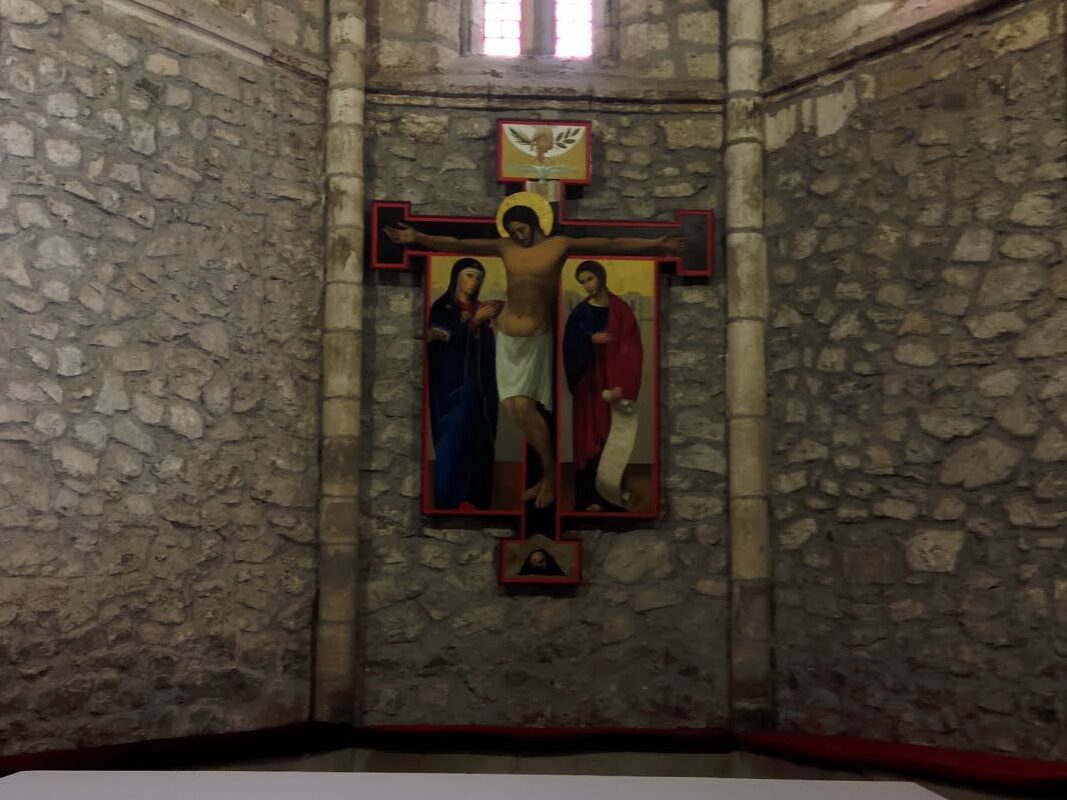
I’d like to mention that the Christ at the altar was painted by one of Manuel’s work colleagues.
The Door of Forgiveness and the Lebaniego Jubilee Year
On the monastery’s south facade is a Gothic Door of Forgiveness (Puerta del Perdón), built between the 15th and 16th centuries, which stays closed almost all the time. It only opens when 16 April — the feast day of Santo Toribio — falls on a Sunday. That is the so-called Lebaniego Jubilee Year, or Holy Year.
The privilege dates back to 1512, when Pope Julius II granted the monastery this status in perpetuity through a papal bull. At first, the jubilee lasted only 8 days; since 1967, thanks to Pope Paul VI, it extends over the whole year in which the feast day falls on a Sunday. Thousands of pilgrims — the so-called “pilgrims of the Cross”, or crucenos — arrive in every Holy Year to walk through the door and obtain the plenary indulgence.
📍 Before planning a trip around a Jubilee Year, we recommend checking the exact dates on the monastery’s official website, since they depend on the calendar and don’t come around every year.
What to see in and around the monastery
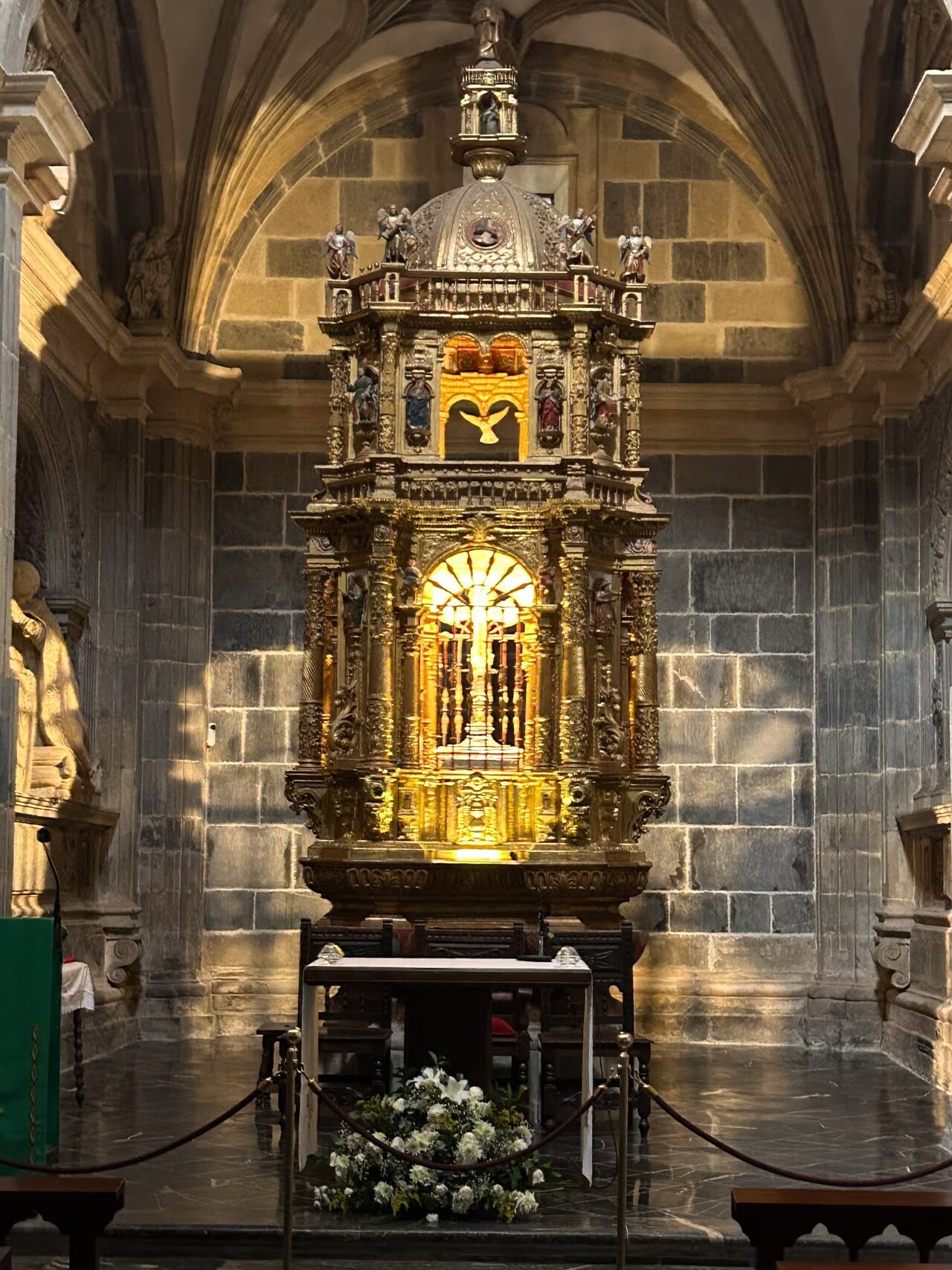
The church, Gothic with Cistercian influence, is the most significant part of the complex. Inside, the highlight is the Baroque chapel of the Lignum Crucis. Next to the main building there are other points of interest worth exploring slowly: the pre-Romanesque Holy Cave (Cueva Santa); the ruins of the Sanctuary of Santa Catalina; and two hermitages, San Juan de la Casería (16th century) and San Miguel (13th century).
The monastery was declared a National Monument on 11 August 1953, and it is part of the Camino Lebaniego, a pilgrimage route listed as a UNESCO World Heritage Site together with the Camino de Santiago. In fact, Cantabria is the only region in the Christian world with two pilgrimage routes of its own.
Where to eat gluten-free near Santo Toribio
The monastery is barely 2 km from Potes, the capital of Liébana, so it is the natural place to stop for a meal. There, the Mexican restaurant Las Mañanitas offers almost its entire menu gluten-free, as well as gluten-free beer. It doesn’t belong to any celiac association such as ACECAN (the Cantabrian Celiac Association), so, as we always recommend, check its cross-contamination protocol on the spot before ordering.
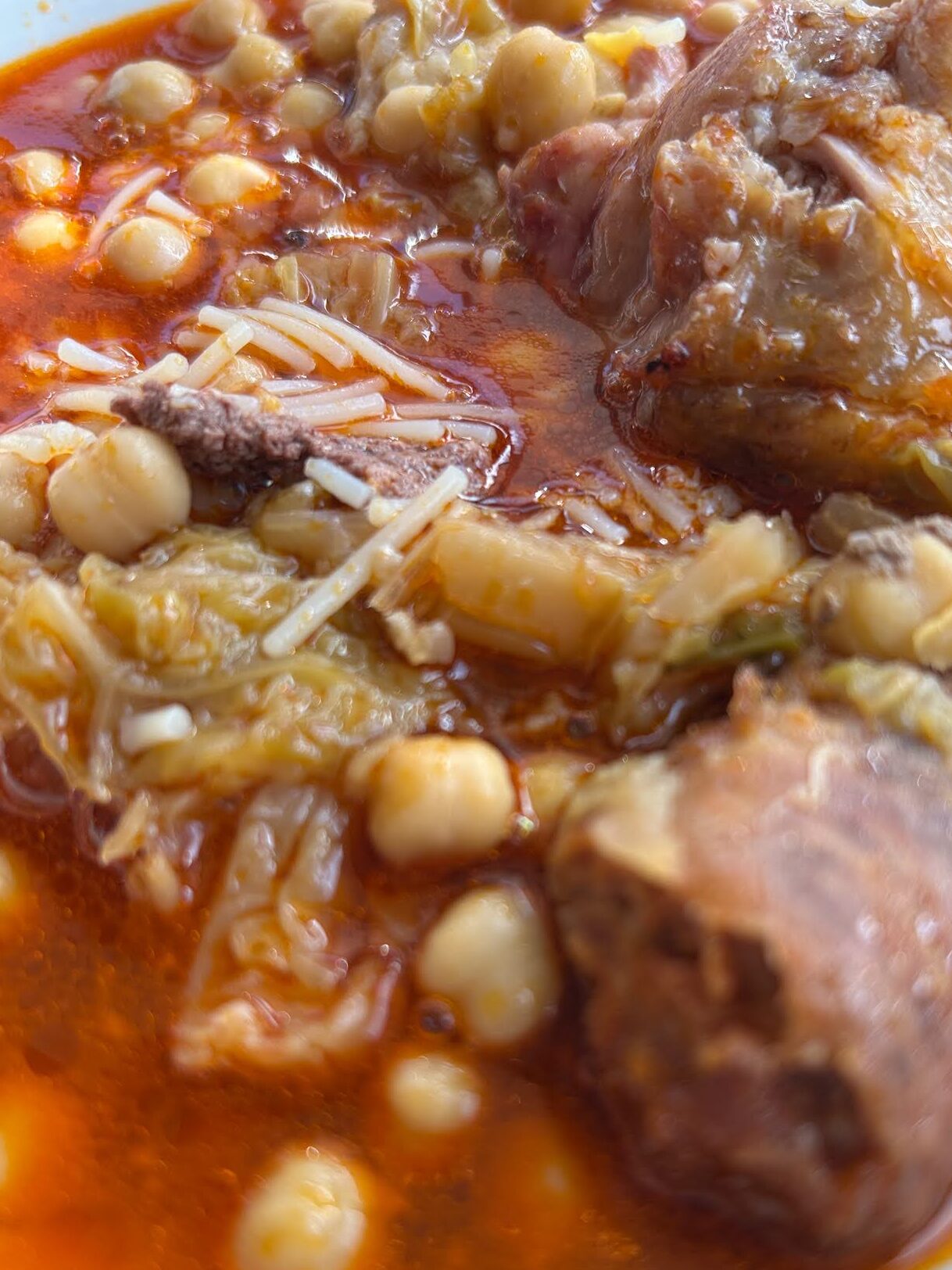
We also recommend eating at El Cenador del Capitán. The cocido lebaniego, the hearty chickpea stew typical of Liébana, is delicious. They have gluten-free bread and a great understanding of cross-contamination.
How to get there
From Potes, the monastery is a few minutes’ drive along the CA-885 road. Since it sits in the heart of Liébana, surrounded by the Picos de Europa, there is no convenient public transport option. The most practical way to explore the whole area freely is to rent a car.
Santo Toribio de Liébana is not a quick stop to tick off a list. It is one of those places where it is worth slowing down, entering in silence and letting history (and, for those who feel it, faith) do the rest. If you’re exploring the Liébana region, you have plenty to fill an entire day between the monastery, Potes and the villages around.
You might also like:
- 10 Essential Tips for Traveling to Cantabria
- 7 Days in Cantabria: A Perfect Gluten-Free Travel Itinerary
- Gluten-Free Restaurants in Cantabria: A Local’s Guide for Celiacs
Frequently Asked Questions (FAQ)
What is the Lignum Crucis of Santo Toribio de Liébana?
It is the largest known fragment of the cross on which Jesus died. According to tradition, it was brought from the Holy Land by Bishop Toribio of Astorga in the 5th century and has been kept at the monastery since the 8th century.
When does the Door of Forgiveness at Santo Toribio open?
It opens during the Lebaniego Jubilee Year, which takes place whenever 16 April, the feast day of Santo Toribio, falls on a Sunday. Since 1967 the jubilee lasts the whole year, not just a few days.
What are the five Holy Places of Christendom?
Jerusalem, Rome, Santiago de Compostela, Caravaca de la Cruz and the Monastery of Santo Toribio de Liébana, the only places where a plenary indulgence can be obtained during their respective Holy Years.
How far is the monastery from Potes?
The Monastery of Santo Toribio de Liébana is barely 2 km from Potes, the capital of the Liébana region, along the CA-885 road.
Where can I eat gluten-free near the monastery?
In Potes, the Mexican restaurant Las Mañanitas has verified reviews confirming that it offers almost its whole menu gluten-free. It doesn’t belong to any celiac association, so it’s best to confirm the cross-contamination protocol before ordering.
FIND IT ON THE MAP